




S12 E8: Lisa Neigut on Running a Core Lightning Node from Home

The audio keeps playing while you browse the site.
Ask the Archive
Lisa Neigut works at Blockstream to make Core Lightning (formerly known as c-lightning) a reliable and robust Lightning network experience. Since September 2018, she has contributed with more than 2000 GitHub commits that helped build and/or improve projects such as Blockstream’s Elements and c-lightning, ACINQ’s eclair, BTCPay Server, mempool.space, and the universal Lightning BOLT system. She reviewed code, fixed bugs, built plug-ins, and made proposals to improve the LN experience. In the process, she always expressed energetic joyfulness and contagious enthusiasm.
Given her experience and line of employment, it comes as no surprise that Lisa recommends Lightning network enthusiasts to use Core Lightning. When I asked her which version of the RaspiBlitz software I should run on my node, Niftynei (also known under the Neil Saitug anagram) began to present the unique features from Blockstream’s client.
But Lisa Neigiut’s recommendation wasn’t just a way to pledge allegiance to her employer, though. It was much more than a mere act of shilling, as she clearly explained why Lightning Labs’ LND client has faced synchronization issues in recent weeks. These bugs reminded us that we are still in the early days of the Lightning network and there are still on-chain events (like a 999 out of 1000 multisig) that can cause unexpected downtimes. Yet interestingly, Blockstream’s Core Lightning was not affected by these events and kept on working while LND nodes were offline and bound to get patched as soon as possible.
It’s not all about the stability and lack of bugs, though: Lisa is very enthusiastic about Commando and Runes (Blockstream’s take on Macaroons). And when it comes to choosing the right hardware for your node and setting up a system which conceals your IP address, she is quite a connoisseur.
Last but not least, I must mention Lisa Neigut’s Bitcoin++ events and her base58 education platform. Outside of her coding, she is very interested in learning from other developers and sharing some of her own knowledge with others.
Listen to Lisa Neigut on Apple Podcasts, Spotify, YouTube & More!
If you use any of these big tech platforms, then please subscribe and leave feedback (likes, comments, ratings, everything that’s available). They’re not a pure vanity metric, as they tell the search algorithms to rank the Bitcoin Takeover podcast higher. So when people look forward to learning from Lisa Neigut, they’ll discover this interview with greater ease.
On the other hand, if you’re privacy-oriented then you can use this free player. It’s built on top of the free open source Podcast Generator plug-in and it offers all the features you find in big tech media players. Not only that, but you can open it using Tor browser and you also have the option to download the episode for offline listening sessions – great news for the Microsoft Zune enthusiasts who want to go out for an internet-free jog in the morning!
00:51– Intro
02:00 – Why use Core Lightning
04:40 – Commando, Runes
09:00 – Rusty and Macaroons
11:20 – Podcast apps on Core Lightning?
11:50 – What broke LND nodes lately?
17:00 – Why were Core Lightning nodes not affected?
20:24 – Computer programming
24:30 – Did Blockstream attack LND?
30:40 – How to protect yourself from theft in Lightning
41:12 – Network-level privacy (Tor, Tunnelsats, VPN, Nym)
54:50 – Lightning node hosted on cloud services
58:30 – Should you use a Raspberry Pi?
01:02:00 – Are laptops or used servers better for Lightning nodes?
01:08:30 – Lisa’s privacy-focused Bitcoin conference from Mexico City
1:16:50 – How to follow Lisa Neigut & base58.info
Bitcoin Takeover Podcast Is Sponsored By Vaultoro & Wasabi Wallet. Maison MAACHI Provides The Clothing!
Vaultoro is the hard money exchange which helps you beat inflation with instant swaps between the best stores of value known to man: gold and bitcoin. Unlike most exchanges, Vaultoro understands the importance of transparency and security. All gold holdings are secured in top tier swiss private vaults and fully insured against theft, fire and more.
Maximize your purchasing power today by going to vaultoro.com/bitcointakeover. This is not financial advice, but gold has been humankind’s most reliable store of value in the last 6000 years. Do your own research! Use the promotion code takeover for a one time bonus of 1 gram of gold for the first 50 new customers buying gold with bitcoin.
Are you concerned that your friends, neighbours, or KYC exchange might know how much bitcoin you own? It’s time to take your financial privacy seriously with Wasabi wallet: a free and open source wallet solution which makes use of mega CoinJoins to mix your coins with those of hundreds of other strangers.
Thanks to the groundbreaking Wabisabi engine, your coins get divided in smaller untraceable units which grant you great anonymity for both HODLing and spending. Download Wasabi wallet 2.0 today at wasabiwallet.io and take advantage of the mega CoinJoins.
What are you gonna wear when Bitcoin hits $1 million? Same old $20 t-shirt? Try Maison MAACHI, designer clothes made in Paris by bitcoiners for bitcoiners.
They’re not your average mass-produced sweatshop clothes: MAACHI will ask for your measurements and tailor every piece of clothing according to the shape of your body, so you will always look and feel great in your t-shirt, hoodie, or dress. And it’s all made in French by real artisans who also happen to be bitcoiners.
Get a Maison MAACHI t-shirt or hoodie today, it might even help you find a girlfriend. And once you get a girlfriend, you can also buy her a Maison MAACHI dress too.
Stop having fun looking poor and check out maisonmaachi.com.
Verify this episode
This is the SHA-256 fingerprint of the MP3 as published here, timestamped in the Bitcoin blockchain with OpenTimestamps. If one byte of the file changes, the fingerprint changes.
- SHA-256
2f2c2cd1d0ebd0033b3e48ee42f6261c32e5c301198b0b05300fb101e51ae2cf- Proof
- 2022-11-10_s12_e8_lisa_neigut_on_running_a_core_lightning_node.mp3.ots · all episode hashes (proof)
- Status
- Anchored in Bitcoin block 974,312
How to check it yourself
- Download the MP3 and the proof into the same folder.
- Run
sha256sum 2022-11-10_s12_e8_lisa_neigut_on_running_a_core_lightning_node.mp3(on a Mac:shasum -a 256 2022-11-10_s12_e8_lisa_neigut_on_running_a_core_lightning_node.mp3). The result must match the SHA-256 above. - Install the OpenTimestamps client (
pip install opentimestamps-client) and runots verify 2022-11-10_s12_e8_lisa_neigut_on_running_a_core_lightning_node.mp3.ots. It hashes the MP3 again and checks the proof against your own Bitcoin node, then prints the block and the date the file existed by. Without a node,ots info 2022-11-10_s12_e8_lisa_neigut_on_running_a_core_lightning_node.mp3.otsshows the block height to look up in any block explorer.
Related

Une explication du réseau Lightning que même un enfant de 10 ans peut comprendre
En tant que seconde couche de Bitcoin, le réseau Lightning apporte de nombreuses améliorations. Il permet des paiements quasiment…
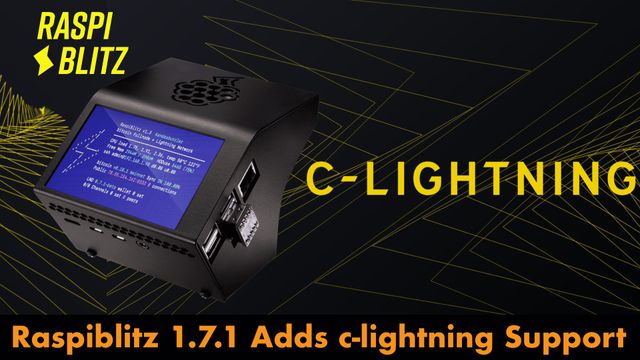
RaspiBlitz 1.7.1 Adds c-lightning Support
The news about RaspiBlitz adding support for Blockstream’s c-lightning implementation first broke in early June of 2021, during…
Explaining the Lightning Network So Even A 10 Year-Old Can Understand It
As Bitcoin’s second layer, the Lightning Network brings a lot of improvements. Its features instant payments that can scale to a…

Comments
Comments run on my own server. No ads, no trackers.