




Before Bitcoin
The cypherpunks, cryptographers, mailing lists, companies and failed currencies that came before Satoshi Nakamoto — from Merkle and Chaum to DigiCash, Hashcash, b-money, bit gold and RPOW. Every factual sentence links to its source; quotes are checked word-for-word against the original text.
75 inventions and proposals in six strands, 20 internet currencies (bar colour = fate) and 24 milestones. Hover for details, click to open; use the chips to show or hide strands.
Read the timeline as a list
Before 1980
1980s
- 1981Mix networks & digital pseudonyms
- 1982Blind signatures
- 1982Chaum’s vault system (1982 dissertation)
- 1982The Byzantine Generals Problem
- 1985ElGamal signatures
- 1985Elliptic-curve cryptography
- 1985Security Without Identification (credentials & card computers)
- 1985Zero-knowledge proofs
- 1988Agoric open systems
- 1988Dining-cryptographers networks (DC-nets)
- 1988The Crypto Anarchist Manifesto
- 1988Untraceable off-line e-cash (Chaum–Fiat–Naor)
- 1989DigiCash (company) (currency)
- 1989Online cash checks
- 1989Paxos
- 1989Undeniable signatures
1990s
- 1990DigiCash ecash
- 1990Mondex (currency)
- 1990State-machine replication
- 1991Group signatures
- 1991Linked timestamping (hash-chained documents)
- 1991PGP (Pretty Good Privacy)
- 1992Cypherpunk anonymous remailers
- 1992Pricing via processing
- 1993A Cypherpunk’s Manifesto
- 1993BlackNet
- 1993Brands’ off-line cash
- 1993Merkle-tree timestamping (Bayer–Haber–Stornetta)
- 1993NetCash
- 1993anon.penet.fi
- 1994CAFE (Conditional Access for Europe)
- 1994CyberCash / CyberCoin (currency)
- 1994First Virtual Holdings (currency)
- 1994Magic Money
- 1994Smart contracts
- 1995Ecash at Mark Twain Bank (currency)
- 1995Millicent
- 1995Mixmaster (Type II remailer)
- 1995NetBill
- 1996PayWord and MicroMint
- 1996Ricardian contracts
- 1996Time-lock puzzles
- 1996e-gold (currency)
- 1997Digital bearer certificates
- 1997E (programming language)
- 1997Hashcash
- 1997Secure names for bit-strings
- 1997The God Protocols
- 1998Bit gold
- 1998PayPal (currency)
- 1998Quorum systems
- 1998Secure property titles with owner authority
- 1998The Geodesic Market / digital bearer settlement
- 1998WebMoney (currency)
- 1998b-money
- 1999Beenz (currency)
- 1999Flooz (currency)
- 1999Lucre
- 1999Practical Byzantine Fault Tolerance
- 1999Secure timestamping with minimal trust (Massias et al.)
- 1999“Proof of work” (the term)
2000s
- 2000Capability-based financial instruments
- 2000Financial Cryptography in 7 Layers
- 2000Mojo (Mojo Nation’s currency)
- 2000Mojo Nation
- 20011mdc (currency)
- 2001BitTorrent
- 2001Peppercoin Inc. (currency)
- 2001SHA-2 (SHA-256)
- 2001Trusted Third Parties are Security Holes
- 2001Zooko’s triangle
- 2001e-Bullion (currency)
- 2002BitPass (currency)
- 2002Digital Monetary Trust (DMT) (currency)
- 2002Peppercoin
- 2002Shelling Out: The Origins of Money
- 2002The Sybil attack
- 2003KARMA
- 2003Linden Dollar (currency)
- 2004RPOW — Reusable Proofs of Work
- 2004Ripple (RipplePay)
- 2004Ripple Project IOUs (currency)
- 2005On Digital Cash-Like Payment Systems
- 2005Triple-entry accounting
- 2006Liberty Reserve (currency)
- 2008Bitcoin
- 2008Truledger
Cryptographers, cypherpunks, Extropians, ecash builders and currency operators. Photos are each person’s own X picture (accounts checked against the person) or freely licensed Wikimedia Commons images, all credited; everyone else gets a monogram.
 Leonard Adlemanborn 1945
The A in RSA
 Julian Assangeborn 1971
Cypherpunk; founder of WikiLeaks
 Adam Backborn 1970
Inventor of Hashcash (1997), cited as reference [6] of the Bitcoin whitepaper; co-founder of Blockstream
 John Perry Barlow1947–2018
Co-founder of the EFF; “A Declaration of the Independence of Cyberspace”
 Dave Bayer
Co-author of the 1993 Merkle-tree timestamping paper (whitepaper ref. [4])
Jim Bellborn 1958Cypherpunk; author of “Assassination Politics” (1995–96)
Stefan BrandsOff-line e-cash and privacy-preserving credentials (CWI, 1993)
Arthur BudovskyFounder of Liberty Reserve
Vince CateCypherpunk in Anguilla; ran the “become an international arms trafficker” page
 David Chaumborn 1955
Cryptographer; inventor of mix networks, blind signatures and ecash; founder of DigiCash
Bill St. ClairTruledger (2008)
 Bram Cohenborn 1975
Mojo Nation developer; creator of BitTorrent (2001)
Lance CottrellMixmaster remailer author; founder of Anonymizer
Wei DaiAuthor of b-money (1998), cited as reference [1] of the Bitcoin whitepaper; Crypto++
 Whitfield Diffieborn 1944
Co-inventor of public-key cryptography (Diffie–Hellman)
John R. DouceurNamed the Sybil attack (2002)
Barry DowneyCo-founder of e-gold
 K. Eric Drexlerborn 1955
Nanotechnology pioneer; co-founder of the Foresight Institute; co-author of agoric systems
 Cynthia Dworkborn 1958
Co-inventor of computational “pricing” to fight spam (proof-of-work idea, 1992)
Niels FergusonCryptographer; Yarrow and Fortuna co-designer
Amos Fiatborn 1956Co-author of off-line untraceable cash (CRYPTO ’88); Fiat–Shamir
Hal Finney1956–2014Cypherpunk, PGP developer, remailer operator, inventor of RPOW, first recipient of a Bitcoin transaction
Ryan FuggerFounder of the Ripple Project (2004)
John Gilmoreborn 1955Co-founder of the Cypherpunks list and of the EFF; early Sun employee
 Ian Goldbergborn 1973
Cypherpunk cryptographer; Zero-Knowledge Systems; Off-the-Record
 Oded Goldreich
Zero-knowledge proofs for NP (with Micali and Wigderson)
Shafi Goldwasserborn 1959Co-inventor of zero-knowledge proofs (1985); 2012 Turing Award
Lucky GreenCypherpunk; worked with DigiCash on ecash at Mark Twain Bank
Ian GriggFinancial cryptographer; Ricardian contracts, triple-entry accounting
Stuart HaberCo-inventor of linked-hash timestamping (cited three times in the Bitcoin whitepaper)
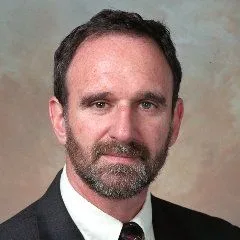 Martin Hellmanborn 1945
Co-inventor of public-key cryptography; Stanford professor
Johan Helsingiusborn 1961Operator of anon.penet.fi (1993–1996)
Robert HettingaCo-founder of FC97 (Anguilla); digital bearer settlement; e$ list
Eric HughesCo-founder of the Cypherpunks; author of A Cypherpunk’s Manifesto; first cypherpunk remailer
Douglas JacksonFounder of e-gold (1996)
Markus JakobssonCo-coined “proof of work” (1999)
 Ari Juels
Co-coined “proof of work” (1999); client puzzles
Neal Koblitzborn 1948Co-inventor of elliptic-curve cryptography (1985)
 Leslie Lamportborn 1941
Byzantine Generals Problem; Lamport one-time signatures
 Ben Laurie
Lucre (anonymous e-tokens); Apache-SSL
 Barbara Liskovborn 1939
Co-author of Practical Byzantine Fault Tolerance (1999)
Henri MassiasLead author of whitepaper reference [2] (1999)
Timothy C. May1951–2018Crypto-anarchist; co-founder of the Cypherpunks; author of the Crypto Anarchist Manifesto and the Cyphernomicon
Jim McCoyMojo Nation
 Ralph Merkleborn 1952
Public-key cryptography pioneer; inventor of Merkle’s puzzles and Merkle trees
 Perry E. Metzger
Runs the Cryptography mailing list where Bitcoin was announced
 Silvio Micaliborn 1954
Zero-knowledge proofs; Peppercoin (with Rivest)
Mark S. MillerAgoric open systems (1988); E language; capability security
Victor S. Millerborn 1947Co-inventor of elliptic-curve cryptography (1985)
 Max Moreborn 1964
Philosopher; founder of the Extropians and Extropy magazine
 Chip Morningstar
Co-author of Capability-based Financial Instruments (2000)
Daniel A. Nagy“On Digital Cash-Like Payment Systems” (2005)
 Moni Naor
Co-author of “Pricing via Processing” and of untraceable e-cash
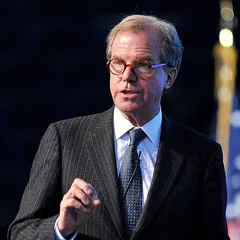 Nicholas Negroponte
Chairman of DigiCash (1997)
 Ted Nelsonborn 1937
Hypertext pioneer; founder of Project Xanadu (1960)
 Jean-Jacques Quisquater
Co-author of whitepaper reference [2] (1999)
Charles RackoffCo-inventor of zero-knowledge proofs (1985)
 Ron Rivestborn 1947
The R in RSA; co-author of PayWord/MicroMint and Peppercoin
Phil Salin1950–1991Economist; founder of AMIX, the American Information Exchange
 Len Sassaman1980–2011
Cypherpunk; maintainer of Mixmaster
Fred B. SchneiderState-machine replication tutorial (1990)
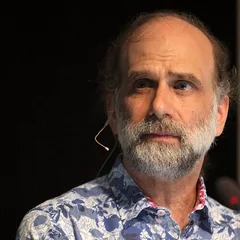 Bruce Schneierborn 1963
Author of Applied Cryptography (1994)
 Adi Shamirborn 1952
The S in RSA; Shamir secret sharing; co-author of MicroMint
 Emin Gün Sirer
Co-author of KARMA (2003), a P2P currency with proof-of-work entry
W. Scott StornettaCo-inventor of linked-hash timestamping
 Nick Szabo
Smart contracts (1994), bit gold, Shelling Out; DigiCash alumnus
 Zooko Wilcox-O’Hearnborn 1974
DigiCash and Mojo Nation developer; Zooko’s triangle; later Zcash
 Phil Zimmermannborn 1954
Creator of PGP (1991)
Satoshi Nakamotopseudonym; active 2008–2011Pseudonymous author of the Bitcoin whitepaper (2008) and software (2009)
78 connections — co-authorship, shared companies, citations and documented influence. Every line has a source (hover a line, or open the table below). Hover a person to light up their network.
All 78 connections, each with its source
| Person | Person | Kind | Connection |
|---|---|---|---|
| Niels Ferguson | Bruce Schneier | coauthor | Yarrow (1999) and Fortuna generators; joint books[1] |
| Whitfield Diffie | Martin Hellman | coauthor | Co-wrote “New Directions in Cryptography” (1976)[2] |
| Martin Hellman | Ralph Merkle | supervised | Hellman supervised Merkle’s 1979 Stanford PhD[3] |
| Ralph Merkle | Whitfield Diffie | colleague | Co-inventors of public-key cryptography[4][5] |
| Ron Rivest | Adi Shamir | coauthor | RSA (1978); PayWord & MicroMint (1996)[6][7] |
| Ron Rivest | Leonard Adleman | coauthor | RSA (1978)[6] |
| Adi Shamir | Leonard Adleman | coauthor | RSA (1978)[6] |
| Ron Rivest | Silvio Micali | coauthor | Peppercoin / “Micropayments Revisited” (2002)[8][9] |
| Silvio Micali | Oded Goldreich | coauthor | Zero-knowledge proofs for NP (1991)[10] |
| David Chaum | Amos Fiat | coauthor | “Untraceable Electronic Cash” (1988)[11] |
| David Chaum | Moni Naor | coauthor | “Untraceable Electronic Cash” (1988)[11] |
| Amos Fiat | Moni Naor | coauthor | “Untraceable Electronic Cash” (1988)[11] |
| Cynthia Dwork | Moni Naor | coauthor | “Pricing via Processing” (1992)[12] |
| Stuart Haber | W. Scott Stornetta | coauthor | Linked timestamping (1991, 1993, 1997); co-founded Surety[13][14][15] |
| Dave Bayer | Stuart Haber | coauthor | Merkle-tree timestamping (1993)[15] |
| Henri Massias | Jean-Jacques Quisquater | coauthor | Secure timestamping with minimal trust (1999)[16][15] |
| Markus Jakobsson | Ari Juels | coauthor | “Proofs of Work and Bread Pudding Protocols” (1999)[17][18] |
| Mark S. Miller | K. Eric Drexler | coauthor | Agoric open systems (1988)[19][20] |
| Mark S. Miller | Chip Morningstar | coauthor | Capability-based Financial Instruments (FC 2000)[21] |
| Leslie Lamport | Barbara Liskov | influence | Castro and Liskov’s PBFT (1999) solves Lamport’s Byzantine Generals problem in practice[22] |
| David Chaum | Nick Szabo | colleague | Szabo worked in DigiCash’s Amsterdam office[23] |
| David Chaum | Zooko Wilcox-O’Hearn | colleague | Zooko worked on DigiCash with Chaum in 1996[24] |
| David Chaum | Nicholas Negroponte | colleague | Negroponte was DigiCash chairman by 1997[25] |
| David Chaum | Stefan Brands | influence | Brands’ off-line cash extends Chaum-style e-cash; credlib implements both[26][27] |
| Timothy C. May | Eric Hughes | cofounded | Co-founded the Cypherpunks (1992)[28][29] |
| Timothy C. May | John Gilmore | cofounded | Co-founded the Cypherpunks (1992)[28][30][29] |
| Eric Hughes | John Gilmore | cofounded | Co-founded the Cypherpunks (1992)[28][30][29] |
| John Gilmore | John Perry Barlow | cofounded | Co-founded the EFF (1990)[31] |
| Timothy C. May | Wei Dai | influence | b-money opens with “I am fascinated by Tim May’s crypto-anarchy”[32] |
| David Chaum | Timothy C. May | influence | The Crypto Anarchist Manifesto builds on Chaum-style anonymous protocols; the Cyphernomicon is full of DC-nets and ecash[33] |
| David Chaum | Hal Finney | influence | Finney explained Chaumian cash in Extropy and on the Cypherpunks list[34][35] |
| Cynthia Dwork | Adam Back | cites | Back’s 2002 hashcash paper credits Dwork & Naor’s pricing functions as earlier work he was not aware of in 1997[36] |
| Adam Back | Hal Finney | influence | RPOW is built on Hashcash-style proofs of work[37] |
| Adam Back | Wei Dai | related | Like hashcash, b-money ties the creation of money to computational work[32][38] |
| Adam Back | Satoshi Nakamoto | cites | Whitepaper ref. [6]: Hashcash[15] |
| Wei Dai | Satoshi Nakamoto | cites | Whitepaper ref. [1]: b-money[15] |
| Stuart Haber | Satoshi Nakamoto | cites | Whitepaper refs. [3][4][5][15] |
| W. Scott Stornetta | Satoshi Nakamoto | cites | Whitepaper refs. [3][4][5][15] |
| Dave Bayer | Satoshi Nakamoto | cites | Whitepaper ref. [4][15] |
| Henri Massias | Satoshi Nakamoto | cites | Whitepaper ref. [2][15] |
| Jean-Jacques Quisquater | Satoshi Nakamoto | cites | Whitepaper ref. [2][15] |
| Ralph Merkle | Satoshi Nakamoto | cites | Whitepaper ref. [7]: Merkle (1980)[15] |
| Nick Szabo | Satoshi Nakamoto | influence | Satoshi: Bitcoin implements “Nick Szabo’s Bitgold proposal”[39] |
| Wei Dai | Nick Szabo | related | Parallel proposals: Satoshi names b-money and Bitgold together as what Bitcoin implements[39] |
| Hal Finney | Satoshi Nakamoto | corresponded | Finney ran Bitcoin v0.1 and received the first transaction[40][41] |
| Perry E. Metzger | Satoshi Nakamoto | related | Satoshi announced Bitcoin on the Cryptography list Metzger created[42][43][44] |
| Phil Zimmermann | Hal Finney | colleague | Finney worked for the PGP Corporation[41] |
| Eric Hughes | Hal Finney | colleague | Hughes and Finney both ran early cypherpunk remailers[28][41] |
| Lance Cottrell | Len Sassaman | colleague | Sassaman maintained Cottrell’s Mixmaster[45][46] |
| David Chaum | Lance Cottrell | influence | Remailers implement Chaum’s mix idea[47][48] |
| Bram Cohen | Jim McCoy | colleague | Worked together on MojoNation[49] |
| Zooko Wilcox-O’Hearn | Jim McCoy | colleague | Zooko was a MojoNation developer[24] |
| Nick Szabo | Ian Grigg | influence | Grigg’s Ricardian contract cites Szabo’s smart contracts[50] |
| Ted Nelson | Mark S. Miller | colleague | Miller took part in Project Xanadu[20][51] |
| Phil Salin | Mark S. Miller | colleague | Miller wrote “AMIX As The First Smart Contracting System”[52] |
| K. Eric Drexler | Mark S. Miller | colleague | Foresight Institute[20][53] |
| Mark S. Miller | Nick Szabo | influence | Szabo’s smart-contract writing draws on agoric and capability ideas; Miller’s FC 2000 paper cites Szabo[21][54] |
| Robert Hettinga | Vince Cate | colleague | With Vince Cate and Ray Hirschfeld, Hettinga launched FC97 on Anguilla[55] |
| Robert Hettinga | Ian Grigg | colleague | Financial Cryptography conference circle[54][55] |
| Max More | Hal Finney | colleague | Finney wrote for Extropy[34] |
| Max More | Nick Szabo | colleague | Szabo’s smart-contracts article ran in Extropy #16[56] |
| David Chaum | Ian Goldberg | influence | Goldberg co-authored the Sphinx mix format (2009), in the line of Chaum’s mixes[57][48] |
| David Chaum | Ben Laurie | influence | Laurie’s Lucre implements Chaum-style anonymous tokens[58] |
| John R. Douceur | Satoshi Nakamoto | related | Bitcoin’s one-CPU-one-vote addresses the Sybil problem Douceur formalised (2002); the whitepaper does not cite him[59][15] |
| Leslie Lamport | Nick Szabo | influence | Szabo’s secure property titles use Byzantine quorums[60] |
| Adam Back | Emin Gün Sirer | influence | KARMA uses a hashcash-style entry puzzle[61] |
| Timothy C. May | Julian Assange | colleague | Both active on the Cypherpunks list[29][62] |
| Timothy C. May | Jim Bell | colleague | Both active on the Cypherpunks list[63][29] |
| Phil Zimmermann | Eric Hughes | influence | PGP was a core cypherpunk tool[64][29] |
| Adam Back | Vince Cate | colleague | Cate’s export-protest page shipped Back’s RSA-in-Perl[29] |
| Neal Koblitz | Victor S. Miller | colleague | Independently proposed elliptic-curve cryptography (1985)[65][66] |
| Leslie Lamport | Fred B. Schneider | influence | Schneider’s state-machine replication tutorial builds on Lamport’s work[67] |
| Stefan Brands | Daniel A. Nagy | influence | Nagy’s survey builds on Brands-style cash[68] |
| Douglas Jackson | Barry Downey | cofounded | Co-founded e-gold[69][70] |
| Zooko Wilcox-O’Hearn | Satoshi Nakamoto | related | Among the first to write publicly about Bitcoin (January 2009); Satoshi linked his blog post from the Bitcoin project page[24] |
| Lucky Green | David Chaum | colleague | Green worked for DigiCash for more than a year in the mid-1990s[71] |
| Shafi Goldwasser | Silvio Micali | coauthor | Introduced zero-knowledge proofs with Charles Rackoff (1985); shared the 2012 Turing Award[72][73] |
| Charles Rackoff | Silvio Micali | coauthor | Co-authors of the 1985 zero-knowledge paper[74][73] |
Where the ideas were argued about: mailing lists, conferences, journals, labs, companies and movements.
The Cypherpunks mailing list
19 people · 10 inventions
Mailing list · since the 2000sThe Cryptography mailing list (metzdowd.com)
4 people · 2 inventions
Movement / magazine / mailing list · 1988–2000sThe Extropians & Extropy magazine
4 people · 1 inventions
Company · 1989–1998DigiCash
5 people · 1 inventions
Research institute · 1980s–1990sCWI Amsterdam cryptography group
2 people · 2 inventions
Conferences / professional body · since 1981–82IACR, CRYPTO & EUROCRYPT
12 people · 9 inventions
Conference · since 1997Financial Cryptography (FC97 Anguilla onward)
8 people · 7 inventions
Conference · since 1984The Hackers Conference
1 people · 1 inventions
Non-profit · since 1986Foresight Institute
3 people · 1 inventions
Projects / companies · 1960–1990sProject Xanadu & AMIX
4 people · 2 inventions
Non-profit · since 1990Electronic Frontier Foundation
2 people · 0 inventions
University · 1970sStanford (Hellman’s group)
3 people · 3 inventions
University · 1970s–2000sMIT (LCS)
6 people · 5 inventions
Industrial lab · 1980s–1990sBellcore
2 people · 3 inventions
Company · 1990s–2010PGP Inc. / PGP Corporation
2 people · 1 inventions
Company · 1997–2000sZero-Knowledge Systems
1 people · 0 inventions
Company / P2P project · public beta 2000; Cohen left April 2001Mojo Nation (Autonomous Zone Industries)
3 people · 3 inventions
Policy conflict · 1990sThe Crypto Wars and the Clipper chip
0 people · 0 inventions
Papers, protocols, essays and software — what each did, what problem it addressed, what happened to it, and how it relates to Bitcoin.
Merkle’s Puzzles
Ralph Merkle
November 1976 · Cryptographic primitivePublic-key cryptography & Diffie–Hellman key exchange
Whitfield Diffie, Martin Hellman, Ralph Merkle
1977; published February 1978 · Cryptographic primitiveRSA
Ron Rivest, Adi Shamir, Leonard Adleman
1979 · Cryptographic primitiveLamport one-time signatures
Leslie Lamport
1979 (thesis; patent filed 1979, granted 1982) · Cryptographic primitiveMerkle trees (hash trees)
Ralph Merkle
November 1979 · Cryptographic primitiveShamir’s secret sharing
Adi Shamir
October 1985 · System designSecurity Without Identification (credentials & card computers)
David Chaum
1985 · Cryptographic primitiveElliptic-curve cryptography
Neal Koblitz, Victor S. Miller
1985 · Cryptographic primitiveElGamal signatures
1985–1991 · Cryptographic primitiveZero-knowledge proofs
Shafi Goldwasser, Silvio Micali, Charles Rackoff, Oded Goldreich
CRYPTO ’89 · Cryptographic primitiveUndeniable signatures
David Chaum
EUROCRYPT ’91 · Cryptographic primitiveGroup signatures
David Chaum
1991 · SoftwarePGP (Pretty Good Privacy)
Phil Zimmermann, Hal Finney
2001 · Cryptographic primitiveSHA-2 (SHA-256)
Mix networks & digital pseudonyms
David Chaum
1988 · Anonymity protocolDining-cryptographers networks (DC-nets)
David Chaum
1992 · Software / networkCypherpunk anonymous remailers
Eric Hughes, Hal Finney
1993–1996 · Serviceanon.penet.fi
Johan Helsingius
mid-1990s · Software / networkMixmaster (Type II remailer)
Lance Cottrell, Len Sassaman
Project Xanadu (transclusion with royalties)
Ted Nelson, Mark S. Miller
Crypto ’82 (published 1983) · Cryptographic primitiveBlind signatures
David Chaum
CRYPTO ’88 · Payment protocolUntraceable off-line e-cash (Chaum–Fiat–Naor)
David Chaum, Amos Fiat, Moni Naor
EUROCRYPT ’89 · Payment protocolOnline cash checks
David Chaum
company 1989; trials 1994; Mark Twain Bank 1995–1998 · Deployed payment systemDigiCash ecash
David Chaum, Nick Szabo, Zooko Wilcox-O’Hearn, Lucky Green
1993 · Payment protocolBrands’ off-line cash
Stefan Brands
1993 · Payment protocolNetCash
1994 · Research projectCAFE (Conditional Access for Europe)
1994 · Software experimentMagic Money
December 1995 (WWW4) · Micropayment protocolMillicent
1995 · Payment protocolNetBill
1996 · Micropayment protocolPayWord and MicroMint
Ron Rivest, Adi Shamir
1998 · Proposalb-money
Wei Dai
design c. 1998; essay dated Dec 2005 (live post: Dec 2008) · ProposalBit gold
Nick Szabo
1999 · SoftwareLucre
Ben Laurie
public beta July 2000 · Software / economyMojo Nation
Jim McCoy, Bram Cohen, Zooko Wilcox-O’Hearn
2002 · Micropayment systemPeppercoin
Ron Rivest, Silvio Micali
2003 · ProposalKARMA
Emin Gün Sirer
2004 · Payment networkRipple (RipplePay)
Ryan Fugger
15 August 2004 · SoftwareRPOW — Reusable Proofs of Work
Hal Finney
2005 · PaperOn Digital Cash-Like Payment Systems
Daniel A. Nagy
31 October 2008 (paper); v0.1 announced 8 January 2009 · SynthesisBitcoin
Satoshi Nakamoto, Hal Finney
2008 · SoftwareTruledger
Bill St. Clair
Pricing via processing
Cynthia Dwork, Moni Naor
1996 · Cryptographic primitiveTime-lock puzzles
Timothy C. May, Ron Rivest, Adi Shamir
28 March 1997 · ProtocolHashcash
Adam Back
1999 · Concept“Proof of work” (the term)
Markus Jakobsson, Ari Juels
The Byzantine Generals Problem
Leslie Lamport
1982 · Distributed system designChaum’s vault system (1982 dissertation)
David Chaum
submitted 1989; published 1998 · Distributed-systems resultPaxos
Leslie Lamport
December 1990 · Distributed-systems resultState-machine replication
Fred B. Schneider
1991 (J. Cryptology) · ProtocolLinked timestamping (hash-chained documents)
Stuart Haber, W. Scott Stornetta
1993 · ProtocolMerkle-tree timestamping (Bayer–Haber–Stornetta)
Dave Bayer, Stuart Haber, W. Scott Stornetta
April 1997 · ProtocolSecure names for bit-strings
Stuart Haber, W. Scott Stornetta
1998 · EssayQuorum systems
Nick Szabo
1998 · ProtocolSecure property titles with owner authority
Nick Szabo
May 1999 · ProtocolSecure timestamping with minimal trust (Massias et al.)
Henri Massias, Jean-Jacques Quisquater
OSDI ’99 · Distributed-systems resultPractical Byzantine Fault Tolerance
Barbara Liskov
2001 · ConjectureZooko’s triangle
Zooko Wilcox-O’Hearn
2002 · ResultThe Sybil attack
John R. Douceur
Agoric open systems
Mark S. Miller, K. Eric Drexler
mid-1988 · Essay / manifestoThe Crypto Anarchist Manifesto
Timothy C. May
1993 · Thought experimentBlackNet
Timothy C. May
9 March 1993 · Essay / manifestoA Cypherpunk’s Manifesto
Eric Hughes
1994; expanded 1996–1997 · ConceptSmart contracts
Nick Szabo
1996; paper 2004 · ConceptRicardian contracts
Ian Grigg
1997 · ConceptDigital bearer certificates
Nick Szabo, Robert Hettinga
1997 · Programming languageE (programming language)
Mark S. Miller
1997 · EssayThe God Protocols
Nick Szabo
1998–1999 · EssaysThe Geodesic Market / digital bearer settlement
Robert Hettinga
FC 2000 · PaperCapability-based financial instruments
Mark S. Miller, Chip Morningstar
FC 2000 · PaperFinancial Cryptography in 7 Layers
Ian Grigg
2001 · ProtocolBitTorrent
Bram Cohen
2001 · EssayTrusted Third Parties are Security Holes
Nick Szabo
2002 · EssayShelling Out: The Origins of Money
Nick Szabo
25 December 2005 · ConceptTriple-entry accounting
Ian Grigg
Money that ran on the internet but depended on an issuer, a bank or a company — and what became of each.
| Currency | Years | Backing | Fate | How it ended |
|---|---|---|---|---|
| DigiCash (company) | 1989–1998 | licensed to banks | Bankrupt 1998 | It declared bankruptcy in 1998 and sold its assets to eCash Technologies, which InfoSpace acquired on 19 February 2002.[23] |
| Mondex | 1990–2008 | bank money on smart cards | Shut down 31 May 2008 (last scheme, Taiwan) | It was spun off to a consortium and then sold to Mastercard; the last place it operated, Taiwan, had its cards disabled on 31 May 2008.[75] |
| CyberCash / CyberCoin | 1994–2001 | credit cards; CyberCoin micropayments | Bankrupt 11 Mar 2001 | CyberCash filed for Chapter 11 bankruptcy on 11 March 2001.[76] |
| First Virtual Holdings | 1994–1998 | credit cards (VISA/Mastercard), confirmed by email | Shut down August 1998 | First Virtual Holdings abandoned its business in August 1998.[77] |
| Ecash at Mark Twain Bank | 1995–1998 | US dollars (bank deposits) | Shut down 1998 | After a three-year trial that signed up only about 5,000 customers, the system was dissolved in 1998, a year after Mercantile Bank bought Mark Twain Bank; DigiCash went bankrupt the same year.[25][23] |
| e-gold | 1996–2009 | gold and other precious metals | Seized / prosecuted 2007–2009 | E-gold, its operating company Gold & Silver Reserve and their three principal directors and owners were indicted in April 2007 and pleaded guilty in July 2008 to criminal charges relating to money laundering and the operation of an illegal money transmitting business.[70] |
| WebMoney | since 1998 | assets held by guarantors | Still operating — | It still operates, reporting 45 million registered accounts in early 2020.[78] |
| PayPal | since 1998 | bank money | Still operating — | It became a wholly owned subsidiary of eBay in 2002, valued at $1.5 billion.[79] |
| Beenz | c. 1999–2001 | marketing points | Acquired / sold 2001 | It could not go public, further funding did not materialise, and it was sold to Carlson Marketing Group in 2001.[80] |
| Flooz | 1999–2001 | prepaid credits | Bankrupt 26 Aug 2001 | Flooz announced its closure on 26 August 2001; unused flooz credits became worthless, and its bankruptcy listed about 325,000 creditors.[81] |
| Mojo (Mojo Nation’s currency) | public beta 2000 | earned by selling spare bandwidth or disk space | Defunct date not sourced | A 2005 guest post by Steve Schear on the Financial Cryptography blog says Mojo Nation was never fully operational and failed because it did not get continued funding.[82] |
| e-Bullion | 2001–2008 | gold and silver | Shut down 2008 | It grew to over one million users by 2008; that year co-founder Pamela Fayed was murdered, and her husband Jim Fayed was later convicted of hiring her murder.[83] |
| 1mdc | 2001–2007 | e-gold held in reserve | Shut down 2007 | A 2007 US court order forcing e-gold to liquidate accounts hit 1mdc’s reserves.[84] |
| Peppercoin Inc. | 2001–2007 | aggregated card payments | Acquired / sold 2007 | It was bought out in 2007 by Chockstone for an undisclosed amount.[9] |
| BitPass | 2002–2007 | prepaid micropayment accounts | Shut down 2007 | The company shut down in 2007.[85] |
| Digital Monetary Trust (DMT) | reported 2002 (dates not sourced) | account balances; unblinded digital bearer certificates | Fate not sourced not sourced | The certificates were not blinded; DMT said it kept no client data on its accounts, which Schear called “a modicum of anonymity”. Its later fate is not documented in the sources used here.[86] |
| Linden Dollar | since 2003 | closed-loop virtual token | Still operating — | Its currency exchange has led to the Linden Dollar being recognised as a centralized virtual currency.[87] |
| Ripple Project IOUs | from 2004 (end date not sourced) | personal credit between trusting friends | Defunct — | The Ripple name was later used for the XRP Ledger, launched in 2012 and operated by OpenCoin, which renamed itself Ripple Labs in 2013; it is a different system.[88] |
| Liberty Reserve | 2006–2013 | LR Dollars / LR Euros tied to the US dollar, the euro or gold | Seized / prosecuted May 2013 | US federal prosecutors shut it down in May 2013.[89] |
| Tencent QQ Coins | launch date not sourced; operating | prepaid credits | Still operating — | Because of QQ’s popularity, online vendors came to accept QQ Coins in exchange for real merchandise.[90] |
Bitcoin’s main components, the earlier work each one draws on, and the line in the whitepaper or Satoshi’s writing that ties them together. Direct citations are marked on each invention page.
Proof of work
Hash-linked timestamp chain
Merkle trees
Public keys & digital signatures
Double-spend prevention
Agreement among strangers
Peer-to-peer network
Money without a trusted issuer
Pseudonymity
Programmable conditions
Cypherpunk ethos
Conversations with people in this history, and with historians of it.
- S1 E1: Donald McIntyre on Bitcoin, The Teachings of Tim May and Nick Szabo, and the History of Money
Bitcoin Takeover · 2019-02-02▶ mp3 - S1 E7: Avi Rosten on John Stuart Mill, Getting Into Bitcoin, and Meeting David Chaum
Bitcoin Takeover · 2019-02-06▶ mp3 - S9 E2: Vlad Zamfir on the Philosophy of Absurdism & Szabo's Law
Bitcoin Takeover · 2021-06-26▶ mp3 - S10 E8: Harry Halpin on Nym, Mixnets, Tor, and Rediscovering Forgotten Cypherpunk Inventions
Bitcoin Takeover · 2022-02-20▶ mp3 - S14 E15: Phil Zimmermann on Bitcoin, Cryptography & PGP
Bitcoin Takeover · 2023-10-19▶ mp3 - S15 E15: Aaron van Wirdum on The Genesis Book & Bitcoin Pre-History
Bitcoin Takeover · 2024-01-12▶ mp3 - S15 E39: Pete Rizzo on Bitcoin History, Journalism & Culture
Bitcoin Takeover · 2024-05-30▶ mp3 - S16 E12: Martti Malmi on Bitcoin in 2009 & Satoshi Nakamoto
Bitcoin Takeover · 2025-03-12▶ mp3 - S16 E29: Zooko on Ecash, Bitcoin & Zcash
Bitcoin Takeover · 2025-06-04▶ mp3 - S17 E32: Perry E. Metzger on Bitcoin in 2008, Cypherpunk Culture & AI Optimism
Bitcoin Takeover · 2026-07-22▶ mp3 - S1 E1 Remastered: Donald McIntyre on Bitcoin, The Teachings of Tim May & Nick Szabo, and the History of Money
Bitcoin Takeover · 2026-08-25▶ mp3 - S17 E40: Richard Werner & Amir Taaki on Economics, CBDCs & Cypherpunk Tech
Bitcoin Takeover · 2026-08-29▶ mp3
Method
- Primary sources first: original papers, mailing-list posts, court and Justice Department documents; Wikipedia and secondary works are labelled as such.
- Every factual sentence is stored as a claim with one or more source IDs. The build fails if a claim cites no source, if a year it states is absent from its sources, or if a quote is not found word-for-word in the saved source text.
- Disputed facts are labelled disputed. Theories about Satoshi Nakamoto’s identity appear only as documented claims.
- No AI images of real people. No pirated copies.
Cite this resource
Costea, V. (2026, November 20). Before Bitcoin: people, scenes and inventions before Bitcoin (c. 1976–2009). In Before Bitcoin. Bitcoin Takeover. https://bitcoin-takeover.com/before-bitcoin/
Costea, Vlad. “Before Bitcoin: people, scenes and inventions before Bitcoin (c. 1976–2009).” Before Bitcoin, Bitcoin Takeover, 20 Nov. 2026, https://bitcoin-takeover.com/before-bitcoin/.
@misc{bb-index,
  author = {Costea, Vlad},
  title = {{Before Bitcoin: people, scenes and inventions before Bitcoin (c. 1976–2009)}},
  howpublished = {Before Bitcoin, Bitcoin Takeover},
  year = {2026},
  month = nov,
  url = {https://bitcoin-takeover.com/before-bitcoin/},
  note = {Accessed {date}}
}
Cite the specific primary sources in the references list for individual facts. Page first published 2026-11-20; stable URL above; section anchors are stable.
References for this page
- Wikipedia contributors (2026). Niels Ferguson. Wikipedia (accessed 20 Nov 2026). en.wikipedia.org/wiki/Niels_Fergusonsecondary ↗
- Diffie, W. & Hellman, M. E. (1976). New Directions in Cryptography. IEEE Transactions on Information Theory 22(6): 644–654. ee.stanford.edu/~hellman/publications/24.pdf doi:10.1109/TIT.1976.1055638primary ↗
- Merkle, R. C. (1979). Secrecy, Authentication, and Public Key Systems (PhD thesis, Stanford University). Stanford University — copy at Satoshi Nakamoto Institute. nakamotoinstitute.org/library/secrecy-authentication-and-public-key-sy…primary ↗
- Wikipedia contributors (2026). Whitfield Diffie. Wikipedia (accessed 20 Nov 2026). en.wikipedia.org/wiki/Whitfield_Diffiesecondary ↗
- Wikipedia contributors (2026). Ralph Merkle. Wikipedia (accessed 20 Nov 2026). en.wikipedia.org/wiki/Ralph_Merklesecondary ↗
- Rivest, R. L., Shamir, A. & Adleman, L. (1978). A Method for Obtaining Digital Signatures and Public-Key Cryptosystems. Communications of the ACM 21(2): 120–126. people.csail.mit.edu/rivest/Rsapaper.pdf doi:10.1145/359340.359342primary ↗
- Rivest, R. L. & Shamir, A. (1996). PayWord and MicroMint: Two Simple Micropayment Schemes. Security Protocols 1996, LNCS 1189; MIT copy. people.csail.mit.edu/rivest/pubs/RS96a.pdfprimary ↗
- Micali, S. & Rivest, R. L. (2002). Micropayments Revisited. CT-RSA 2002, LNCS 2271. people.csail.mit.edu/rivest/pubs/MR02a.prepub.pdfprimary ↗
- Wikipedia contributors (2026). Peppercoin. Wikipedia (accessed 20 Nov 2026). en.wikipedia.org/wiki/Peppercoinsecondary ↗
- Goldreich, O., Micali, S. & Wigderson, A. (1991). Proofs that Yield Nothing But Their Validity or All Languages in NP Have Zero-Knowledge Proof Systems. Journal of the ACM 38(3): 690–728 — copy at Satoshi Nakamoto Institute. nakamotoinstitute.org/library/zero-knowledge-proofs/ doi:10.1145/116825.116852primary ↗
- Chaum, D., Fiat, A. & Naor, M. (1990). Untraceable Electronic Cash. Advances in Cryptology — CRYPTO '88, LNCS 403: 319–327 (copy at chaum.com). chaum.com/wp-content/uploads/2021/12/Untraceable_Electronic_Cash.pdf doi:10.1007/0-387-34799-2_25primary ↗
- Dwork, C. & Naor, M. (1993). Pricing via Processing or Combatting Junk Mail. Advances in Cryptology — CRYPTO '92, LNCS 740: 139–147. wisdom.weizmann.ac.il/~naor/PAPERS/pvp.pdf doi:10.1007/3-540-48071-4_10primary ↗
- Haber, S. & Stornetta, W. S. (1991). How to Time-Stamp a Digital Document. Journal of Cryptology 3(2): 99–111. doi.org/10.1007/BF00196791 doi:10.1007/BF00196791primary ↗
- Wikipedia contributors (2026). Stuart Haber. Wikipedia (accessed 20 Nov 2026). en.wikipedia.org/wiki/Stuart_Habersecondary ↗
- Nakamoto, S. (2008). Bitcoin: A Peer-to-Peer Electronic Cash System. bitcoin.org. bitcoin.org/bitcoin.pdfprimary ↗
- Massias, H., Serret Avila, X. & Quisquater, J.-J. (1999). Design of a Secure Timestamping Service with Minimal Trust Requirements. 20th Symposium on Information Theory in the Benelux — copy at Satoshi Nakamoto Institute. nakamotoinstitute.org/library/secure-timestamping-service/primary ↗
- Jakobsson, M. & Juels, A. (1999). Proofs of Work and Bread Pudding Protocols. Secure Information Networks (CMS '99), IFIP vol. 23, Springer, pp. 258–272. link.springer.com/chapter/10.1007/978-0-387-35568-9_18 doi:10.1007/978-0-387-35568-9_18primary ↗
- Wikipedia contributors (2026). Proof of work. Wikipedia (accessed 20 Nov 2026). en.wikipedia.org/wiki/Proof_of_worksecondary ↗
- Wikipedia contributors (2026). K. Eric Drexler. Wikipedia (accessed 20 Nov 2026). en.wikipedia.org/wiki/K._Eric_Drexlersecondary ↗
- Wikipedia contributors (2026). Mark S. Miller. Wikipedia (accessed 20 Nov 2026). en.wikipedia.org/wiki/Mark_S._Millersecondary ↗
- Miller, M. S., Morningstar, C. & Frantz, B. (2000). Capability-based Financial Instruments. Financial Cryptography 2000, LNCS 1962 — copy at Satoshi Nakamoto Institute. nakamotoinstitute.org/library/capability-based-financial-instruments/primary ↗
- Wikipedia contributors (2026). Byzantine fault. Wikipedia (accessed 20 Nov 2026). en.wikipedia.org/wiki/Byzantine_faultsecondary ↗
- Wikipedia contributors (2026). DigiCash. Wikipedia (accessed 20 Nov 2026). en.wikipedia.org/wiki/DigiCashsecondary ↗
- Wikipedia contributors (2026). Zooko Wilcox-O%27Hearn. Wikipedia (accessed 20 Nov 2026). en.wikipedia.org/wiki/Zooko_Wilcox-O%27Hearnsecondary ↗
- Wikipedia contributors (2026). Ecash. Wikipedia (accessed 20 Nov 2026). en.wikipedia.org/wiki/Ecashsecondary ↗
- Brands, S. (1993). An Efficient Off-line Electronic Cash System Based on the Representation Problem (CWI Report CS-R9323). CWI. ir.cwi.nl/pub/5303primary ↗
- Wikipedia contributors (2026). Adam Back. Wikipedia (accessed 20 Nov 2026). en.wikipedia.org/wiki/Adam_Backsecondary ↗
- Wikipedia contributors (2026). Eric Hughes (cypherpunk). Wikipedia (accessed 20 Nov 2026). en.wikipedia.org/wiki/Eric_Hughes_(cypherpunk)secondary ↗
- Wikipedia contributors (2026). Cypherpunk. Wikipedia (accessed 20 Nov 2026). en.wikipedia.org/wiki/Cypherpunksecondary ↗
- Wikipedia contributors (2026). John Gilmore (activist). Wikipedia (accessed 20 Nov 2026). en.wikipedia.org/wiki/John_Gilmore_(activist)secondary ↗
- Wikipedia contributors (2026). Electronic Frontier Foundation. Wikipedia (accessed 20 Nov 2026). en.wikipedia.org/wiki/Electronic_Frontier_Foundationsecondary ↗
- Dai, W. (1998). b-money. weidai.com. weidai.com/bmoney.txtprimary ↗
- May, T. C. (1994). The Cyphernomicon: Cypherpunks FAQ and More, Version 0.666 (10 Sep 1994). self-published FAQ — copy at Satoshi Nakamoto Institute. nakamotoinstitute.org/library/cyphernomicon/primary ↗
- Finney, H. (1993). Protecting Privacy with Electronic Cash. Extropy #10 (vol. 4, no. 2), Winter/Spring 1993 — copy at Satoshi Nakamoto Institute. nakamotoinstitute.org/library/protecting-privacy-with-electronic-cash/primary ↗
- Finney, H. (1993). Detecting Double Spending (15 Oct 1993). Cypherpunks mailing list — copy at Satoshi Nakamoto Institute. nakamotoinstitute.org/library/detecting-double-spending/primary ↗
- Back, A. (2002). Hashcash — A Denial of Service Counter-Measure (1 Aug 2002). hashcash.org — copy at Satoshi Nakamoto Institute. hashcash.org/papers/hashcash.pdfprimary ↗
- Finney, H. (2004). RPOW — Reusable Proofs of Work (15 Aug 2004). Cryptography mailing list — copy at Satoshi Nakamoto Institute. nakamotoinstitute.org/library/rpow/primary ↗
- Back, A. (1997). [ANNOUNCE] hash cash postage implementation (28 Mar 1997). Cypherpunks mailing list, via hashcash.org. hashcash.org/papers/announce.txtprimary ↗
- Nakamoto, S. (2010). Re: They want to delete the Wikipedia article (20 Jul 2010). Bitcointalk, via Satoshi Nakamoto Institute. satoshi.nakamotoinstitute.org/posts/bitcointalk/249/primary ↗
- Finney, H. (2013). Bitcoin and me (Hal Finney). Bitcointalk. bitcointalk.org/index.php?topic=155054.0primary ↗
- Wikipedia contributors (2026). Hal Finney (computer scientist). Wikipedia (accessed 20 Nov 2026). en.wikipedia.org/wiki/Hal_Finney_(computer_scientist)secondary ↗
- Nakamoto, S. (2008). Bitcoin P2P e-cash paper (31 Oct 2008). The Cryptography Mailing List (metzdowd.com). metzdowd.com/pipermail/cryptography/2008-October/014810.htmlprimary ↗
- Metzger, P. E. (2026). cryptography — The Cryptography Mailing List (list info page). metzdowd.com. metzdowd.com/mailman/listinfo/cryptographyprimary ↗
- Ludlow Institute (2026). Perry Metzger. ludlowinstitute.org (accessed 20 Nov 2026). ludlowinstitute.org/perry-metzgersecondary ↗
- Wikipedia contributors (2026). Len Sassaman. Wikipedia (accessed 20 Nov 2026). en.wikipedia.org/wiki/Len_Sassamansecondary ↗
- Wikipedia contributors (2026). Mixmaster anonymous remailer. Wikipedia (accessed 20 Nov 2026). en.wikipedia.org/wiki/Mixmaster_anonymous_remailersecondary ↗
- Wikipedia contributors (2026). Anonymous remailer. Wikipedia (accessed 20 Nov 2026). en.wikipedia.org/wiki/Anonymous_remailersecondary ↗
- Wikipedia contributors (2026). Mix network. Wikipedia (accessed 20 Nov 2026). en.wikipedia.org/wiki/Mix_networksecondary ↗
- Wikipedia contributors (2026). Bram Cohen. Wikipedia (accessed 20 Nov 2026). en.wikipedia.org/wiki/Bram_Cohensecondary ↗
- Grigg, I. (2004). The Ricardian Contract (6 Jul 2004). First IEEE International Workshop on Electronic Contracting — copy at Satoshi Nakamoto Institute. iang.org/papers/ricardian_contract.htmlprimary ↗
- Wikipedia contributors (2026). Project Xanadu. Wikipedia (accessed 20 Nov 2026). en.wikipedia.org/wiki/Project_Xanadusecondary ↗
- Wikipedia contributors (2026). Phil Salin. Wikipedia (accessed 20 Nov 2026). en.wikipedia.org/wiki/Phil_Salinsecondary ↗
- Wikipedia contributors (2026). Foresight Institute. Wikipedia (accessed 20 Nov 2026). en.wikipedia.org/wiki/Foresight_Institutesecondary ↗
- Grigg, I. (2000). Financial Cryptography in 7 Layers. Financial Cryptography 2000, LNCS 1962 — copy at Satoshi Nakamoto Institute. nakamotoinstitute.org/library/financial-cryptography-in-7-layers/primary ↗
- Hettinga, R. (1998). The Geodesic Market (newsletters, 1998–1999). FT Virtual Finance Report — copy at Satoshi Nakamoto Institute. nakamotoinstitute.org/library/the-geodesic-market/primary ↗
- Szabo, N. (1996). Smart Contracts: Building Blocks for Digital Markets. Extropy #16 (1996), partial rewrite — copy at Satoshi Nakamoto Institute. nakamotoinstitute.org/library/smart-contracts-building-blocks-for-digi…primary ↗
- Wikipedia contributors (2026). Ian Goldberg. Wikipedia (accessed 20 Nov 2026). en.wikipedia.org/wiki/Ian_Goldbergsecondary ↗
- Laurie, B. (1999). Lucre: Anonymous Electronic Tokens v1.8. apache-ssl.org / aldigital.co.uk — copy at Satoshi Nakamoto Institute. nakamotoinstitute.org/library/lucre/primary ↗
- Douceur, J. R. (2002). The Sybil Attack. Peer-to-Peer Systems (IPTPS 2002), LNCS 2429 — copy at Satoshi Nakamoto Institute. nakamotoinstitute.org/library/the-sybil-attack/ doi:10.1007/3-540-45748-8_24primary ↗
- Szabo, N. (1998). Secure Property Titles with Owner Authority. nakamotoinstitute.org — copy at Satoshi Nakamoto Institute. nakamotoinstitute.org/library/secure-property-titles/primary ↗
- Vishnumurthy, V., Chandrakumar, S. & Sirer, E. G. (2003). KARMA: A Secure Economic Framework for Peer-to-Peer Resource Sharing. Workshop on Economics of Peer-to-Peer Systems, Berkeley. cs.cornell.edu/people/egs/papers/karma.pdfprimary ↗
- Wikipedia contributors (2026). Julian Assange. Wikipedia (accessed 20 Nov 2026). en.wikipedia.org/wiki/Julian_Assangesecondary ↗
- Wikipedia contributors (2026). Jim Bell. Wikipedia (accessed 20 Nov 2026). en.wikipedia.org/wiki/Jim_Bellsecondary ↗
- Wikipedia contributors (2026). Pretty Good Privacy. Wikipedia (accessed 20 Nov 2026). en.wikipedia.org/wiki/Pretty_Good_Privacysecondary ↗
- Wikipedia contributors (2026). Neal Koblitz. Wikipedia (accessed 20 Nov 2026). en.wikipedia.org/wiki/Neal_Koblitzsecondary ↗
- Wikipedia contributors (2026). Victor S. Miller. Wikipedia (accessed 20 Nov 2026). en.wikipedia.org/wiki/Victor_S._Millersecondary ↗
- Schneider, F. B. (1990). Implementing Fault-Tolerant Services Using the State Machine Approach: A Tutorial. ACM Computing Surveys 22(4): 299–319 — copy at Satoshi Nakamoto Institute. nakamotoinstitute.org/library/implementing-fault-tolerant-services/ doi:10.1145/98163.98167primary ↗
- Nagy, D. A. (2005). On Digital Cash-Like Payment Systems. ICETE 2005 — copy at Satoshi Nakamoto Institute. nakamotoinstitute.org/library/on-digital-cash-like-payment-systems/primary ↗
- Wikipedia contributors (2026). E-gold. Wikipedia (accessed 20 Nov 2026). en.wikipedia.org/wiki/E-goldsecondary ↗
- U.S. Department of Justice (2008). Digital Currency Business E-Gold Pleads Guilty to Money Laundering and Illegal Money Transmitting Charges (21 Jul 2008). justice.gov. justice.gov/archive/opa/pr/2008/July/08-crm-635.htmlcourt/government ↗
- Green, L. (1997). Re: Chaum steps down as CEO of Digicash (29 April 1997). Cypherpunks mailing list archive (cryptoanarchy.wiki). mailing-list-archive.cryptoanarchy.wiki/archive/1997/04/18ddc10316e965…primary ↗
- Wikipedia contributors (2026). Shafi Goldwasser. Wikipedia (accessed 20 Nov 2026). en.wikipedia.org/wiki/Shafi_Goldwassersecondary ↗
- Wikipedia contributors (2026). Zero-knowledge proof. Wikipedia (accessed 20 Nov 2026). en.wikipedia.org/wiki/Zero-knowledge_proofsecondary ↗
- Wikipedia contributors (2026). Charles Rackoff. Wikipedia (accessed 20 Nov 2026). en.wikipedia.org/wiki/Charles_Rackoffsecondary ↗
- Wikipedia contributors (2026). Mondex. Wikipedia (accessed 20 Nov 2026). en.wikipedia.org/wiki/Mondexsecondary ↗
- Wikipedia contributors (2026). CyberCash. Wikipedia (accessed 20 Nov 2026). en.wikipedia.org/wiki/CyberCashsecondary ↗
- Wikipedia contributors (2026). Financial cryptography. Wikipedia (accessed 20 Nov 2026). en.wikipedia.org/wiki/Financial_cryptographysecondary ↗
- Wikipedia contributors (2026). WebMoney. Wikipedia (accessed 20 Nov 2026). en.wikipedia.org/wiki/WebMoneysecondary ↗
- Wikipedia contributors (2026). PayPal. Wikipedia (accessed 20 Nov 2026). en.wikipedia.org/wiki/PayPalsecondary ↗
- Wikipedia contributors (2026). Beenz.com. Wikipedia (accessed 20 Nov 2026). en.wikipedia.org/wiki/Beenz.comsecondary ↗
- Wikipedia contributors (2026). Flooz.com. Wikipedia (accessed 20 Nov 2026). en.wikipedia.org/wiki/Flooz.comsecondary ↗
- Schear, S. (guest post) (2005). The Mojo Nation Story. Financial Cryptography blog (Ian Grigg), 12 October 2005. financialcryptography.com/mt/archives/000571.htmlsecondary ↗
- Wikipedia contributors (2026). E-Bullion. Wikipedia (accessed 20 Nov 2026). en.wikipedia.org/wiki/E-Bullionsecondary ↗
- Wikipedia contributors (2026). 1mdc. Wikipedia (accessed 20 Nov 2026). en.wikipedia.org/wiki/1mdcsecondary ↗
- Wikipedia contributors (2026). BitPass. Wikipedia (accessed 20 Nov 2026). en.wikipedia.org/wiki/BitPasssecondary ↗
- Hettinga, R. A. (2002). DBCs now issued by DMT (8 December 2002). Cryptography mailing list archive (mail-archive.com). mail-archive.com/cryptography@wasabisystems.com/msg03176.htmlprimary ↗
- Wikipedia contributors (2026). Linden dollar. Wikipedia (accessed 20 Nov 2026). en.wikipedia.org/wiki/Linden_dollarsecondary ↗
- Wikipedia contributors (2026). Ripple (payment protocol). Wikipedia (accessed 20 Nov 2026). en.wikipedia.org/wiki/Ripple_(payment_protocol)secondary ↗
- Wikipedia contributors (2026). Liberty Reserve. Wikipedia (accessed 20 Nov 2026). en.wikipedia.org/wiki/Liberty_Reservesecondary ↗
- Wikipedia contributors (2026). Tencent QQ. Wikipedia (accessed 20 Nov 2026). en.wikipedia.org/wiki/Tencent_QQsecondary ↗
- Hughes, E. (1993). A Cypherpunk's Manifesto. activism.net copy. activism.net/cypherpunk/manifesto.htmlprimary ↗
Sources
212 sources are cited across the resource (89 primary, 2 court/government, 3 news, 118 secondary). Browse all sources and the pages that cite them →
