




S15 E40: Rijndael on Taproot Wizards, BIP420 & OP_CAT
The audio keeps playing while you browse the site.
Read the transcript16,861 words, every line links to the minute it was said
Ask this episode
Rijndael is the CTO of Taproot Wizards, which is either the most useful meme factory in Bitcoin or the most expensive cosplay attack on consensus, depending on which timeline you refresh. I opened by asking the rude version: why does a meme shop need a CTO, and isn't this a waste of his talent?
His answer was pure wizard branding with a soft-fork agenda underneath. "I'd say the focus of the company is we're you know trying to help make Bitcoin magical," he told me. Bitcoin is already magical. They think it can be more. The public face is two inscription collections (Bitcoin culture, then covenants and OP_CAT). The private face is R&D on protocols that need a general-purpose covenant opcode. Memes are not the product. Memes are the delivery system.
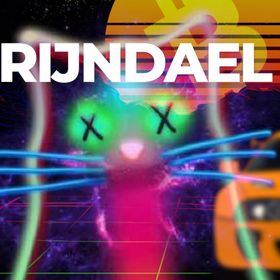
This was also the first time we streamed across Nostr, Twitch, Facebook, and the usual YouTube/X stack. On camera he is a cat on the internet talking about opcodes. Pronounce it "Rhine-doll," silent J. Before that I kept reading it as "Regen dial."
Make Bitcoin Magical (On Purpose)
Taproot Wizards got stuck in the covenant circular firing squad and decided to change the room temperature. "We thought that by bringing more voices into the conversation and by like having the conversation in a slightly different way we could like move the conversation along," Rijndael said. Whether that worked is, in his words, something reasonable people can disagree about. The intent is not obscure: more expressiveness in Bitcoin Script, usually for covenant-shaped things, plus lots of homework on what becomes possible once OP_CAT (or something like it) lands.
I joked that every attempt to improve Bitcoin is also an attack, therefore they are evil. He did not flinch into a press release. Spook accusations and competence are not mutually exclusive, he said, and then leaned into the bit: of course he would deny being a spook, which is exactly what a spook would say. His serious line underneath the joke was incentive design. If Bitcoin's incentives work, it should not matter who is throwing developers at the protocol. If a tiny cabal of three-letter-agency-funded coders can quietly break it, Bitcoin was never going to survive a hard government attack anyway.
rot13maxi, Distributed Systems & BitKey
Before he was rot13maxi on Twitter, Rijndael worked distributed systems, security, and what he calls applied cryptography: not inventing the math, but shipping the math at scale. Large network security, infrastructure automation, resilient state management. Full-time Bitcoin for roughly three or four years by the time we recorded; before that, side-of-desk hobby projects and corporate PR policies that made him tweet under a nym. Rot13 is an encryption gag. The handle is a thesis statement.
The wallet he would name on air was BitKey at Block (Jack Dorsey's company, not Jack soldering boards). I pushed him on the missing screen. He framed the bet as defending a narrow malware class: a compromised wallet app that shows a legitimate address while shipping a different transaction to the device. Clipboard hijacking is commoner, and a screen does not save you if both displays agree on the wrong address.
"Most users don't know you know what they're looking at if you just show them transaction details and say does this look good to you," he said. His mental model puts BitKey between a single-sig phone wallet and a nest of coldcards: more seed-phrase replacement than general-purpose vault. I still wanted the five dollars of screen. He told me to send the feedback to the BitKey team.
Statecoins, Drivechains & Why Hashrate Escrow Ages Poorly
Chat asked about Mercury statechains for Ordinals. Rijndael's take was warm: whole UTXOs off-chain with a service provider, on-chain exit, and it "actually fits the Ordinals model really really well" because you are not constantly joining and splitting. He flagged Mercury Layer's blinded signatures, called the team insanely smart, and ranked it roughly as the best non-Lightning L2 he sees. Companion episode: Nicholas Gregory and Tom Trevethan on MercuryLayer.
Drivechains got less romance. Fiat Jeff wanted BIP 300 as risk-free 100x scaling. Rijndael declined: people do not want hashrate escrow, miners may not want custodian optics, and BIP 300 withdrawals need majority hashrate to pass while ~25% plus one can block forever (two pools already sit there).
"I think Drivechains were a really great idea like 10 years ago," he said, "but I think in 2024 2025 if you have other ways of bridging coins in and out of L1 Bitcoin I think the Market's going to pick other ways." Validity-proof bridges beat six-month hashrate escrow in his ranking. Paul Sztorc still gets respect (and a LayerTwo Labs bit). For Paul's comedy special about every scaling idea except the one he cannot name, see S15 E16.
Accusations, Udi & the Business Model That Cannot Exist
Then the culture war tax. Udi Wertheimer is on the Taproot Wizards team. Half the timeline treats him as the devil for every fat inscription and every BRC-20 mint. Rijndael's complaint is logical, not emotional.
People claim the Wizards raised money to spam BRC-20s for a year, then also claim they are getting rich scamming people with the same spam. "I don't know how those things are both true at the same time," he said. If there is no market, what is the business model for manufacturing twelve months of activity?
The rumor mill named Mossad, China, the Ethereum Foundation, even Craig Wright. He answered in wizard: yes, WEF handler, Mossad office, pupusa fee plot. Then the flip: advocating non-custodial L2s after "destroying" L1 is somehow evil too. The joke is the point. The incentives are the argument.
STARKs, CatVM & the Case Against Perfect-Money Ossification
StarkWare sponsored a beat; I pointed at my Eli Ben-Sasson episode from this season and the pitch that OP_CAT unlocks more cryptographic toys on Bitcoin. Rijndael is a STARK fan for a Bitcoin-native reason: "there's no new cryptographic assumptions Beyond what's already in Bitcoin." SNARKs are succinct and exotic. STARKs lean on hash functions Bitcoin already trusts. Two dreams follow. One: verify a pile of off-chain activity against an on-chain UTXO cheaply. Two: IBD as a UTXO snapshot plus a proof, so a phone can be a fully validating node after downloading a few megabytes. "We could run more nodes in more places which would be great," he said.
CatVM is their illustrated children's book about recursive covenant state machines, Merkle verification, and optimistic challenge-response withdrawals. NFT collection plus kids' book about smart contracts is either peak wizard or peak troll. He reads it to his kid with different character voices, including a booming Ghost of Satoshi.
Against the "Satoshi was a god, never change anything" crowd, he was blunt. Bitcoin has changed and improved. "There's this meme that like we should stop changing Bitcoin and we should scale it in layers," he said. "I think the people who say that don't understand what it takes to try to build new layers on top of Bitcoin." Non-custodial L2s need expressive settlement scripts. There is not enough block space for everyone to own a Lightning channel. If you want more people using Bitcoin non-custodially, L1 needs upgrades. "There's just like no two ways about it." For permissionless bridging without waiting for a soft fork, Robin Linus on BitVM pairs cleanly with this episode.
Lightning as Settlement, Ordinals as Flywheel
Lightning impressed him as engineering and bored him as end-user payments. Liquidity and interactivity make non-custodial phone receive hard (sleeping phones, HTLCs, LSPs holding payments until you wake). "I'm skeptical that end users are going to have you know non-custodial lightning Wallets on their phones all over the place," he said. Institutional settlement, Cashu/eCash mint hops, always-online servers: that is where Lightning shines.
Liquid versus Lightning in ten years? "Probably lightning." Liquid's cold-start flywheel never really caught. Ordinals did, which is partly why he went full-time into that economy: Discord spreadsheet trading, then wallets, marketplaces, then non-custodial DLC lending (Liquidium hat on stream, no affiliation). "They've got enough energy to Kickstart that flywheel," he said. Stacks got a polite shrug and someone else's analogy he half-endorsed: "Stax is kind of like the polygon for Bitcoin."
Why CAT, Not Another CTV Costume Change
Covenants were stuck between CTV, TXHASH, LNHANCE, Tapleaf Update Verify, and infinite Twitter team sports. CAT is almost insultingly simple: concatenate two stack elements. Combined with a Schnorr trick, you can pull transaction fields onto the stack and introspect. Taproot Wizards surveyed builders, looked at activation politics, and bet on CAT: eight lines of code, easy to review, explainable in a song, and "I really want proposal X or if we had cat I could kind of make do with it" from people pushing rival opcodes.
"There's been almost just a a miscommunication between the Bitcoin development community and like the broader Bitcoin Community," he said. Holders see CTV-versus-TXHASH food fights and assume the devs have no idea what they are doing, then feel forced to pick a jersey. Old FUD about covenants being dangerous still sits in the room. Their job, as he framed it, is accessible education so people can decide whether to activate.
I brought up Andrew Poelstra preferring OP_CAT, Liquid already having CAT, and Bitcoin Cash as a mainnet playground for people who claim CAT destroys chains. Rijndael stressed a fact the meme war often loses: the current BIP to activate OP_CAT was written by Ethan Heilman and Armin Sabouri, not by Taproot Wizards. "BIP420" was campaign branding; the formal track became BIP 347.
OP_CAT is live on Bitcoin Inquisition / Signet for anyone who wants to build the apocalypse they keep announcing. "I've heard people throw this claim out that like cat is gonna enable unlimited amounts of like Badness but they they can't come up with one concrete instantiation," he said. Outsourcing judgment to "Udi likes it, therefore evil" is a control surface.
Evaluate the proposal. Lightning developers, StarkWare, BitVM, miners, inscription builders: lots of corners say CAT would be useful even when it is not optimal. Rusty Russell's Great Script Restoration is the bigger umbrella: turn deactivated opcodes back on and make CAT-era scripts less nasty. Multiplication is the teaching example. You can fake it by adding forever. Or you can multiply.
Ocean, Filters & an 80-Line "Purifier"
On Ocean, Knots, and the data-carrier crusade, Rijndael cheers the long-run idea of hasher control over block templates (Stratum V2 and friends) and thinks the filter war is economically backwards. Inscriptions paid over a quarter billion dollars in mining fees in the prior year, by his telling. Force them out of public mempool relay and they go direct to pools, which centralizes mining. "Inscriptions don't actually harm the network," he said, and Knots with datacarriersize=0 still stores the blocks that include them.
His satire was Bitcoin Purifier: an 80-line shell script that rejects blocks containing inscriptions. If the economic majority truly believes those transactions are invalid, run it, fork them off, enjoy clean holy Bitcoin. "Turns out that most people don't actually want to reject those blocks," he said. The script even had a -s start height so you could cosplay a UASF Flag Day. Naming jokes and Deus Vult strings included. The lesson he wanted was consensus reality, not vibes: change the rules by convincing the economic majority, not by yelling "bug" at valid transactions that refuse to disappear.
Casey, Runes & Protocol Simplicity
Casey Rodarmor, in Rijndael's view, is one of the smartest and kindest people he has met, and also someone who absorbed a full year of human emotion aimed at one skull. On Runes versus Counterparty, he stressed simplicity. "One of the big lessons out of runes and inscriptions is that protocol Simplicity matters because that's what lets lots of people build interoperable software," he said.
RGB can be more efficient and still lose ecosystems to complexity. Runes follow UTXOs more cleanly for light wallets, possible L2 lifts, and better dust incentives than BRC-20 message spam. For Casey's own voice, start with S13 E3. Wallets he named without affiliation: Xverse, Leather, OKX, UniSat, Sparrow for coin control, and ord for power-user automation (including Quantum Cats production graphs).
Cat Chain vs Dog Chain
People who want to soft-fork out Taproot and SegWit got the short version. Data embedding predates both (Peter Todd's constructions, OpenTimestamps, Stamps' fake P2WSH image tricks). Kill SegWit and you also gut Lightning density and multiparty pre-sign protocols. Kill Taproot and you throw away Schnorr and Merklized script trees. "If if you actually want to get rid of those things like I don't know why you're you're using coin at this point," he said. Dogecoin still lacks SegWit. "If you don't like the cat chain go to the dog chain." Cats are also why CAT might win a signaling war that more complex covenant opcodes lose: the internet likes cats, and sometimes people just need a banner.
What is next if OP_CAT ships? CatVM-style optimistic bridges that settle to L1 without multisig rugs or pre-sign liquidity hell. North star UX: static address, silent-payment vibes, fast, cheap, private, no channel anxiety. Bitcoin-native assets (Ordinals, Runes, Taproot Assets, RGB) as a bootstrapping path toward the services an all-Bitcoin economy needs. Hiring plug included. Wizard robes at Bitcoin 2024 included. Main Taproot Wizards collection still not fully distributed at recording time; Quantum Cats had already minted.
His filter for whether you are doing Bitcoin right: "if nobody's accusing you of being an attack on bitcoin you're probably not doing Bitcoin right." Taproot Wizards are not vanishing. Keep an eye on the memes. The covenants are the plot.
Listen to Rijndael on Spotify, Apple Podcasts, YouTube, and More
Time stamps:
00:01:53 – Taproot Wizards and Bitcoin Magic
00:03:20 – Memes as Tools for Bitcoin Advancement
00:03:47 – Discussion on Taproot Wizards' Intentions
00:06:38 – Rijndael's Background and Work
00:09:12 – Discussion on BitKey Hardware Wallet
00:20:06 – Statechains and Drivechains
00:26:03 – Layer Two Labs and Paul Sztorc's Message
00:28:16 – Taproot Wizards Funding Accusations
00:31:53 – Cryptography and Scaling
00:33:06 – Stark Proofs and Scalability
00:36:33 – Layer Two Solutions
00:38:51 – Bitcoin's Evolution
00:42:21 – Lightning Network
00:47:39 – Is Stacks a Layer Two?
00:49:41 – Future of Liquid and Lightning
00:50:35 – Lightning Network and Liquid
00:52:13 – Ordinals and Flywheel Effect
00:53:17 – Non-Custodial Lending and Trading
00:57:54 – Covenant Proposals and Bitcoin Upgrades
00:59:32 – CAT Opcode and Bitcoin Development
01:03:25 – OP_CAT Activation and Community Perception
01:09:25 – Ocean Mining and Network Control
01:12:55 – Bitcoin Purifier and Transaction Rejection
01:15:36 – Bitcoin Development and Narrative Control
01:16:19 – Casey and Runes
01:17:19 – Simplicity and Protocol Design
01:20:11 – User-Friendly Implementation of Runes
01:22:34 – Use Cases and Challenges of Ordinals
01:24:26 – Great Script Restoration and Controversy
01:27:21 – Ordinal Inscriptions and Scarcity
01:30:25 – Future Projects and Layer Twos
01:36:55 – Taproot Wizards' Presence and Conference Participation
01:38:04 – Addressing Critics of Taproot and SegWit
01:38:42 – Data Embedding in Bitcoin Transactions
01:41:10 – The Cat Chain vs. Dog Chain
01:43:00 – Setting Up a Live Stream
01:44:25 – Following Taproot Wizards on Twitter
01:45:07 – International Travel and Visa Issues
01:46:20 – "Regen Dial"
01:46:48 – Final Remarks and Invitation to Follow Taproot Wizards
Verify this episode
This is the SHA-256 fingerprint of the MP3 as published here, timestamped in the Bitcoin blockchain with OpenTimestamps. If one byte of the file changes, the fingerprint changes.
- SHA-256
c7d3c49e215fafc157cba8a0feff1597c18a744343df16f647b388b978319472- Proof
- 2024-05-31_s15_e40_rijndael_on_taproot_wizards_bip420.mp3.ots · all episode hashes (proof)
- Status
- Anchored in Bitcoin block 974,312
How to check it yourself
- Download the MP3 and the proof into the same folder.
- Run
sha256sum 2024-05-31_s15_e40_rijndael_on_taproot_wizards_bip420.mp3(on a Mac:shasum -a 256 2024-05-31_s15_e40_rijndael_on_taproot_wizards_bip420.mp3). The result must match the SHA-256 above. - Install the OpenTimestamps client (
pip install opentimestamps-client) and runots verify 2024-05-31_s15_e40_rijndael_on_taproot_wizards_bip420.mp3.ots. It hashes the MP3 again and checks the proof against your own Bitcoin node, then prints the block and the date the file existed by. Without a node,ots info 2024-05-31_s15_e40_rijndael_on_taproot_wizards_bip420.mp3.otsshows the block height to look up in any block explorer.
Related

S15 E17: Andrew Poelstra on Bitcoin Covenants (OP_CAT vs OP_CTV)
As of February 2023, there seems to be a consensus among users that Bitcoin needs covenants. And Andrew Poelstra, as Director of…
S15 E33: David Bailey on Bitcoin Maximalism, Ordinals & the Biggest Stage in Bitcoin
David Bailey on Bitcoin maximalism, Ordinals, OP_CAT vs CTV, high fees, BitVM, Tether and Bitcoin Conference boycotts, plus a…
The Best Quotes from Every Episode of Bitcoin Takeover Podcast! (2019-2026)
The best Bitcoin Takeover quotes from every episode, seasons 1 to 17: Vitalik Buterin, Roger Ver, Phil Zimmermann, Slush and 300+…

Comments
Comments run on my own server. No ads, no trackers.