




Avi Rosten on John Stuart Mill, Getting Into Bitcoin and Meeting David Chaum (S1 E7 Article)

The audio keeps playing while you browse the site.
Read the transcript12,865 words, every line links to the minute it was said
Ask this episode
Most Bitcoin podcasts talk about the Austrian school of economics. Few talk about classical liberal philosophy. Avi Rosten, then managing editor at CryptoGlobe, studied exactly that. He's also a good friend, since we used to work together at CryptoGlobe and went together to the London Blockchain Summit back in June 2018, so I wanted his take on Bitcoin, freedom and the people building it.
It was also his first podcast ever. "I think this is the first podcast I've ever been on. So I hope I didn't sound like a rambling idiot." He didn't. You can find the audio on the episode page.
A Familiar Story
Avi first heard about Bitcoin around 2013 at university, and he wasn't impressed. "Embarrassingly, I thought it was going to probably end in a bit of a disaster. I thought this is some crazy darknet illegal money." He admits, "I kind of bought into the media narrative on it."
At the end of 2016 he almost bought at about $1,000. "I thought, 'No way, it's $1,000 now, there's no way it's going to go up from here.'" That one hurt. "Which I regretted massively, come November 2017."
What finally pulled him in was the 2017 run. Before that, a Netflix documentary about the dark web and "the whole Ross Ulbricht saga" made him a bit more curious, but not enough to commit. In 2017 he bought a little, started reading, and in April 2018 applied to CryptoGlobe as a freelance writer. "Now I'm, you know, fully down the rabbit hole of crypto." His honest summary: "I feel like the less I know, but it's been an enjoyable ride so far."
John Stuart Mill and Liberty
Avi studied political science and then a master's at the University of Bristol. In my intro I called it political philosophy, but he corrected me: it was "actually in philosophy generally," and the course was "quite philosophy of science focused." His favorite philosopher was John Stuart Mill, and "his famous essay On Liberty, one of kind of the founding texts of, I guess, political libertarianism, and that definitely appealed to me."
He doesn't box himself in. "I wouldn't necessarily describe myself as, you know, out and out a libertarian, although I do have very strong sympathies with the libertarian ideology." He finds Bitcoin's potential "to be politically and economically empowering" exciting, but he's wary of extremes. Some of what he sees online "often resembles faith," with ideas like "the markets will solve everything" and "We have no need for governments."
I appreciated that. It's healthy to hear a Bitcoiner say he's suspicious of his own side's slogans.
Who Decides What You Can Pay For?
The topic Avi cared about most was payment platforms deciding who gets paid. He saw Bitcoin as "a potential bastion of free speech." For him it's about principle: "why should the payment processors define what we find palatable?"
That's where Mill comes in, "with the idea of the free competition of ideas." Avi acknowledged that free speech has dangers. But Mill's point is that "the dangers of policing it outweigh the dangers of not policing it." The real question is: "who decides it? Will you decide it? Does the government decide it? Does the company decide it? Is it done by majority?"
His reading: "The point of freedom of speech is that no one decides it." Bitcoin fits that idea, because it doesn't police anything.
Bitcoin Is Just a Tool
Avi worried that Bitcoin's image could push people away. People make a "fallacious argument" that if Bitcoin is used by certain groups, it shares their views. But Bitcoin "isn't even a person." It's "an inanimate thing." So "it's important to educate people that they can use Bitcoin in the way that they want to use it."
Open-Minded Maximalism
Over time Avi moved toward maximalism, "mainly because I just see the number of, you know, ridiculous failed ICOs." But he pushed back on the strongest version. Saying every future alternative must fail is "a bit of a fallacy of, I suppose you'd call it a fallacy of induction."
He admitted his patience was running out, though. "2018 for me was just like reading about so many different things, and it led to a little bit of, I suppose, exhaustion with new ideas." It's tempting to "just go back to Bitcoin and stick with that," but "that's not necessarily an intellectually viable position."
The ICO Hangover
We discussed whether the 2017 and 2018 mania was good or bad for the space. Avi worried about everyone it burned. As for most people he knew outside the space, "now they're just completely switched off because all the altcoins they bought in the latter half of 2017 are now worthless." He saw "collateral damage there even to Bitcoin." They "just view it all as this one negative lump." For many, the whole experience is "I invested $10,000 and it's now worth $800." For every person who bought a scam coin and "ended up at Bitcoin," he feared "there might have been 10" who bought high and "watched it collapse." He called the experience "an incredibly negative one, obviously, and I think that that's a real problem, at least for now."
Bitcoin in the UK
I asked about using Bitcoin in Britain. "In terms of payment and spending, in a word, no. It's really not that common." There was a Bitcoin ATM near him, but "in terms of accepting Bitcoin, I've never come across a shop here."
On regulation, he'd covered the UK's Cryptoassets Taskforce. His CFO described the approach as "cautious but not negative." The regulator split crypto assets into exchange tokens, security tokens and utility tokens, so Bitcoin wasn't treated as money. "They don't view them actually as currencies. They view them as exchange tokens."
There was a bright side, though. The fights over payment platforms showed new audiences "crypto as something more than just" a way to "triple my money." And institutional money, he thought, would still bring "more people on board," and "that's probably a positive, it's a net positive."
Meeting David Chaum
The highlight was his interview with David Chaum. "We met in London. He was in London for a conference, so we met at the end of August on the rooftop of a hotel, which was very cool." "He's been thinking about these problems since before I was born. So it was quite a privilege to talk to him." They talked about the origins of the movement and where today's projects go wrong.
Chaum didn't take a side in the store of value versus medium of exchange debate, but in Avi's view he did "quite strongly indicate" a problem. Crypto assets "are not being used enough, anywhere near as enough as a medium of exchange." Chaum's original vision, with eCash and DigiCash, "was more as a, you know, a means of payment."
Why Crypto Journalism Is Special
Avi made a point every small writer in this space will recognize. "CryptoGlobe, we're a small site. I have no history. No one knows who I am." Yet he could interview people like David Chaum. In traditional finance, he said, "the chances of you speaking to those people are next to none" unless you're a giant outlet. "You don't have to be some massive financial or mainstream outlet in order to gain access to them."
That's exactly how this podcast started too.
Where Is It Going?
Avi stayed humble about the future. "What I'm quite confident of, although I may be wrong, is that Bitcoin has some place in the future of money." Whether it becomes a reserve currency or stays a fringe asset, "I have no idea."
Looking Back
This episode is a nice reminder that Bitcoin has philosophers, not just economists. Avi's question about who decides what we can pay for is still the right one to ask.
You can read the full transcript, visit the episode page, or find more on Avi Rosten's guest page.
Listen to Avi Rosten on Spotify, Apple Podcasts, and More
Time stamps:
- 00:01:44– CryptoGlobe and philosophy
- 00:02:34– First impressions in 2013
- 00:03:07– A dark web documentary
- 00:03:50– Almost buying at $1,000
- 00:04:16– Regret in 2017
- 00:05:00– Down the rabbit hole
- 00:07:37– Political philosophy
- 00:08:23– On Liberty
- 00:09:01– Not out and out a libertarian
- 00:09:20– Faith without reason
- 00:12:05– Payment platforms and speech
- 00:19:08– Who defines what's palatable
- 00:20:40– The free competition of ideas
- 00:21:18– The dangers of policing
- 00:21:45– No one decides
- 00:42:28– A fallacious argument
- 00:43:05– An inanimate thing
- 00:49:00– Moving toward maximalism
- 00:49:43– A fallacy of induction
- 00:50:28– Exhaustion with new ideas
- 00:51:44– Collateral damage
- 00:52:23– One negative lump
- 00:56:43– One in ten
- 00:57:51– $10,000 to $800
- 01:00:39– More than speculation
- 01:01:23– A net positive
- 01:01:52– The UK Cryptoassets Taskforce
- 01:04:04– Spending bitcoin in the UK
- 01:07:36– Exchange tokens, not currencies
- 01:10:33– Some place in the future of money
- 01:12:33– Meeting David Chaum
- 01:13:05– A means of payment
- 01:14:29– A rooftop in London
- 01:18:35– Access in a young industry
- 01:19:10– No massive outlet needed
- 01:20:23– A first podcast
Verify this episode
This is the SHA-256 fingerprint of the MP3 as published here, timestamped in the Bitcoin blockchain with OpenTimestamps. If one byte of the file changes, the fingerprint changes.
- SHA-256
b2dcd2fdbb29f74fa1c820b74b867795ceaf046531ef159b14d6a1a63ae4f8e4- Proof
- 2019-02-04_avi_rosten_bitcoin_takeover_podcast_.mp3.ots · all episode hashes (proof)
- Status
- Anchored in Bitcoin block 974,312
- Timestamped
- After release. The episode came out on 6 Feb 2019, but this proof was made on 3 Nov 2026 and anchored in block 974,312, so it proves this exact file existed by 3 Nov 2026, not on the release date.
How to check it yourself
- Download the MP3 and the proof into the same folder.
- Run
sha256sum 2019-02-04_avi_rosten_bitcoin_takeover_podcast_.mp3(on a Mac:shasum -a 256 2019-02-04_avi_rosten_bitcoin_takeover_podcast_.mp3). The result must match the SHA-256 above. - Install the OpenTimestamps client (
pip install opentimestamps-client) and runots verify 2019-02-04_avi_rosten_bitcoin_takeover_podcast_.mp3.ots. It hashes the MP3 again and checks the proof against your own Bitcoin node, then prints the block and the date the file existed by. Without a node,ots info 2019-02-04_avi_rosten_bitcoin_takeover_podcast_.mp3.otsshows the block height to look up in any block explorer.
Related

S1 E4 Remastered: Omar Faridi on Bitcoin in Pakistan, Brain Drain & the Case for Moderate Thinking
In January 2019, I was still an editor at Crypto Insider. Working a fixed salary and editing other people’s articles while…
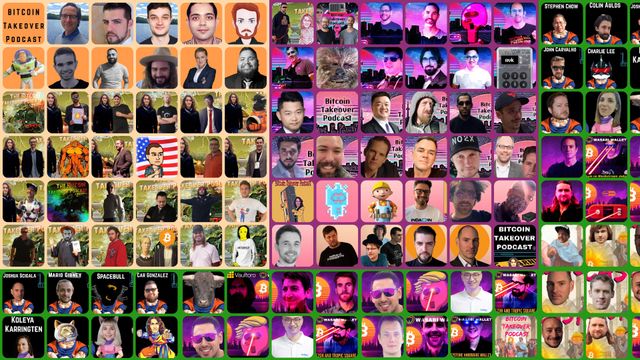
The First 109 Episodes of the Bitcoin Takeover Podcast
Much like Satoshi Nakamoto’s decentralized money system, the Bitcoin Takeover Podcast was launched in times of turmoil and…
Colin Harper on Bitcoin Mining, AI, the Epstein Emails and Journalism (S17 E7 Full Article)
Blockspace Media's Colin Harper returns to explain why big US Bitcoin miners are pivoting to AI, what hash price at an all-time…

Comments
Comments run on my own server. No trackers, no tracking cookies.