




S15 E41: F/Dev (1440000bytes) on Joinstr, CoinJoin & Bitcoin Privacy
The audio keeps playing while you browse the site.
Ask the Archive
Draft article, waiting for Vlad's review. It is not indexed by search engines yet.
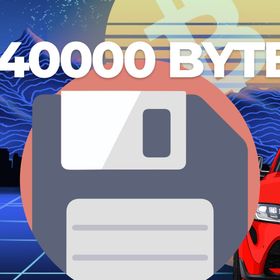
F/Dev goes by 1440000bytes on Twitter and Nostr, which is the capacity of a classic floppy disk, so of course half the timeline just calls him Floppy. He is an open source privacy builder best known for Joinstr: a CoinJoin protocol that coordinates over Nostr relays and ships as an Electrum plugin instead of asking you to babysit yet another coordinator empire.
I invited him live because the privacy shelf had just lost another corporate shelf peg. zkSNACKs had shut down Wasabi's main coordinator. Samourai's company layer was already gone. Floppy had spent two years on a design that treats relays as bulletin boards, not bosses, and he had just taken a job at LayerTwo Labs to poke Paul's Drivechain toys, including the Zcash-flavored zside. CoinJoin without a throne. Soft forks without a four-year liturgy. Privacy as a toolkit, not a religion. That was the tape.
Joinstr: CoinJoin Without a Coordinator Throne
"I've been working on this project called Joinstr since two years," he told me. The early clients needed a full node and almost nobody wanted to babysit them. JoinMarket had once shipped an Electrum plugin around 2015 and then abandoned it, so Floppy rebuilt that path: install a plugin, talk to peers, try the protocol without cloning Bitcoin Core first. "It's almost completed," he said at recording time. "I have a few things to fix and then it can be used on mainnet."
Electrum will not ship Joinstr as a default plugin. He was clear about that. Founders and contributors helped him when he got stuck, and they do not object to a privacy plugin existing. Default status is another story after the Samourai shock. Users can still install it, which is how Electrum has always treated optional weirdness.
The protocol itself is the point. "It's completely different from WabiSabi and Whirlpool because it's not using a centralized coordinator," Floppy said. Clients do peer-to-peer CoinJoin. Communication rides Nostr relays. You need a common relay (or a small set of them) between the people in the round. Joinstr is a protocol, not a brand moat: anyone can build another client that speaks the same messages and shares the same liquidity.
Versus JoinMarket, the market metaphor flips. JoinMarket has makers and takers. In Joinstr, a user creates a pool (or joins one), pools show up like orders in an order book, peers share and sign PSBTs, then someone broadcasts. Denomination and peer count are not Samourai-style fixed menus. "There's nothing fixed here," he said. "Everything is decided by the people who would be running these clients."
Liquidity on mainnet was still aspirational when we talked. Developers had tried it on signet. Super Testnet reviewed code and later built something adjacent. Users were excited and blocked by unfinished Electrum plugin edges. For the older decentralized CoinJoin lineage this sits next to, my chat with Lord Kristaps on JoinMarket still holds up as the maker-taker companion piece.
After zkSNACKs: Many Coordinators Still Smell Like One Target
This was the first episode I recorded after Wasabi's zkSNACKs coordinator died. The client could point at other coordinators. Ginger was already bubbling as a fork effort. Floppy's forecast was cold: you still cannot trust whoever runs the box, liquidity fragments when the main hub dies, and even a hundred coordinators across jurisdictions remain trackable if the volume is real.
"The Nostr relays do not really coordinate the CoinJoin rounds," he said. "They do not have any authority of banning any users or banning any UTXOs. They do not control the CoinJoin rounds. They are only used for reading and writing information that the clients can use." Relays are dumb pipes. Coordinators are interesting targets. "In the long term only things like JoinMarket or Joinstr make sense," he added, while still leaving room for people to experiment with the messier middle.
LayerTwo Labs, zside & Counting to 13,000
Floppy joined LayerTwo Labs after Twitter sparring with Paul Sztorc and a job hunt that lined up with Drivechain timing. His wager is blunt. If covenant proposals already let you fake something Drivechain-shaped, maybe try activating the real BIP 300/301 path first and learn from live scaling before soft-forking every covenant dream. "I've been experimenting with different tools they are working on," he said. He had already deposited into the Zcash sidechain that day and planned to break things for a living.
The only big Drivechain problem he sees is perception. Miners voting on withdrawals sounds scary until you remember what 51% can already do. "We just have to learn to count to 13,000," as the LayerTwo meme goes. Paul's on-air ad roasted Lightning vaporware and Fedimint friends-and-family rug potential with the usual Sztorc sweetness. If you want the longer Drivechain philosophy tape, start with S9 E4 or the season's own S15 E16 comedy special where Paul cannot say Drivechains.
Lightning Opium & the eCash Detour
On Lightning he was less polite than the roadmap influencers. Liquidity management, channel UX, and fee spikes when the chain is busy: "it's a complete mess." Some people accept the problems and try to fix them. Others, in his words, are "completely delusional" and will not admit the bugs exist. Custodial Lightning wallets and eCash mints arriving as the "easy" path looked to him like an admission of failure, not a victory lap. If non-custodial Lightning had delivered the privacy and scale story, you would not need mint gardens.
Cashu and Fedimint got the harder edge. Mints can exit-scam. Mints can issue more claims than reserves. Fancy cryptography does not erase bank-shaped failure modes. "We should be increasing the number of people who using self custodial wallets," he said. "We shouldn't be trying to push them to use custodial wallets." Investor money and open source grants pouring into mint stacks, plus a fanbase that treats eCash as the soft-fork substitute, is the cultural failure mode he cares about. Experiments are fine. Declaring the experiment the scaling endgame is not.
He even floated that dark markets might be a natural eCash niche because those users already accept custodial risk. That line did not win him friends. His closing on the topic stayed free-market and firm: people can build and use what they want, but this is not the long-term scaling or privacy answer Bitcoin needs.
Soft Forks Without a Liturgical Calendar
Floppy is not an ossification monk. He likes OP_CTV for being simple and hard to turn into circus rides. OP_CAT alone does not look like a theft gadget to him, but OP_CAT plus friends (OP_CHECKSIGFROMSTACK and company) can encode ugly policy toys, including on-chain AOPP-shaped withdrawal gates where claiming funds needs a certified key. He has been researching Drivechain constructions with OP_CAT and OP_CSFS, including on Bitcoin Cash where CAT already lives, partly as a rhetorical bomb: if covenants can already approximate Drivechains, why not do BIP 300/301 cleanly?
Asked for a soft-fork schedule, he rejected the four-year liturgy. "I don't think the time matters," he said. Activate when a use case is ready, reviewed, and backed by enough community and economic nodes. His short list of what makes sense soon: consensus cleanup / bug-fix soft forks (the BlueMatt-era cleanup family), OP_CTV, and BIP 300/301. OP_CAT and friends can wait unless someone proves the package. Quantum resistance via CAT tricks is "cool" and "not the priority." For the covenant food fight from Andrew Poelstra's desk, see OP_CAT vs OP_CTV.
His hard line underneath the opcode ranking: he would rather accept almost any soft fork than watch custodial wallets become Bitcoin's official scaling story.
Privacy Is a Toolkit, Not a Jersey
When I admitted I had trapped him into CoinJoin tribalism after he DMed asking for a broader privacy talk, he redirected cleanly. Mercury Layer statechains are underrated and underfunded relative to the hype cycles. PayJoin work from the Bangkok residency crowd matters. CoinSwap is not "better CoinJoin"; it is a different tradeoff stack. "You cannot replace CoinJoin with CoinSwap," he said. Research the tradeoffs, combine tools, stop marrying one implementation.
His concrete chain: CoinJoin a UTXO, then spend with Mercury or PayJoin; dump toxic change into a Lightning channel or, if it is dust-tier, even mint eCash. Until soft forks give us stronger primitives, "use them all" and "use the right tool for the right purpose." Mercury's own season tape is Nicholas Gregory and Tom Trevethan on MercuryLayer.
Amount confidentiality remains the hard hole. CoinJoins buy sender deniability. New addresses buy optional receiver privacy. Tor and VPNs buy network fog. Transparent amounts still leak wealth. He had not deep-dived MimbleWimble research enough to preach it, but he agreed the culture has to want fungibility or the cryptography will sit on a shelf.
Your Node Is a Privacy Machine, Not a Ballot
After a brief Wi-Fi dropout (live stream tax), Floppy landed the node rant I wish more educators would steal. Privacy is not only CoinJoin theater. Run your own full node. Do not spray UTXOs across social media. Samourai users leaning on someone else's node were doing privacy cosplay. "You just need to download Bitcoin Core and sync it for a few days," he said. "That's it."
Nodes are not democratic voting machines. They verify your transactions and keep your addresses off other people's servers. Economic weight can matter socially for soft forks, but that is social layer, not a built-in ballot inside bitcoind. Half the network's publicly counted nodes vanishing tomorrow would not kill Bitcoin. Your one or two nodes matter for you. The 2017 UASF user-agent theater politicized the meme; the underlying tool was always personal sovereignty hardware.
Culture, Cancelation & Why Disagreeing Still Works
We spent the back half on the social disease: influencers policing speech, funding pile-ons, and the weird gap between "financial freedom" branding and "do not interview that heretic" practice. Floppy defended my Roger Ver conversation on journalist grounds. Podcasters should talk to people they disagree with. He also described a funding thread where someone asked for privacy project donations, Joinstr got tagged, and a pile of replies urged the donor not to fund him over Ordinals and filter opinions. "I've never tried to stop funding for anyone," he said, "even if I do not agree with them."
He has contributed to Bitcoin Core, still reviews pull requests, and has watched the internal politics. He blocked an influential funder who tried to police his eCash criticism rather than argue it. "I'm free to say what I feel," he said. Pieter Wuille showed up in his telling as the anti-example of cancel culture: disagree with Ordinals, still nak filter PRs that pretend filters kill demand. Disagreement without exile.
Drivechain discourse, he argued, lives on extremes: "Liquid and Rootstock failed, so sidechains never work" versus "Drivechains will summon miner-extracted value hell." He planned to answer Shinobi-style critiques in writing. Most people wear "don't trust, verify" merch and then outsource opinions to magazine headlines. His ask was smaller: listen to builders, form your own model, stop treating loud non-contributors as high priests.
Floppy Disks, Nostr & the Long CoinJoin Game
Near the two-hour mark he thanked me for giving a non-influencer a mic after other shows refused. "Nobody else was willing to give me the opportunity to express myself on a podcast," he said. "I had already reached out to many other people but they refused." Follow him as 1440000bytes on Twitter and Nostr. Near-term work: finish Joinstr for real mainnet use, keep building and testing at LayerTwo Labs, publish Drivechain rebuttals. I told him the filter I actually use for guests is proof of work, not follower count. Electrum plugin grind, Core review hours, blunt privacy takes: that is enough.
Joinstr will not magically refill the anonymity sets Wasabi and Samourai left behind. It might be one of the few designs left that does not ask you to trust a charismatic coordinator and hope the jurisdiction stays polite. Floppy's bet is that relays, pools, and boring peer-to-peer PSBT sharing beat another corporate CoinJoin sequel. If he is right, the floppy disk emoji ages into a protocol. If he is wrong, at least the failure mode is code you can fork, not a CEO you cannot.
Listen to F/Dev (1440000bytes) on Spotify, Apple Podcasts, YouTube, and More
Time stamps:
00:01:31 – Mr. Floppy's Work on CoinJoin
00:04:02 – Differences in CoinJoin Protocols
00:06:35 – User Reception and Usage of CoinJoin
00:11:45 – Challenges and Social Dynamics in Bitcoin Community
00:18:22 – Mr. Floppy's Employment at LayerTwo Labs
00:21:23 – LayerTwo Labs and Lightning Network Critique
00:22:06 – State of Lightning Network
00:29:26 – Client Protections
00:30:41 – Custodial Wallet Risks
00:32:07 – Custodial Wallet Misconceptions
00:33:42 – CoinJoin and Scaling
00:35:13 – Privacy and Custody
00:37:44 – Zero Knowledge Proofs
00:41:44 – Soft Forks and Bitcoin Upgrades
00:44:26 – Bitcoin Culture and Development
00:54:29 – Bitcoin Upgrades and Soft Forks
00:57:57 – Soft Fork Preferences
01:00:09 – Quantum Resistance and Covenants
01:02:20 – Custodial Wallets and Adoption
01:04:57 – Bitcoin Privacy Tools
01:08:04 – Confidentiality and Fungibility
01:15:08 – Running a Full Node
01:18:21 – Node Politicization
01:21:42 – Bitcoin's Evolution and Narrative
01:24:01 – Custodial and Non-Custodial Solutions
01:26:02 – Bitcoin Cash and Bitcoin Community
01:28:50 – Bitcoin Community Dynamics
01:33:57 – Freedom of Expression
01:34:18 – Litecoin and HODL Culture
01:40:58 – Centralization in Bitcoin Development
01:43:51 – Scaling with Drivechains
01:47:51 – Influencers and Opinions
01:49:28 – Future Work and Contact Information
Verify this episode
This is the SHA-256 fingerprint of the MP3 as published here, timestamped in the Bitcoin blockchain with OpenTimestamps. If one byte of the file changes, the fingerprint changes.
- SHA-256
0193adb2e62a1c7f93981a37dd07019f8fba4c20cd5e71dd70c6d540e78c63c6- Proof
- 2024-06-05_s15_e41_fdev_1440000_bytes_on_joinstr_bitcoin_privacy.mp3.ots · all episode hashes (proof)
- Status
- Anchored in Bitcoin block 974,312
How to check it yourself
- Download the MP3 and the proof into the same folder.
- Run
sha256sum 2024-06-05_s15_e41_fdev_1440000_bytes_on_joinstr_bitcoin_privacy.mp3(on a Mac:shasum -a 256 2024-06-05_s15_e41_fdev_1440000_bytes_on_joinstr_bitcoin_privacy.mp3). The result must match the SHA-256 above. - Install the OpenTimestamps client (
pip install opentimestamps-client) and runots verify 2024-06-05_s15_e41_fdev_1440000_bytes_on_joinstr_bitcoin_privacy.mp3.ots. It hashes the MP3 again and checks the proof against your own Bitcoin node, then prints the block and the date the file existed by. Without a node,ots info 2024-06-05_s15_e41_fdev_1440000_bytes_on_joinstr_bitcoin_privacy.mp3.otsshows the block height to look up in any block explorer.
Related

S15 E54: Kruw on Running a Wasabi Coordinator, Blockchain Analysis & the Myths of Bitcoin Privacy
Kruw runs Wasabi's biggest coinjoin coordinator for zero fees. He explains how blockchain analysis works, Samourai's double…

S15 E42: Super Testnet & Shinobi on Bitcoin Projects That Suck
Super Testnet & Shinobi roast Taproot marketing, LND incentives, Wasabi CoinJoin gaps, Nostr key management, SeedSigner…
S17 E19: Amaury Séchet on Forking Bitcoin Twice, Quantum FUD & Scars from the Block Size Wars
Two years after our first interview, I decided to invite Amaury Séchet(@deadalnix) to find out what the Greg Maxwell of big…

Comments
Comments run on my own server. No ads, no trackers.