




{ideal} on BitVM Optimizations With Robin Linus, Liam Eagen and Ying Tong (S17 E4 Full Article)
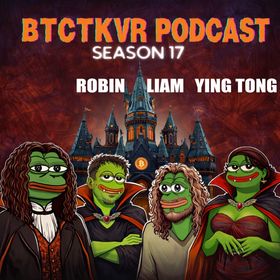
The audio keeps playing while you browse the site.
Read the transcript16,905 words, every line links to the minute it was said
Ask this episode
On January 19th, 2026, a new group called {ideal} announced Argo, a garbling scheme that makes BitVM bridges dramatically more efficient. The founders are Robin Linus, who invented BitVM, cryptographer Liam Eagen, and ZK engineer Ying Tong. I asked for an interview right away, and less than a week later all three were on the show.
Robin and Liam have been here before: Robin in S15 E13 and S15 E58, where Liam joined him to discuss Shielded CSV, and Liam solo in S16 E2. Ying Tong was the newcomer, and she fit right in. The original show notes have the short version.
Why the Brackets?
Robin explained the name. "Naming things is hard." Inventing the scheme was the easy part for Liam, "but then finding a name and finding a domain was pretty hard." In ring theory, "there is a thing called ideal." Then, "we thought maybe it's a bit too pretentious. So we added brackets to it."
What Argo Does
Liam left Alpen to work on it with Ying Tong. "It is significantly better than the state of the art, as you said many thousand times better. And we think that this enables sort of better bridges." The plan: "We're working on shipping Argo and then building a bridge around it."
Why was there so much room to improve? Garbling a SNARK verifier "is kind of a unique problem that not a lot of other people have thought deeply about." And "by exploiting kind of the specific structure of the SNARK verifier, which is quite algebraic, you can build like a better garbling scheme."
The difference is huge in practice. With the Yao-style approach, Liam said, the tables are "I think like 40 to 50 gigabytes," and you need several of them per operator. Robin summed up the history: BitVM 3 cut on-chain cost "by a factor of 1000 or something," and Argo cuts "the off-chain cost by 1,000x or something." His hope is that "we hopefully won't see like that breaking changes anymore."
Ying Tong addressed the audit worry. "It's really small. Like, it's 4000 lines of code," and it uses "very popular and very widely audited cryptographic libraries."
Why It Matters
Ying Tong made the key point. "The efficiency is not purely and simply a performance gain. It passes this threshold where it actually enables a different kind of bridge." It allows "orders of magnitude more operators to participate," and "permissionless challenging. So this allows every user to contribute to the security of the protocol."
Robin explained the trick simply. A user posts a proof that a peg-out is valid. With garbled circuits, "you can check that proof off-chain. And if it's incorrect, then you learn a secret. And that secret can be used to slash the person and stop the peg-out on-chain. So it's essentially just a hash lock mechanism."
Not Bringing Ethereum to Bitcoin
BitVM worries some Bitcoiners. Robin was clear about their focus. "We are not building BitVM for the sake of BitVM. And we are not building it to like, bring Ethereum to Bitcoin. Our focus is definitely to make Bitcoin more scalable and more private and more cypherpunk in the end." Privacy protocols are "pretty aligned with like the original cypherpunk ethos."
The Right Way: SNARKs on Bitcoin
All three still want a soft fork. Liam: "I personally would like to see the ability to verify SNARKs on Bitcoin for many reasons, but one of them is just to like kind of build the bridge the right way." Ying Tong called BitVM "a trust-reduced design because there's a trusted set of signers," so "it is in no way equivalent to just directly verifying SNARKs on Bitcoin." Liam added that permissioned operators "can be like targeted."
What would they add? Liam prefers "opcodes for field arithmetic so that people can write SNARK verifiers," without enshrining one verifier. Robin's ideal is "to enable Simplicity with a bunch of jets for field arithmetic," the Blockstream work "activated on Liquid last year." It would need time to "stew for a while until it can be considered safe for mainnet activation."
Liam warned against locking in one design because "what STARKs are has changed over time." A bonus: "STARKs are post-quantum."
Shielded CSV and Privacy
Liam's preferred route to privacy is Shielded CSV. "The not putting proofs on-chain, I think is very compelling from like a scalability and block space efficiency point of view." Robin explained the idea: "use the blockchain for what the blockchain is good for, which is an immutable ordering of commitments to prevent double spending." Everything else is checked by the recipient. It costs "50 bytes in particular" per transaction, and you get "pretty much best in class privacy."
Ying Tong added the catch: "this is only going to work if there's enough adoption, meaning there's a large enough anonymity set."
She also explained why privacy protects miners. "The only true defense against this is for the miners to not be able to discriminate," citing Peter Van Valkenburgh's idea of "dumb pipes."
Institutions Want Privacy Too
Ying Tong had a point most Bitcoiners miss. "I think institutions are one of the people who want privacy the most and whom privacy would benefit the most."
Liam compared privacy to self-custody. "I think it's kind of a funny historical accident that self-custody exists at all." People "should be able to self-custody their funds and spend them without revealing all of their information to third parties." Ying Tong cited Matthew Green's talk "The Coming Forest Fire": every piece of data collected is timber waiting for a spark.
On Zcash, Liam corrected an old belief: "Zcash does not use SNARKs with the trusted setup in their most recent versions of the protocol."
Quantum and UTXO Spam
Liam was humble about quantum timelines. "I'm not a quantum computing expert," but he'd use "post-quantum and pre-quantum signatures until a quantum computer actually exists," since some new schemes were broken. Robin was more skeptical, saying there's "a huge gap between like the hype and the actual substance."
The Vision
Ying Tong: "I think the culture wars are not interesting and are distracting. And really what it's about is the ideals of privacy, of decentralization."
Robin: "Making Bitcoin more useful as money, I think that's the vision." It needs "better scalability, better privacy and better usability."
Ying Tong: "I think the great strength of Bitcoin is in its consensus and in the security that these rollups can derive from it."
Learning ZK
For anyone wanting to learn, Robin's reassurance: "You don't need to understand how a SNARK actually works to be able to use it." Liam recommended the ZK podcast and tutorials, including one Ying Tong wrote about PLONK. Ying Tong learns from hands-on toys: RISC Zero "actually built a ZK-STARK in a Google spreadsheet."
Her goal is for all of this to disappear for users. "Do you think about HTTPS, for example? Do you think about the TLS handshake? No. So hopefully it becomes invisible and secure."
What Makes This Episode Worth Listening To
I admitted on air that this conversation restored some of my bullishness. Three people who could work anywhere are spending their time on privacy and scaling for Bitcoin. If you want to understand where BitVM is heading, start here.
You can read the full transcript, the original show notes, or visit the guest pages for Robin Linus, Liam Eagen and Ying Tong.
Listen to Robin Linus, Liam Eagen and Ying Tong on Spotify, Apple Podcasts, and More
Time stamps:
- 00:02:04– Argo and leaving Alpen
- 00:03:00– Why the brackets
- 00:07:03– A unique problem
- 00:07:47– Exploiting the SNARK structure
- 00:09:22– 4000 lines of code
- 00:10:30– 40 to 50 gigabyte tables
- 00:12:31– From BitVM 1 to Argo
- 00:14:21– Bridges to other layers
- 00:18:34– Not bringing Ethereum to Bitcoin
- 00:20:38– Verify SNARKs on Bitcoin
- 00:21:05– Trust-reduced design
- 00:22:44– Field arithmetic opcodes
- 00:24:50– Simplicity with jets
- 00:38:34– Dumb pipes
- 00:41:00– Shielded CSV
- 00:41:47– Anonymity sets
- 00:42:43– Use the blockchain for ordering
- 00:46:30– No more trusted setup
- 00:53:28– Institutions want privacy
- 00:54:01– Self-custody is an accident
- 00:57:03– The Coming Forest Fire
- 01:04:56– Quantum hype
- 01:11:00– Pre- and post-quantum signatures
- 01:18:40– UTXO expiry
- 01:31:44– Culture wars are distracting
- 01:34:33– A hash lock mechanism
- 01:35:29– A different kind of bridge
- 01:40:43– Bitcoin as money
- 01:41:26– Rollups and consensus
- 01:43:15– STARKs are post-quantum
- 01:46:55– The ZK podcast and PLONK
- 01:47:53– You don't need to understand SNARKs
- 01:48:26– A STARK in a spreadsheet
- 01:49:05– Invisible like HTTPS
Verify this episode
This is the SHA-256 fingerprint of the MP3 as published here, timestamped in the Bitcoin blockchain with OpenTimestamps. If one byte of the file changes, the fingerprint changes.
- SHA-256
1fdf60c98b350d3e42ff5882f1cb98b93b36393964af7ad6d24a611ad2296a7f- Proof
- 2026-01-24_s17_e4_ideal_bitvm_optimizations_robin_linus_liam_eagen_ying_tong_.mp3.ots · all episode hashes (proof)
- Status
- Anchored in Bitcoin block 974,312
- Timestamped
- After release. The episode came out on 24 Jan 2026, but this proof was made on 3 Nov 2026 and anchored in block 974,312, so it proves this exact file existed by 3 Nov 2026, not on the release date.
How to check it yourself
- Download the MP3 and the proof into the same folder.
- Run
sha256sum 2026-01-24_s17_e4_ideal_bitvm_optimizations_robin_linus_liam_eagen_ying_tong_.mp3(on a Mac:shasum -a 256 2026-01-24_s17_e4_ideal_bitvm_optimizations_robin_linus_liam_eagen_ying_tong_.mp3). The result must match the SHA-256 above. - Install the OpenTimestamps client (
pip install opentimestamps-client) and runots verify 2026-01-24_s17_e4_ideal_bitvm_optimizations_robin_linus_liam_eagen_ying_tong_.mp3.ots. It hashes the MP3 again and checks the proof against your own Bitcoin node, then prints the block and the date the file existed by. Without a node,ots info 2026-01-24_s17_e4_ideal_bitvm_optimizations_robin_linus_liam_eagen_ying_tong_.mp3.otsshows the block height to look up in any block explorer.
Related
S17 E4: {ideal} on BitVM Optimizations (Robin Linus, Liam Eagen, Ying Tong Lai)
On January 19th 2026, the Bitcoin development world was taken by storm: Ideal Group, aka {ideal}, launched Argo with a 2000x…
S17 E13: Charlie Spears on Blockspace Media, the Purity Spiral & the Case for Classical Maximalism
Editor’s note: this conversation was streamed live in mid-March 2026, a week after the US switched to daylight saving time (which…
S15 E58: Liam Eagen, Robin Linus & Jonas Nick on Shielded CSV, Private Client-Side Validation & the Future of Bitcoin Privacy
Liam Eagen, Robin Linus and Jonas Nick explain Shielded CSV: private client-side validation with ZK proofs, BitVM bridges…

Comments
Comments run on my own server. No trackers, no tracking cookies.