




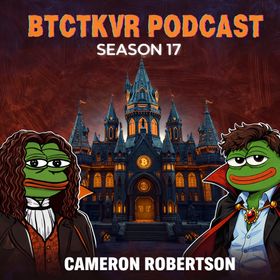
S17 E9: Cameron Robertson on Burner & Bitcoin in 2010
The audio keeps playing while you browse the site.
Read the transcript20,396 words, every line links to the minute it was said
Ask this episode
Cameron Robertson first read about Bitcoin in 2009 on Slashdot: a news website for nerds and hackers. However, it wasn’t until 2010 that he started mining and getting involved more actively in the project. This puts Cameron in a very unique position, as he remembers every year in Bitcoin’s existence and he lived the entire project’s existence.
Needless to say, it was an honor for me to interview the Burner CEO on February 18th 2026 — the first day of ETH Denver. We sat in a quieter and better lit corner of the otherwise enormous hallway of the Westin Denver Downtown. And what started out as a slightly awkward conversation between two people who just met for the first time (thanks to the graciousness of S17 E2 guest Tyler Spalding) turned out to become a very productive debate about the history of bitcoin as cash – both digital and as a bearer asset.
As a product, the Burner card comes from a long lineage of projects that allowed people to use BTC as physical cash. From Mike Caldwell’s Casascius coins and all the way to Sergio Demian Lerner’s BitBanknotes concept, there’s quite a lot of history in trying to bring the digital asset into the physical world. Cameron’s Kong Cash is also part of this tradition, and it’s been interesting to learn more about it.
What Burner does differently is to borrow the smart chip technology from the bank cards that people have become accustomed to tap, and use it in conjunction with a progressive web app (PWA) which anyone can use from their phone’s browser. Payments can be made with Burner cards by only tapping on the NFC terminal, but the details of the transaction will be confirmed from the mobile device. It’s the perfect marriage between a well-known technology and something new enough to make millions of people feel challenged.
How is Burner different from hardware wallets like Trezor and Ledger? First of all, there are no apps and updates involved. Users tap the card to the back of their phones to get a notification from the NFC port. Once they open the page in their preferred internet browser, they have all the features that they need. All the code is open source, so the trust is minimized and the software can outlive the company.
Also, the Burner Terminal is set to become the easiest way to make payments. The kind of inexpensive device that merchants and restaurants can keep behind the counter to accept instant sovereign payments.
Burner is also incredibly affordable, costing only $9 per card. This makes it ideal for gifting bitcoin to somebody who finds the technology intimidating or too complex to grasp. Towards the end of the interview, Cameron was also generous enough to agree to offer a 25% discount to purchases that use promo code ”BTCTKVR”. Consider it a gift for listening to the Bitcoin Takeover Podcast.
Cameron Robertson also tells some heartwarming stories about the early days of Bitcoin and what it was like to buy coffee with it in San Francisco, or that one moment in his life when he wanted to purchase a beat-up Porsche for 2 BTC in 2013. Today, 2 BTC will buy you a pretty nice Porsche… or better yet, a Supra!
This episode is sponsored by LayerTwo Labs, NoOnes.com, Bitcoin.com News, Sideshift.ai, Braiins HashPower, and Unstoppable Wallet!
Listen to Cameron Robertson on YouTube, Spotify, Apple Podcasts & More!
Time stamps:
- 00:01:15Introducing Cameron Robertson
- 00:02:45Cameron’s Bitcoin Origin Story
- 00:03:40Early GPU Mining & Startup Life
- 00:04:46Meeting with Brian Armstrong of Coinbase & Smart Locks
- 00:06:10Evolution of the Crypto Ecosystem
- 00:07:20Building Self-Custody Tools
- 00:08:30Kong Cash: Physical Crypto Notes
- 00:10:25Community Reactions to Physical Crypto
- 00:11:17NFTs, Halos, and Physical Authentication
- 00:12:30Offline Cash: Improved Bitcoin Notes
- 00:13:30Denominations, Sats, and Psychological Value
- 00:15:30Challenges of Issuing Physical Bitcoin
- 00:16:22From Cash Notes to Burner Card
- 00:17:30Web-Based Wallets & App Store Challenges
- 00:18:48Bitcoin Banknotes & Physical Representations
- 00:21:01Casascius, Legal Precedents & Coinage Laws
- 00:24:28Mining, Spending, and Store of Value
- 00:28:22Early Bitcoin Community & Mining Stories
- 00:30:02Bitcoin as Money vs. Store of Value
- 00:32:07Unit of Account Challenges
- 00:37:31Development Culture: Then vs. Now
- 00:39:03Silicon Valley, Meetups, and Early Builders
- 00:40:58Money Changes Everything: 2013–2017
- 00:46:57Bear Markets, Building, and Lightning
- 00:50:23Future Risks: Mining, Quantum, and Hard Forks
- 00:54:44Quantum Resistance: Migration and Hardware
- 00:56:52Quantum Attacks: Practical Risks and Mitigations
- 01:03:20Consensus, Upgrades, and Developer Culture
- 01:05:41Ethereum vs. Bitcoin: Governance and Upgrades
- 01:14:57Stablecoins, Sidechains, and Payments
- 01:18:03Burner Card Demo & Security Model
- 01:22:36Technical Details: Secure Element & Open APIs
- 01:25:49Third-Party Wallets & Business Model
- 01:29:31Supported Coins & Expansion Plans
- 01:32:44Naming & Philosophy Behind Burner
- 01:34:38Cameron’s Non-Shitcoin Picks & Privacy Coins
- 01:40:08Privacy vs. Scaling: ZK Tech & Future Hopes
- 01:44:31ZK Apps & Privacy Onramps
- 01:47:2416-Year Outlook: Bitcoin & Crypto’s Future
- 01:53:29No Price Predictions, Just Tech
- 01:53:37Promo Code BTCTKVR & Closing Thoughts
Verify this episode
This is the SHA-256 fingerprint of the MP3 as published here, timestamped in the Bitcoin blockchain with OpenTimestamps. If one byte of the file changes, the fingerprint changes.
- SHA-256
f078d622fd7fbafe261d2a523de15011b3c37cd83e13c51bee2dcd0251bbcff0- Proof
- 2026-02-27_s17_e9_cameron_robertson_on_burner_bitcoin_in_2010-final.mp3.ots · all episode hashes (proof)
- Status
- Anchored in Bitcoin block 974,312
How to check it yourself
- Download the MP3 and the proof into the same folder.
- Run
sha256sum 2026-02-27_s17_e9_cameron_robertson_on_burner_bitcoin_in_2010-final.mp3(on a Mac:shasum -a 256 2026-02-27_s17_e9_cameron_robertson_on_burner_bitcoin_in_2010-final.mp3). The result must match the SHA-256 above. - Install the OpenTimestamps client (
pip install opentimestamps-client) and runots verify 2026-02-27_s17_e9_cameron_robertson_on_burner_bitcoin_in_2010-final.mp3.ots. It hashes the MP3 again and checks the proof against your own Bitcoin node, then prints the block and the date the file existed by. Without a node,ots info 2026-02-27_s17_e9_cameron_robertson_on_burner_bitcoin_in_2010-final.mp3.otsshows the block height to look up in any block explorer.
Related
The Best Quotes from Every Episode of Bitcoin Takeover Podcast! (2019-2026)
The best Bitcoin Takeover quotes from every episode, seasons 1 to 17: Vitalik Buterin, Roger Ver, Phil Zimmermann, Slush and 300+…

S1 E4 Remastered: Omar Faridi on Bitcoin in Pakistan, Brain Drain & the Case for Moderate Thinking
In January 2019, I was still an editor at Crypto Insider. Working a fixed salary and editing other people’s articles while…

S1 E3 Remastered: Zack Voell on Bitcoin & Politics
(This remaster is sponsored by Helen’s Pizza, 183 Newark Avenue, Jersey City, where you can buy pizza, pasta, and coffee with…

Comments
Comments run on my own server. No trackers, no tracking cookies.