




S17 E10: Mark Karpelès on Mt. Gox, the 1Feex Fortune & His Plan to Hard Fork Bitcoin
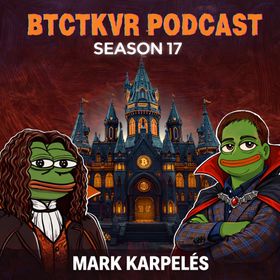
The audio keeps playing while you browse the site.
Read the transcript19,850 words, every line links to the minute it was said
Ask this episode
Mark Karpelès is the one name in Bitcoin that needs no introduction and always gets one anyway. The former CEO of Mt. Gox joined this episode on short notice, at five in the morning in Tokyo, as part of the podcast’s seven year anniversary spaces, and still managed to pull close to a thousand live listeners between X and YouTube. Some people came for the lore. Most came for the controversy: days earlier, Mark had submitted a proposal to change Bitcoin’s consensus rules so that 79,956 BTC, stolen from Mt. Gox in 2011 and untouched ever since, could be recovered for creditors.
What followed was over two hours of primary source history. Mark walked through how he acquired the world’s biggest exchange for no money down, the theft that poisoned the deal before the servers even changed hands, his conversations with Satoshi Nakamoto, the true story behind the infamous Roger Ver video, and why he filed a hard fork proposal he fully expected to fail. Whether you consider him a cautionary tale or a wronged man, this is the most complete account he has given in years.
This episode was sponsored by Cake Wallet, SideShift.ai, Braiins Hashpower, Bitcoin.com News, NoOnes, and LayerTwo Labs. Cake Wallet sent Mark one Zcash live on air, and one listener will win another. Vlad’s French fashion friends at Maison Mashi (spelled on air as M A I S O N M A C H I) also got a plug.
From Web Hosting to the First Bitcoin Payments
Mark’s Bitcoin story begins before Mt. Gox, before most people had heard the word at all. He moved to Japan in 2009 simply because he wanted to live there, and founded Tibanne, a company doing development and web hosting. One of his hosting customers was a French expat living in Peru whose French bank card got flagged for fraud every time he used it. In mid-2010, the customer asked whether he could pay in bitcoin instead.
Mark looked into it, liked the technology, and wired bitcoin payments directly into his billing system using the original bitcoind, generating a fresh address per order and watching for incoming transactions. To put the timing in perspective, this was the era of the 10,000 BTC pizza and not much else. By his account, Tibanne was probably the first real business to accept bitcoin as payment, a claim that is difficult to verify but plausible given how thin the merchant landscape was in 2010.
The Crossroads Deal
As Mark became a fixture of the early technical community, Mt. Gox founder Jed McCaleb started asking him for help. In January 2011, Jed emailed with a question that would define the rest of Mark’s life: did he want to buy Mt. Gox? The exchange, originally built as a trading venue for Magic: The Gathering cards (hence the name, Magic: The Gathering Online eXchange), looked like a business that could run itself while Mark did other things.
There was one problem. Mark had no money. Jed’s answer sounds like folklore in retrospect: no money needed, just take it over and share revenue for six months. The contract was signed in February, and server access was scheduled for March 2011. I told Mark it sounds like one of those devil at the crossroads myths, the young ambitious man offered a deal too good to be true. He agreed there was a catch. Several, in fact.
The Secret Theft Before the Handover
Days before the handover, roughly 80,000 BTC were stolen from the exchange’s hot wallet. Jed messaged Mark one morning to say bitcoins were missing and rushed the server access over to him. The contract was already signed, so the problem was now Mark’s. Jed offered three options: raise funds to buy the coins back, a second option Mark admits he can no longer remember, or buy the coins back slowly over time. Above all, Jed was adamant that customers must never find out, because disclosure would kill the business.
With no venture capital interested in Bitcoin in 2011, only the slow buyback was realistic. Mark now considers that decision, and especially the secrecy, a mistake. The modern playbook, pioneered by Bitfinex after its 2016 hack, is transparency plus a tokenized claim on future recovery. Mark points out this did not even require blockchain infrastructure: an internal IOU balance tradable on the exchange would have done the job in 2011. The lesson cost him everything and cost the industry a decade of distrust.
These are, by Mark’s account, the very coins that sit today in the 1Feex address, which matters for reasons that become clear later in the episode.
Regrets, Rewrites, and Explosive Growth
Asked whether taking over Mt. Gox was a good decision, Mark says he would do it again, but differently. The original contract was signed without a lawyer, on the assumption of good faith, and he did not rewrite Jed’s code immediately. He waited a couple of months, and in June 2011 the exchange suffered its famous public hack and flash crash, an event distinct from the silent March theft. Both mistakes were paid for in full.
The growth, meanwhile, was feral. Mt. Gox went from around 6,000 customers in March 2011 to 60,000 by June, a surge Mark attributes in part to Time magazine’s April 2011 piece on Bitcoin. Bank transfers were processed partially by hand, support tickets piled up, and then US senators began writing letters about Silk Road, turning a fast growing business into a compliance emergency. I noted the parallel with Satoshi’s “we kicked the hornet’s nest” remark after WikiLeaks adopted Bitcoin. The difference is that Satoshi disappeared. Mark stayed.
The Satoshi and Dread Pirate Roberts Rumors
Two of the biggest names in early Bitcoin history have been pinned on Mark over the years, and I asked him directly. Is he Satoshi? Was he involved with Silk Road? None of it is true, he says. On Satoshi, he adds a principle worth quoting: anyone involved in Bitcoin should respect Satoshi’s will to remain anonymous, because “the myth is always better than whatever is behind it.”
The Silk Road suspicion has a concrete, almost comical origin. Dread Pirate Roberts chose Mark’s hosting company, one of the first to accept bitcoin, to host silkroadmarket.org, a plain web page explaining how to reach the actual darknet market through Tor. US investigators looked at the server, saw his name, and, in his telling, did not think further. The theory resurfaced at Ross Ulbricht’s 2015 trial, where the defense floated Mark as an alternative suspect. His actual position on darknet markets is unfashionable in both directions: if you want something illegal, vote to legalize it or move somewhere it is legal. We live, he notes, in the era of the easiest freedom of movement in human history.
Security in the wallet.dat Era
How does the biggest exchange in the world get emptied? Mark describes a daily whack-a-mole of intrusion attempts, where defenders must win every time and attackers need to win once. The fatal breach, he believes, was not remote at all. It was physical.
His theory, offered with the caveat that law enforcement holds the real answers, centers on a RAID disk that kept “failing” in the months after Mt. Gox migrated away from the old bitcoind setup in September 2011. Each failure meant a technician pulling the disk and replacing it. Each pulled disk contained an unencrypted wallet.dat, since bitcoind only gained wallet encryption around that same period. If someone was walking out with the drives, they walked out with every private key the exchange had, and nobody would have noticed.
The contrast with today is stark. BIP32 hierarchical deterministic wallets let exchanges keep private keys offline entirely, generating deposit addresses from public keys alone. Mark also notes Mt. Gox was a pioneer in offering YubiKey account security to customers. The tools to survive arrived roughly one generation too late for him.
Vinnik, the Bankruptcy, and What Creditors Actually Got
On the investigation, Mark says the picture has been clear since 2017: by his account, over 550,000 BTC were laundered through Alexander Vinnik and BTC-e. Public US indictments attribute the theft itself to Russian nationals Alexey Bilyuchenko and Aleksandr Verner, with BTC-e as the laundering venue. Vinnik was arrested in Greece, passed through France, pled guilty in the US, and was then returned to Russia in a prisoner swap. Since he is now beyond reach, Mark doubts any recovery will ever come from that side.
As for creditor repayments, he corrected my framing: the early bankruptcy plan to reimburse fiat value was overtaken by bitcoin’s price rise, which made the estate solvent again. Distributions are now pro rata in bitcoin, roughly 18 percent of claims from the recovered cold wallet coins, under trustee Nobuaki Kobayashi, with the deadline currently pushed to October 2026.
Why Mt. Gox Swallowed the Market
BitInstant, TradeHill, Bitstamp, Britcoin: the early field was crowded, yet Mt. Gox held somewhere between 70 and 90 percent of global volume for years. Mark’s explanation is unglamorous and convincing. He built local payment rails everywhere he could: Dwolla in the US, SEPA accounts first in France then Poland, domestic transfers in Japan, accounts in Australia and Hong Kong, all wrapped in verification and velocity checks.
Two war stories illustrate the edge. Barclays gave Mt. Gox a UK account, then hated it when customers started walking into branches making cash deposits, and shut it down. And one day, fifteen transfers between $2,000 and $3,000 arrived from Chase under different names, against a baseline of three or four US wires a day. Mark held them. Two days later the bank recalled the lot: phishing victims whose credentials had been harvested. Competitors like TradeHill, which accepted deposits without such checks, were not so lucky, and a $40,000 Dwolla recall saga contributed to their demise. In an era before exchanges faked volume, liquidity attracted liquidity, and the biggest pool won by default.
Compliance in Japan vs. America
The popular complaint that Mt. Gox hid in Japan to dodge regulation gets the causality backwards: Mark was already in Japan when the exchange fell into his lap. Japanese regulators answered inquiries with a characteristically ambiguous “it is not our role to respond,” and because the site was English-only, Japanese customers were about one percent of the base, an accidental regulatory shield.
The real cost center was the US, where a money transmitter license is required state by state, versus Europe, where even then one setup in Poland could serve the whole continent in euros. Charlie Shrem’s legal bills in The Rise and Rise of Bitcoin suddenly make sense in this light.
Talking With Satoshi
Mark did interact with Satoshi, and the main exchange was a clash. Unimpressed with the original client’s messy wxWidgets code, Mark started building his own Bitcoin client in Qt. Satoshi’s response was an alarmed “no, please don’t”: if two implementations interpret consensus rules even slightly differently, the chain itself can fork. Mark then took over Mt. Gox and never finished the client, but he believes the episode is part of why consensus code was later moved into a dedicated library.
His impression of Satoshi is of one consistent person: same voice, same memory of prior conversations, no signs of a rotating cast behind the account. IRC logs from #bitcoin-dev probably survive on someone’s hard drive, he adds, since many clients logged by default. Asked for his favorite Satoshi conspiracy theory, he offered one I had never heard: Satoshi came from the future to bootstrap power-hungry data centers, so that humanity would have the infrastructure ready when AI arrived. With miners now pivoting their facilities to AI workloads because the margins are better, the joke lands uncomfortably well.
Chief Pussy, Tibane, and the Solana Trenches
Mark’s current crypto life revolves around Solana and a memecoin named Chief Pussy, after the rank his late cat Tibane held on a joke website parodying the Bitcoin Foundation. A group of trenchers built the token, did their Mt. Gox lore homework, and approached him with what he describes as genuine respect for the story, which is why he took the project over. He is now building tools for the memecoin trenches: staking pools that let creators return fees to holders, a fee monitoring tool (born after someone socially engineered pump.fun support into redirecting the token’s creator fees), and a no-fee Solana incinerator.
For the record, and because objectivity requires it: the token pumped over 2,500 percent on his endorsement, then crashed roughly 90 percent, after which he began burning his own allocation and pledged part of the fees to feline kidney disease research. He finds Solana genuinely pleasant to build on, though he worries about its long term sustainability. Bitcoin, he says, still excites him, but the innovation has moved elsewhere, and at a $1.29 trillion market cap nobody wants to experiment on the main chain anymore. Asked what one thing he would change about Bitcoin, he did not say smart contracts or privacy. He said: move the 1Feex coins to Mt. Gox customers. We will get there.
Forks as Natural Selection
Mark was arrested in August 2015 in the middle of the block size war, and when he came out on bail a year later, the same debate was still raging. Being offline for a year, he jokes, meant missing nothing.
His position on forks is more market anarchist than either camp’s: splits are good, because they let both directions be tested in parallel, like natural selection across environments. Pressed on whether he would have been a big blocker or small blocker ten years ago, he answered both. Bigger blocks were always part of the plan and hardware improves, but that path is boring. SegWit was the elegant, innovative solution. It is a very engineer’s answer, and it foreshadows how he thinks about his own hard fork proposal.
The Truth Behind the Roger Ver Video
The 2013 video in which Roger Ver stood in the Mt. Gox office and declared the problems were with the traditional banking system, not the exchange, has been replayed for a decade as evidence that Roger was reading a script. Mark confirms he was, and explains why.
In May 2013, the US seized Mt. Gox funds (about $2 million by Mark’s recollection on air; public records put the Dwolla and Wells Fargo seizures closer to $5 million). The affidavit was signed by Shaun Bridges, the Secret Service agent later jailed for stealing Silk Road bitcoins himself.
After that, Citibank cut Mt. Gox off, international wires kept dying, and the visible crisis was fiat, not bitcoin. Marketing chief Gonzague Gay-Bouchery asked Roger to come inspect the bank balances and say so on camera. The text was workshopped, rehearsed, and re-shot until it sounded robotic, which the internet read as deceit.
The devastating irony: nobody at Mt. Gox knew the coins were already gone. The banking crisis was real, and after Ulbricht’s arrest cleared Mark of the DPR suspicion, the seized funds were reportedly close to being returned. Then February 2014 happened.
Prison, Weight Loss, and Starting Over
Mark lost everything in the collapse: the company, his own coins held at Mt. Gox (as an involved party he could not file a claim), and, after his arrest, his apartment and belongings, since nobody was left to pay the rent. He emerged from eleven months of Japanese detention visibly healthier, and his explanation is almost wholesome: regular meals, real sleep at night, and a life without deadlines.
Japan’s system of three week interrogation cycles, renewable by re-arrest, eventually gives way to long stretches of waiting. Charges came at the end of 2015, the trial in 2017. In March 2019 he was convicted only of falsifying records, acquitted of embezzlement and breach of trust, and given a suspended sentence. His advice from the experience: eat at the same time every day and sleep at night, which he was himself violating to do this interview.
The 80,000 BTC Hard Fork Proposal
And so to the main event. The address 1FeexV6bAHb8ybZjqQMjJrcCrHGW9sb6uF holds 79,956 BTC (Mark said 79,957 on air), about $5.2 billion, untouched since the 2011 theft. His proposal does not rewrite history or invalidate any transaction. It adds one consensus rule: from a chosen block height, the Mt. Gox recovery address may also spend the outputs locked to the theft address, routing the coins into the existing court-supervised rehabilitation.
His read of the hacker is strategic, not lost keys: cashing out the most watched UTXOs in Bitcoin would trigger every alarm, so the thief waits for the world to forget. Better, Mark argues, that the coins go to creditors than to the hacker’s future self. His ethical framing is a wallet that flies into your house: do you return it, or declare it yours because it landed on your floor? He is explicit that this decision belongs to the community, not to courts, and equally explicit about the odds, which he puts near zero. Filing it was a duty, and the discussion was the point.
For the record: he first submitted the change as a pull request to Bitcoin Core on February 27, 2026, under sixty lines of code, with the activation height set to infinity. It was closed within roughly 17 hours, with developers noting that such ideas belong on the mailing list and in a BIP. The debate has since migrated to Bitcointalk and Reddit, where it continues.
The Precedent Problem
I gave Mark the standard objection: once Bitcoin reassigns coins for a good cause, every hack victim gets a template, the immutability premium dies, and the price follows. I compared it to May 2019, when CZ floated rolling back the chain after Binance lost 7,000 BTC and backed down. Mark does not really fight this. He calls it a very good reason not to do it, doubts the price impact would be that severe, and concedes the feedback has settled the matter for the main chain. He did receive some non-hostile responses, he notes, and expects the question to return in the future, which is why he wants the ethics debated now rather than in a crisis.
The timing is indeed strange. Between proposals to freeze dust, the transaction filtering wars, and talk of freezing Satoshi’s coins ahead of quantum computing, the boundaries of ossification are being probed from every direction this year.
The Fork Universe Option
There is a wrinkle most coverage missed. BSV and BCH both inherited the 2011 UTXO set, so the 1Feex coins exist on those chains too, and BSV has explicitly built court-order coin seizure into its protocol. At $15 per BSV, 80,000 coins are worth about $1.2 million, not $5.2 billion, but not nothing either.
The catch is pure theater: Craig Wright has claimed for years that 1Feex is his own address, saying he bought the private keys in 2012, a claim my past guest Daniel Krawisz’s camp has to live with. Mark, who followed the Wright saga closely and clearly has more to say than legal prudence allows, calls the claim plainly false. BCH, he assumes, would follow Bitcoin’s answer.
BCH developer Calin Culianu asked in chat whether Mark would take the proposal directly to miners with a 5 to 10 percent recovery bounty. Mark half-joked that he might write the fork “just to get things to the end,” but drew the real line immediately: the coins are not his to sell, they belong to Mt. Gox customers.
The Epstein Question, CoinLab, and the Foundation
Asked about Jeffrey Epstein’s influence on Bitcoin, Mark cannot say how deep it goes, but he offers a concrete data point. Brock Pierce tried to buy Mt. Gox, both before and during the bankruptcy, with backers he refused to disclose, backers who failed Mark’s due diligence. When the recent Epstein file releases documented Pierce’s correspondence with Epstein, Mark says he was genuinely surprised. For Mt. Gox, at least, that money went nowhere.
He is more comfortable dissecting the Bitcoin Foundation, which he co-founded in 2012. Mt. Gox had wanted such a body and even held the domains, but it was CoinLab’s Peter Vessenes who operationalized it, and in Mark’s telling, CoinLab employees became Foundation employees while still working for CoinLab, a conflict he only learned of afterward. The partnership meant to make Mt. Gox fully legal in the US collapsed when CoinLab’s actual strategy turned out to be operating without licenses, the dispute went to court, and the CoinLab claim haunted the bankruptcy proceedings for years. His verdict: good intentions, horrible management, and he is not sad the Foundation is gone. His regret is staying hands-off for the sake of neutrality.
vp.net and the $1 Million Prediction
Mark’s other main venture is vp.net, the VPN he runs with Andrew Lee, Roger Ver, and Matt Kim. Every VPN asks you to trust its no-logging promise; vp.net uses Intel SGX enclaves so the client software cryptographically verifies what code the server is running, against the open source build on GitHub, before any traffic flows. Trust, replaced with attestation. Given what centralized trust cost him, the design philosophy is autobiographical.
And his long term call on Bitcoin, after 17 years in the space: if quantum computing has not broken ECDSA fifteen to seventeen years from now, one bitcoin trades between $800,000 and $1 million, on scarcity alone. Bold, conditional, and delivered at sunrise in Tokyo.
Closing Thoughts
Whatever you think of the man, this episode is a document. The pre-handover theft told in first person, the RAID disk theory of the fatal breach, the Roger Ver video’s production notes, the Foundation’s internal rot, and a hard fork proposal whose author admits it is dead but argues the corpse is worth examining. Mt. Gox taught Bitcoin self-custody the hard way; Mark Karpelès is now asking, politely and at five in the morning, whether fourteen years of immutability theology has an exception clause. The community’s answer, so far, is no. The question, he predicts, will be back.
Follow him on X at @MagicalTux, where he posts everything, or find him on GitHub and Bitcointalk as the proposal thread evolves.
Listen to Mark Karpelès on Spotify, Apple Podcasts, YouTube & more!
Time stamps:
- 0:00Intro
- 1:19Introducing Mark Karpelès
- 2:39Cake Wallet Sponsorship & Zcash Giveaway
- 3:29How Mark Got Into Bitcoin & Moved to Japan
- 6:09Acquiring Mt. Gox From Jed McCaleb
- 8:01The Secret 80,000 BTC Theft Before the Handover
- 10:20Handling the Loss & the Transparency Lesson
- 13:24Regrets & Lessons From Early Mt. Gox
- 15:09Explosive Growth & Regulatory Pressure
- 17:19The Satoshi & Dread Pirate Roberts Rumors
- 21:16Security, Daily Attacks & the Physical Breach Theory
- 24:07Bankruptcy, Repayments & Alexander Vinnik
- 27:00How the Mt. Gox Hack Actually Happened
- 29:08How Bitcoin Security Evolved Since 2011
- 30:42Sponsors: SideShift & Braiins Hashpower
- 34:01Sending Mark One Zcash Live
- 35:29Why Mt. Gox Dominated the Market
- 44:53Legal Compliance: Japan vs. the US
- 48:13Talking With Satoshi
- 51:35Satoshi the Time Traveler & the AI Pivot
- 55:30Chief Pussy, Tibane & Building on Solana
- 59:06Why Mark Drifted Away From Bitcoin
- 1:00:28Bitcoin Innovation, Scaling & the Block Size War
- 1:14:00Drivechains & Sidechains First Impressions
- 1:17:50Sponsors: Bitcoin.com News, NoOnes & Maison Mashi
- 1:21:52Listener Questions: Magic Cards & Frappuccinos
- 1:26:30What Was Your Role With Silk Road?
- 1:29:37The Chris DeRose Question
- 1:30:58The Truth Behind the Roger Ver Video
- 1:36:10Mt. Gox as a Cautionary Tale
- 1:42:18Prison, Weight Loss & Starting Over
- 1:44:58The 80,000 BTC Hard Fork Proposal
- 1:51:11Community Reaction & the Precedent Problem
- 1:55:09BSV, BCH & the Fork Universe Option
- 2:00:03Immutability, Dust Freezes & Quantum Threats
- 2:02:47Should Miners Get a Cut of the Recovery?
- 2:04:42Can We Roll Back Bitcoin to 2010?
- 2:05:22Why File a Proposal You Expect to Fail?
- 2:06:19The Euphoria Meme & What Makes Mark Happy
- 2:08:03Building on Solana
- 2:09:49Satoshi’s Anonymity & the Epstein Question
- 2:15:28The Bitcoin Foundation & CoinLab
- 2:22:54Promoting Chief Pussy
- 2:25:05How vp.net Is Different
- 2:27:02Bitcoin in 17 Years: The $1 Million Prediction
- 2:28:07Closing Remarks & Farewell
Verify this episode
This is the SHA-256 fingerprint of the MP3 as published here, timestamped in the Bitcoin blockchain with OpenTimestamps. If one byte of the file changes, the fingerprint changes.
- SHA-256
9d05435572dc44a8526e7ce98f88ba739bb56e9b29c3b5b309df1198c4a09bf1- Proof
- 2026-03-01_s16_e10_mark_karpeles_on_mt._gox_80000_bitcoins_chief_p_ssy.mp3.ots · all episode hashes (proof)
- Status
- Anchored in Bitcoin block 974,312
How to check it yourself
- Download the MP3 and the proof into the same folder.
- Run
sha256sum 2026-03-01_s16_e10_mark_karpeles_on_mt._gox_80000_bitcoins_chief_p_ssy.mp3(on a Mac:shasum -a 256 2026-03-01_s16_e10_mark_karpeles_on_mt._gox_80000_bitcoins_chief_p_ssy.mp3). The result must match the SHA-256 above. - Install the OpenTimestamps client (
pip install opentimestamps-client) and runots verify 2026-03-01_s16_e10_mark_karpeles_on_mt._gox_80000_bitcoins_chief_p_ssy.mp3.ots. It hashes the MP3 again and checks the proof against your own Bitcoin node, then prints the block and the date the file existed by. Without a node,ots info 2026-03-01_s16_e10_mark_karpeles_on_mt._gox_80000_bitcoins_chief_p_ssy.mp3.otsshows the block height to look up in any block explorer.
Related
S17 E17: Lukas Hozda on Building Bitcoin in Rust & Why Mempool Filters Can’t Work
Recorded in a soundproofed room at Braiins headquarters in Prague that once doubled as an ASIC oven (more on that later), this…
S17 E39: Kurt Wuckert Jr on the Big Block Wars, BSV, Craig Wright & the Road Not Taken
Every community has its designated villains, and in Bitcoin’s longest running morality play, Kurt Wuckert Jr has worn the black…
S17 E23: Hunter Beast & Mark Karpeles on Quantum-Proofing Bitcoin, Satoshi’s Coins & the Ghost of Mt. Gox
This interview took place on April 29th 2026, at the LayerTwo Labs booth at the Bitcoin Conference in Las Vegas with Hunter…

Comments
Comments run on my own server. No trackers, no tracking cookies.