




Fartface2000 on the Lightning Torch, Bit Piggys and Saving in Bitcoin (S2 E9 Full Article)
The audio keeps playing while you browse the site.
Read the transcript17,148 words, every line links to the minute it was said
Ask this episode
Some people pick a username after careful thought. Jim picked his in about two minutes, around 2008 or 2009, after hearing someone talk about Twitter on Howard Stern. "Yeah. No, it was a juvenile name to begin with," he told me, and he was "too lazy to ever change it." A decade later, that name ended up on mugs and T-shirts, because Fartface2000 became the first person to receive the Lightning Torch from Hodlonaut.
The Lightning Torch, or #LNTrustChain, was a game Hodlonaut started in January 2019: a small Lightning payment passed from person to person, with each holder adding some sats before sending it on. It became one of the friendliest moments in Bitcoin history, and I wanted to know who the man at the very start of it was. The original show notes were short, so here's the full story.
A Carpenter Who Likes Change
Jim isn't a developer, and he's the first to say it. "Well, my background is actually construction. I'm a carpenter by trade." After about ten years on job sites, he moved into an office in the mid-90s, when his small company started using computers and software, and he had to learn all of it on the fly.
What he saw there shaped his attitude to Bitcoin. "As my business was growing, I saw a lot of people just become extinct because they didn't want to learn new tricks. Nobody thought email was going to take..." He went the other way. "I lived through it and I've always embraced it rather than rejected it. I like change. I don't know why. I just do."
He even tried learning to code on Codecademy over the winter. "I got to like lesson number seven, and it just was like, whew." I told him I had signed up for the same kind of course and didn't follow through all the classes either.
Running Nodes and Testing the Network
When Casa advertised its node, Jim ordered one and set it up, with help from a Telegram channel when he ran into issues. He also runs Bitcoin Core at home, which he turns on and off. "In order for this thing to stay decentralized, you need people to commit to running a node." When the torch reached him, he was away from home, so he used BlueWallet. "I wasn't using a lot of money or anything and I was anxious to just help them out, help the developers work through the issues and learn at the same time."
He also did his own stress test when the network was busy, sending coins to two exchanges late at night with different fees to see how long each took. Then he went to sleep. For his own savings, he's patient. "I always send with the lowest fee possible because normally what I'm doing is I'm just sending my Bitcoin into cold storage and I really, you know, what's the difference if it takes an hour or a day? I don't mind if it takes a week."
His way of explaining Bitcoin to people is one of the simplest I've heard. "Imagine if you joined Twitter, and if when you joined Twitter you got a token, and now you owned a piece of the Twitter network. That's how I see Bitcoin."
Pay Yourself First
The most emotional moment of the episode came when Jim talked about his father. He has been investing since he entered the workforce at 18, taught by his oldest brother and by a father who "always told us to pay yourself first." He had to pause the conversation. "I bring up my father, I got choked up, so just calm down."
That background is why inflation bothers him even at low rates. "1.8% inflation, although it doesn't sound that bad as, you know, using dollars for a medium of exchange, it's still a terrible store of value, which is why we have thousands of financial companies." I told him about my parents, who got married in 1989 in Romania, saved money to buy a car and had to wait months for approval while the country was transitioning out of communism. Stories like that are why people from my part of the world don't trust their own currency for saving.
Volatility Needs a Noble Cause
Jim has held other investments, and he knows what volatility does to people. "It's going to take some real resolve for you to HODL your position in Bitcoin." His advice: only hold a share of your wealth that can survive the swings, and believe in what you hold. "You gotta believe in it. And beyond profit, you know, you got to have a more noble cause, a more noble feeling."
When I said Bitcoin can sound like a scam at first, because you have to trust code you can't read, he gave me an answer that stuck. "So you get on an airplane, wouldn't you? When's the last time you looked at a jet airplane engine?"
On altcoins, he keeps the ones he picked up "during my voyage" as a reminder, valued in bitcoin. "My philosophy on shitcoins is, and I've learned this, unless you really need it, why buy it? Like, an Ethereum token. I'm not gonna write a smart contract."
In Defense of Maximalists
I expected a newcomer to complain about toxic maximalists. Jim did the opposite. "When you mentioned maximalists, I got to tell you, I've never been offended by a maximalist." He sees them repeating old arguments for the benefit of people who arrive late. "It's like they almost feel responsible for being ambassadors to Bitcoin." Several helped him with technical questions. "I think they're noble. I think they want sound money, regardless if they were here first or not." My reply was a joke: if they helped you out, how are we supposed to be toxic?
Bit Piggys
In February 2019, Jim started a small company called Bit Piggys. He takes a plastic piggy bank and an Opendime, exposes the public key, prints a QR label and packages it as a gift. "It basically gives them a unique Bitcoin address that they can save money in." The idea is that a kid keeps it on the dresser, and "If his room was clean, his father would come in and shoot him a couple thousand satoshis." He was honest about who learns more: "And more than the kid, it'll probably teach the parents."
His dream is a piggy bank that's a full node and generates new addresses, with the parents holding the key. He doesn't have the time or know-how to build it, but when he mentioned it to Samson Mow at a conference, Samson said he was going to do it. "I'm all for kids saving in Bitcoin."
Mining at a Loss, on Purpose
Jim is also a miner, and a terrible one by his own numbers, because he pays New Jersey electricity prices. "Total loser, you know what I mean? But I did it because I really wanted to understand the economics of Bitcoin and how this whole mining thing worked." Two S9s earned him about a hundredth of a bitcoin every 10 days, and he planned to let them run until the halving. What he learned was worth it, even if he still doesn't know whether hash rate follows price or the other way around. "I'm unclear of what triggers what."
Selling Is Just Paying the Government
His tax advice is practical. "So, and there's another lesson that I've learned: selling is just paying the government. If you don't need the money, don't sell." At 46, he plans as if he were 60. "So keep what you need in fiat if you need the money to spend and only put in Bitcoin what you're willing to hoard, because that's what you're doing."
And his best advice wasn't about Bitcoin at all. "Everybody that you deal with has a different angle." Some information isn't worth digesting, because it's designed to make you feel a certain way. He also told me why he stopped worrying about things he can't control, after watching his father worry over intraday stock prices in the 80s. I called it the best kind of advice you can give on any podcast, regardless of the topic, and I still think so.
What Makes This Episode Worth Listening To
Anyone younger than 30 listening to this will learn something, and might find a few arguments that convince their parents. Jim is proof that you don't need to be a programmer to run nodes, mine, test Lightning and teach kids about saving. We also talked about Hodlonaut, who had a bounty placed on his identity by Calvin Ayre. Hodlonaut later won his case against Craig Wright in a Norwegian court in 2022.
You can read the full transcript, the original show notes, or visit Fartface2000's guest page and the Lightning topic.
Listen to Fartface2000 on Spotify, Apple Podcasts, and More
Time stamps:
- 00:01:59– How the Fartface2000 name happened
- 00:03:17– Casa Node, BlueWallet and receiving the Lightning Torch
- 00:04:52– From carpenter to early computer adopter
- 00:10:00– Bitcoin as a social network you own a piece of
- 00:13:38– Testing fees on a busy network
- 00:19:47– Pay yourself first
- 00:21:54– Inflation and saving in post-communist Romania
- 00:26:34– Volatility and holding with resolve
- 00:33:09– Altcoins: unless you need it, why buy it?
- 00:42:53– In defense of maximalists
- 00:47:30– Bit Piggys and Opendime piggy banks
- 01:10:36– Not worrying about what you can't control
- 01:20:01– Selling is just paying the government
- 01:29:59– Mining at a loss to understand Bitcoin
- 01:43:21– Everybody has an angle
Verify this episode
This is the SHA-256 fingerprint of the MP3 as published here, timestamped in the Bitcoin blockchain with OpenTimestamps. If one byte of the file changes, the fingerprint changes.
- SHA-256
11f66121fdedcad92b3d7df888d0329996ffe3d2b285a99f77757c48565e7522- Proof
- 2019-07-06_bitcoin_takeover_s2_fartface2000_ff2k.mp3.ots · all episode hashes (proof)
- Status
- Anchored in Bitcoin block 974,312
- Timestamped
- After release. The episode came out on 6 Jul 2019, but this proof was made on 3 Nov 2026 and anchored in block 974,312, so it proves this exact file existed by 3 Nov 2026, not on the release date.
How to check it yourself
- Download the MP3 and the proof into the same folder.
- Run
sha256sum 2019-07-06_bitcoin_takeover_s2_fartface2000_ff2k.mp3(on a Mac:shasum -a 256 2019-07-06_bitcoin_takeover_s2_fartface2000_ff2k.mp3). The result must match the SHA-256 above. - Install the OpenTimestamps client (
pip install opentimestamps-client) and runots verify 2019-07-06_bitcoin_takeover_s2_fartface2000_ff2k.mp3.ots. It hashes the MP3 again and checks the proof against your own Bitcoin node, then prints the block and the date the file existed by. Without a node,ots info 2019-07-06_bitcoin_takeover_s2_fartface2000_ff2k.mp3.otsshows the block height to look up in any block explorer.
Related
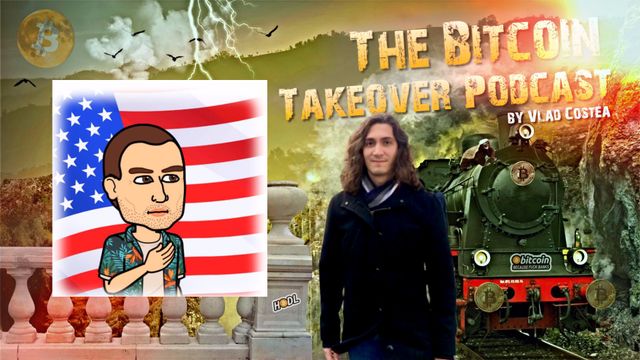
S2 E9: Fartface2000 on #LNTrustChain and Investments in BTC
American bitcoiner Jim, best known as Fartface2000 and his great contribution to the #LNTrustChain movement which Hodlonaut…
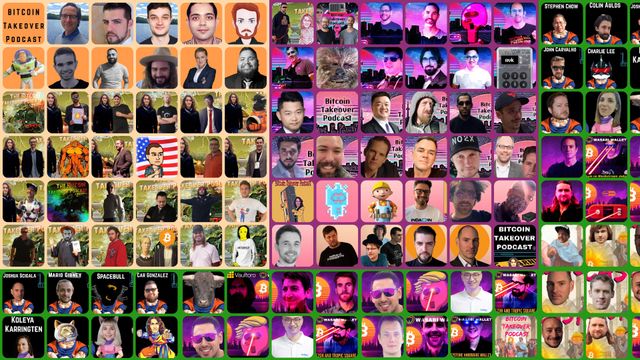
The First 109 Episodes of the Bitcoin Takeover Podcast
Much like Satoshi Nakamoto’s decentralized money system, the Bitcoin Takeover Podcast was launched in times of turmoil and…
S15 E21: Fiatjaf on Nostr, Drivechains & Why Lightning Sucks
Fiatjaf is one of the most prolific developers in Bitcoin and Lightning. But despite contributing to lots of Lightning open…

Comments
Comments run on my own server. No trackers, no tracking cookies.