




Arthur van Pelt on Craig Wright and the Faketoshi Fraud Timeline (S5 E10 Full Article)
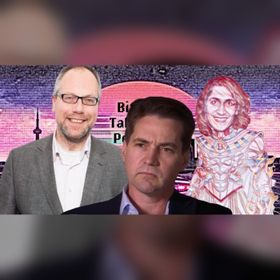
The audio keeps playing while you browse the site.
Read the transcript20,791 words, every line links to the minute it was said
Ask this episode
When we recorded the Season 5 finale in July 2020, Arthur van Pelt had spent about two years documenting Craig Wright's claims. Some people called him obsessed. He called it community service, an effort to protect the reputations of people Wright had targeted, from Hal Finney to Adam Back and Hodlonaut.
His tool was the #Faketoshi Fraud Timeline, a site built from court filings, testimony and his own research. The original show notes summarize our 155-minute talk. This article covers the main points and, since a lot happened afterward, adds what the courts later decided.
Why Not Just Ignore Him?
I asked the obvious question first. Wouldn't it be better to stop giving Wright attention? Arthur disagreed. "You can choose to ignore him, but he still makes headlines here and there. And if you do not criticize the headlines and the content behind the headlines, then people will still fall for his scam."
Later he put it more strongly. Ignoring it lets "a kind of a cancer" keep growing, because "a lie is being repeated many times." His goal was that "at least the people have access to information."
The Hodlonaut Bounty
Arthur had known about Bitcoin since 2012. "I've never been convinced that this guy is Satoshi Nakamoto." What changed everything was the libel suits against Hodlonaut, Peter McCormack and others, and "especially when he put $5,000 on the head of Hodlonaut, a bounty" to reveal his identity. "That was for me the main trigger to ramp up my research."
He admitted he'd been worried about being sued. "Afraid is a big word, but I have been worried about that a few times." He relied on two things: "the community will support me," and "I always do things fact-based." Living in the Netherlands helped too, since libel law there is "quite different from England."
Building the Timeline
His work came from "court documents, from evidence that he provided himself in those courts," much of it filed in Kleiman v. Wright. Some depositions alone run to 400 pages. "I work with queries," he explained, and the key is the timeline. "My mindset is on a timeline." When a document claims to fill a gap in 2008 or 2009, he can check when it was really created.
His short version of the story: Wright "learned about Bitcoin in 2011," and much of what he presented as evidence was produced later, in his view mostly in 2014 and 2015. As for the late Dave Kleiman, Arthur described him as mostly an online friend of Wright's. "They wrote a paper together in 2008 about wiping hard disks," and later ran a cybersecurity company together.
The Gavin Andresen Episode
We talked about how Wright convinced Gavin Andresen in 2016. Arthur offered his personal opinion of Gavin: "He is a personality, if I'm honest, that can be bamboozled." Gavin had four points he wanted to check, and according to Arthur, he never got full answers on three of them. About half a year after the London signing session, Gavin said he might have been "bamboozled."
Arthur also mentioned Michele Seven, known as Bitcoin Belle, who introduced Wright to people in 2015, and noted that people like Nick Szabo "hardly never believed anything that Craig Wright said."
The Genesis Block Gives It Away
My favorite part was a detail only an obsessive researcher would catch. The genesis block is dated January 3rd, 2009, but block 1 wasn't mined until January 9th. Wright explained the gap by saying the software stopped and restarted after a Microsoft Patch Tuesday. Arthur checked. "Microsoft Patch Tuesday is a software release by Microsoft that is only done once a month. And in January 2009, it was on January the 13th."
"It's so clear that this guy is not Satoshi Nakamoto, because Satoshi Nakamoto would have the real story about the Genesis block." Arthur also pointed to a blog post he says was backdated, which announced Bitcoin's launch after it had already started, and which didn't know that "Satoshi called it Bitcoin Alpha in those days."
Then there's the code. "It's quite clear he's not a coder." Satoshi "happily shared complicated code, pages and pages full, with Mike Hearn, Hal Finney, Ray Dillinger and all the people that were the OGs back then." There's no record of that with Wright.
Conspiracy Theories
I raised a couple of theories: that Wright is a government operation to discredit Bitcoin, or that someone pays him to make the Satoshi question irrelevant. Arthur didn't buy either. "I see no proof of that." His view was simpler: "Just a sloppy con man." As for the real Satoshi, he wasn't researching that at all. "For me, it's pretty fine that he is anonymous and stays anonymous."
A Hobby, at Night
How does someone with a job and kids do this? "It's a hobby. It's a time-consuming hobby." When his wife goes to bed early, "I need way less sleep. So I take several hours of reading, making screenshots, preparing for the next tweet." He was spending "several hours per day on it," several days a week.
He rejected the obsession label. "I don't call it obsessed. It's personal interest, and to fix an injustice that is going on in the Bitcoin community." He called himself "the sniper in the backyard of Bitcoin," guarding the fences while builders work on things like Lightning, which he was testing himself.
Facts Over Clickbait
We agreed on the conclusion. The community should be honest and phase out bad actors with facts and thorough research. Bad actors deserve less coverage, but their claims still need to be balanced with facts. Arthur noted that the media was struggling with the same dilemma. It's less glamorous than clickbait, but better in the long run. Arthur had seen it from both sides. His tweets had been picked up by "several handfuls of articles," but he noticed coverage getting quieter as journalists asked themselves the same question I had asked him at the start.
He was confident in his approach. "Every claim that I make, every number that I mention, every person that I mention, I can refer back to proof, to exhibits, evidence." And when Wright's lawyer said he had no idea what he was talking about, he wasn't worried: "As long as you keep it factual and base your opinion on facts, then it is not libel."
He also explained why the courts were slow. "The mills of law in Australia and America, they are going slow. But in my opinion, quite thorough." It takes "between three to five years before you have a full picture," because the schemes are "not only complicated and sophisticated, but somehow all sloppy." Even the libel suits stalled on basic questions. "Is it England? Is it Norway? Is it elsewhere?" It took Hodlonaut more than a year just to establish that his case belonged in Norway, before anyone looked at the claims themselves.
What the Courts Decided Later
Arthur was right about the slow but thorough part. In December 2021, a Miami jury in Kleiman v. Wright found Wright liable for conversion and awarded $100 million to W&K Info Defense Research, the company he ran with Dave Kleiman. In 2022, Hodlonaut won his case against Wright in Norway. In March 2024, the UK High Court ruled in the COPA case that Craig Wright is not Satoshi Nakamoto and found that he had forged documents on a large scale. In December 2024, he received a suspended prison sentence for contempt of court.
What Makes This Episode Worth Listening To
It's a record of how one person with a day job and a lot of patience documented a case years before the courts confirmed it. It also shows that the boring answer, facts and sources, holds up better than outrage.
You can read the full transcript, the original show notes, or visit Arthur van Pelt's guest page.
Listen to Arthur van Pelt on Spotify, Apple Podcasts, and More
Time stamps:
- 00:03:18– Why not just ignore him?
- 00:04:56– Never convinced
- 00:05:31– The Hodlonaut bounty
- 00:07:42– Dutch libel law
- 00:09:55– Everything sourced from court documents
- 00:11:27– Learning about Bitcoin in 2011
- 00:17:37– Who was Dave Kleiman?
- 00:23:16– How Gavin Andresen was convinced
- 00:34:21– Bitcoin Belle and Nick Szabo
- 01:08:50– The genesis block and Patch Tuesday
- 01:14:43– Bitcoin Alpha
- 01:22:38– Just a sloppy con man
- 01:45:14– Not a coder
- 01:47:13– Research at night
- 01:57:22– The sniper in the backyard of Bitcoin
- 02:10:15– Every claim backed by evidence
- 02:20:46– Slow but thorough courts
Verify this episode
This is the SHA-256 fingerprint of the MP3 as published here, timestamped in the Bitcoin blockchain with OpenTimestamps. If one byte of the file changes, the fingerprint changes.
- SHA-256
65be95b78e77e444b5ee54fb9438b8321483406ad71cf1b8459f8be4c6113ef0- Proof
- 2020-07-14_s5_e10_arthur_van_pelt_on_craig_wright.mp3.ots · all episode hashes (proof)
- Status
- Anchored in Bitcoin block 974,312
- Timestamped
- After release. The episode came out on 14 Jul 2020, but this proof was made on 3 Nov 2026 and anchored in block 974,312, so it proves this exact file existed by 3 Nov 2026, not on the release date.
How to check it yourself
- Download the MP3 and the proof into the same folder.
- Run
sha256sum 2020-07-14_s5_e10_arthur_van_pelt_on_craig_wright.mp3(on a Mac:shasum -a 256 2020-07-14_s5_e10_arthur_van_pelt_on_craig_wright.mp3). The result must match the SHA-256 above. - Install the OpenTimestamps client (
pip install opentimestamps-client) and runots verify 2020-07-14_s5_e10_arthur_van_pelt_on_craig_wright.mp3.ots. It hashes the MP3 again and checks the proof against your own Bitcoin node, then prints the block and the date the file existed by. Without a node,ots info 2020-07-14_s5_e10_arthur_van_pelt_on_craig_wright.mp3.otsshows the block height to look up in any block explorer.
Related
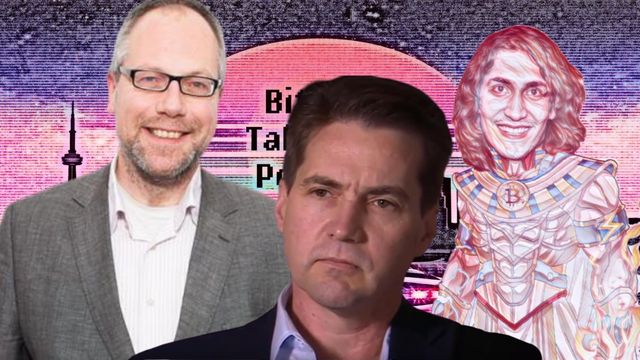
S5 E10: Arthur van Pelt on Craig Wright
Arthur van Pelt talks about his “Faketoshi Fraud Timeline” – a website where he documents the entire history of Craig Wright’s…
S17 E39: Kurt Wuckert Jr on the Big Block Wars, BSV, Craig Wright & the Road Not Taken
Every community has its designated villains, and in Bitcoin’s longest running morality play, Kurt Wuckert Jr has worn the black…
S17 E19: Amaury Séchet on Forking Bitcoin Twice, Quantum FUD & Scars from the Block Size Wars
Two years after our first interview, I decided to invite Amaury Séchet(@deadalnix) to find out what the Greg Maxwell of big…

Comments
Comments run on my own server. No trackers, no tracking cookies.