




Pavol Luptak on Paralelní Polis and the Hackers Congress (S6 E8 Full Article)
The audio keeps playing while you browse the site.
Read the transcript9,260 words, every line links to the minute it was said
Ask this episode
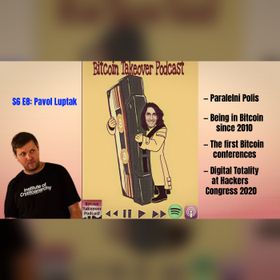
If there's one place in Europe where you can live on Bitcoin alone, Pavol Luptak thinks it's Prague. He should know. He co-founded Paralelní Polis, the crypto-only hackerspace that hosts the Hackers Congress (HCPP), one of the few conferences in our space that's openly about freedom first and money second.
Paralelní Polis opened in 2014, and by the time we recorded, right before HCPP20, the congress was in its seventh year. The theme was "Digital Totality," and it couldn't have been more fitting for 2020. The original show notes have the event details. This article focuses on the ideas, which have aged better than any schedule.
A Perpetual Traveler
Pavol introduced himself in a way that already says a lot. "I'm like a perpetual traveler. At this time, I am the citizen of Slovakia and I don't have residency in Europe. I have residency in Panama and now in Paraguay."
Crypto Only, From Day One
Paralelní Polis "consists of Bitcoin Coffee, Paper Hub, Institute of Cryptoanarchy," and from the beginning, "we decided to be crypto-only. So we refuse and we always refuse to accept fiat money." Tickets, merch and coffee can be paid with Lightning, and the team built Lightningomat, "a unique Bitcoin Lightning ATM machine."
It had recently become a private club, because "private clubs in Prague are less regulated than the normal public spaces." Anyone can join. Paper Hub, he said, is "the only crypto coworking space in Prague."
And Prague makes it work. "Prague is a crypto city." SatoshiLabs, the maker of Trezor, and General Bytes, which makes Bitcoin ATMs, are Czech companies, so "in Prague we have like hundreds of Bitcoin ATM machines." The biggest Czech online shop takes crypto, and so does a food delivery service. "If you want to switch completely to crypto regime, crypto mode, and be able to survive from crypto only Prague is the best city, probably."
A Conference About Freedom
"The goal of HCPP Congress is not to be like a typical Bitcoin conference. Our goal is freedom." Crypto is "just a liberation tool." That's why "we do not allow any commercial or vendor-based presentations." Talks have to be technical or crypto-anarchist in spirit.
The HCPP20 manifesto was about digital privacy declining "not in dictatorship countries, like many people may expect, but in Western Europe or the Western world." More than 40 speakers signed up, with a mix of in-person and online talks for the first time.
New that year were sovereignty workshops, "focused on digital privacy, how to gain independence from the government, from the state," running all three days, plus HCPP TV, a public stream with interviews and the best talks. But Pavol was clear that the real value is being there. "The HCPP Congress has really unique atmosphere," and with a regular ticket, "you can chat with the local crypto nerds."
It's run almost entirely by volunteers, "so we organize this conference for free," and the budget was still around "2 million or 2.5 million Czech crowns, which is about 100,000 euros." The goal was simply "to cover our expenses."
He was proud of the lineup. Alexander Bard, co-founder of the Swedish pop band Army of Lovers, had become a philosopher writing about decentralization. "Someone who was one of the singers in this pop band like 30 years ago, now he is basically a crypto-anarchist promoting Bitcoin." Eric S. Raymond was on the list too, whom Pavol called as famous in open source as Richard Stallman. Regulars like Frank Braun, Smuggler and Paul Rosenberg help pick speakers every year.
Then the fun parts. "Every year we print and issue the coin which is dedicated to some freedom fighters. So this year it'll be Snowden." There was an auction of a gold coin with Aaron Swartz. And each year they sell a lifetime ticket for one bitcoin, which "usually it's sold in a few hours."
The Word "Coin" Belongs to the Central Bank
This is where the stories got good. In the Czech Republic, you can't use "coin" in a product description, because "the Czech National Bank, they have a monopoly over using" the word. "I know that it looks really stupid." So the freedom fighter coins couldn't officially be called coins, and "now we have quite a big legal conflict with the Czech National Bank."
Then there's EET, the "Electronic Evidence of Transactions." Every beer and meal you bought was sent to the tax office in real time. "It's basically like a total financial surveillance." Paralelní Polis decided "to be the first and the only organization in the Czech Republic which publicly boycott and refuse this EET system." The Czech Republic later abolished EET, starting in 2023.
How do they get away with it? "We have our own people who are willing to fight with the government." And the fines are worth it, "because this advertising or this PR is usually more valuable for us than the final penalty we have to pay."
Protected by Art
I told him that if I tried something like this in Romania, "I would get arrested in like one week." Pavol said the same was true of Slovakia and most countries. The difference is that Paralelní Polis "was created by artist, contemporary artistic group with the name Ztohoven," a famous "anti-government group." Because of that, the state tolerates it, "because otherwise many people would criticize the government for censorship." Paralelní Polis has "some kind of special protection." The Czech government, he said, is "really tolerant, especially to the expression of like artists."
A Parallel Society, Not Elections
"In Paralelni Polis, we do not believe in a political change." Instead, "we should invest in building parallel society." "We don't believe in voting or elections." The idea is to help like-minded people "achieve a lot of personal and economic freedom," and Paralelní Polis acts as an umbrella for homeschoolers, unschoolers and free market groups. "We try to be like a real competition for the Czech Republic." He'd recently met a lot of Swedish families who moved to Prague, partly because the Czech Republic "is, for example, homeschool friendly, significantly cheaper than Sweden."
I told him I found it admirable, because Europe is "not getting any more liberal anywhere," and rights that constitutions were meant to protect seemed to be "vanishing as we speak." His message for the congress fit that mood: "it still makes sense to fight totalitarian state and look for freedom and at least preserve or keep our freedom."
Does he worry about intelligence agencies? "I'm more than sure that the HCPP Congress is under inspection of these three-letter agencies." His joke: "at least they buy tickets and they support us."
Bitcoin in 2010
Pavol is an ethical hacker with "20 years" in IT security and Linux. "I think I got to Bitcoin in 2010." He attended "the world's second Bitcoin conference in London, organized by Amir Taaki," met the early crypto-anarchists, and co-founded hackerspaces, first Progressbar in Bratislava and then Paralelní Polis in Prague. Those early contacts are why HCPP could get "high quality speakers" even in the early years.
Did he keep his early coins? No. "These were testing coins, you know, like testing coins are for test." People in 2010 "didn't have this HODLer mentality like they have now." I admitted I probably wouldn't have kept them either.
What Makes This Episode Worth Listening To
Paralelní Polis is proof that a parallel economy doesn't have to stay theoretical. You can see it, drink coffee in it and pay in sats. Pavol also tried the Phoenix wallet the day before we recorded and called it "probably the most easy Lightning wallet I have ever used."
You can read the full transcript, the original show notes, or visit Pavol Luptak's guest page.
Listen to Pavol Luptak on Spotify, Apple Podcasts, and More
Time stamps:
- 00:01:46– A perpetual traveler
- 00:02:57– Crypto only
- 00:07:56– Lightningomat
- 00:08:54– A private club
- 00:09:36– Prague is a crypto city
- 00:12:28– Sovereignty workshops and HCPP TV
- 00:16:44– No vendor presentations
- 00:19:07– Run by volunteers
- 00:20:49– The one-bitcoin lifetime ticket
- 00:23:33– Alexander Bard
- 00:25:10– Regular speakers
- 00:26:58– Snowden and Aaron Swartz coins
- 00:30:52– Eric S. Raymond
- 00:33:06– Our goal is freedom
- 00:34:34– The Czech National Bank and the word coin
- 00:35:52– Boycotting EET
- 00:37:28– PR is worth the penalty
- 00:38:27– Ztohoven
- 00:47:27– An ethical hacker since 2010
- 00:53:44– Liberties vanishing
- 00:54:40– Parallel society
- 00:56:27– Three-letter agencies
- 01:04:03– Testing coins
- 01:09:04– Phoenix wallet
Verify this episode
This is the SHA-256 fingerprint of the MP3 as published here, timestamped in the Bitcoin blockchain with OpenTimestamps. If one byte of the file changes, the fingerprint changes.
- SHA-256
fc68f94c09d8e8d7a10412324d8d43e5b77d4283ce3193eac6bdfd1476f80817- Proof
- 2020-10-01_s6_e8_pavol_luptak_on_paralelni_polis_hackers_congress.mp3.ots · all episode hashes (proof)
- Status
- Anchored in Bitcoin block 974,312
- Timestamped
- After release. The episode came out on 1 Oct 2020, but this proof was made on 3 Nov 2026 and anchored in block 974,312, so it proves this exact file existed by 3 Nov 2026, not on the release date.
How to check it yourself
- Download the MP3 and the proof into the same folder.
- Run
sha256sum 2020-10-01_s6_e8_pavol_luptak_on_paralelni_polis_hackers_congress.mp3(on a Mac:shasum -a 256 2020-10-01_s6_e8_pavol_luptak_on_paralelni_polis_hackers_congress.mp3). The result must match the SHA-256 above. - Install the OpenTimestamps client (
pip install opentimestamps-client) and runots verify 2020-10-01_s6_e8_pavol_luptak_on_paralelni_polis_hackers_congress.mp3.ots. It hashes the MP3 again and checks the proof against your own Bitcoin node, then prints the block and the date the file existed by. Without a node,ots info 2020-10-01_s6_e8_pavol_luptak_on_paralelni_polis_hackers_congress.mp3.otsshows the block height to look up in any block explorer.
Related
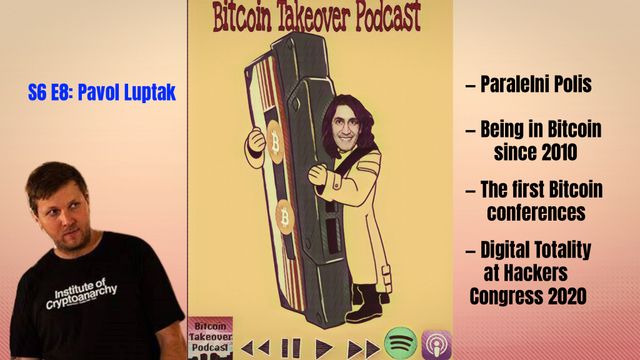
S6 E8: Pavol Luptak on Paralelni Polis Hackers Congress
Pavol Luptak (@wilderko on Twitter) is a cryptoanarchist and ethical hacker who co-founded the Paralelni Polis artistic and…
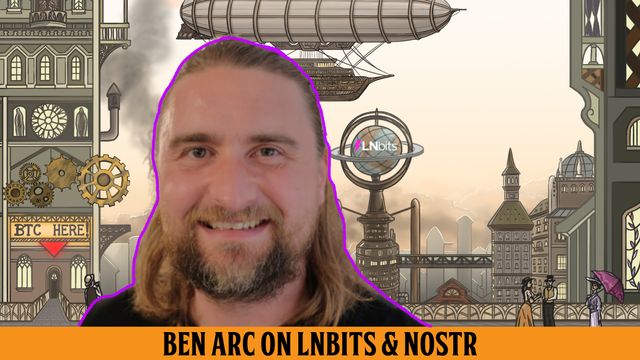
S14 E5: Ben Arc on LNBits and Nostr
Ben Arc is the creator of LNBits: a modular Lightning wallet which empowers users to pick their desired features (presented as…
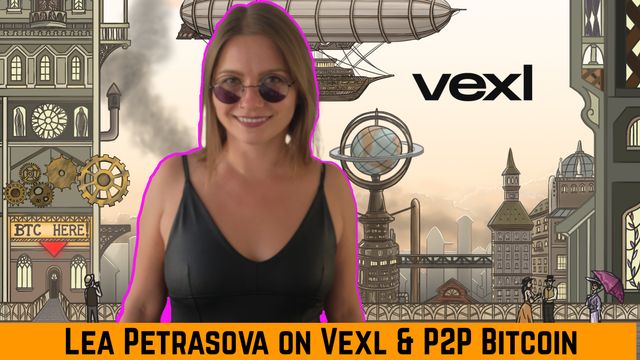
S14 E20: Lea Petrasova on Vexl & Why P2P Bitcoin Exchanges Matter
Vexl is the new kid on the SatoshiLabs block – and Lea Petrasova is the proud CEO and main advocate of this…

Comments
Comments run on my own server. No trackers, no tracking cookies.