




Lisa Neigut on Running a Core Lightning Node From Home (S12 E8 Full Article)
The audio keeps playing while you browse the site.
Read the transcript13,733 words, every line links to the minute it was said
Ask this episode
I run a Lightning node at home on a RaspiBlitz, and I had questions. So I asked someone who builds one of the main implementations. Lisa Neigut, known as niftynei, works on Core Lightning at Blockstream. She also runs the bitcoin++ conferences and the Base58 education project.
Of course, I asked her which implementation to run. Her answer was honest and funny, and then she explained a lot of things I needed to hear about running a node properly. The original show notes have the short version.
Run Core Lightning, Obviously
"Of course, I would recommend that you run Core Lightning, first and foremost, so that if you ever have any questions, you have a reason to come talk to me or one of my colleagues." She was upfront about her limits too. "I don't really know a lot about how LND works or what features it offers."
What she's proud of is the new accounting. "We just shipped some really cool bookkeeping, like accounting, so you can get really detailed reports on where you spend your money and where your money's going." You need version .12 or later. She hopes "someone builds really nice accounting dashboards" so node runners can see "what your profit and loss is."
She also likes the plugin system, "kind of like you can run all these extra apps on your Core Lightning node." One favorite is CLBoss, which "will open channels and do loopouts." Combined with the bookkeeping, "it gives you a really good idea of like how much it's costing to run CLBoss."
Commando and Runes
Then came Commando, a protocol that "lets you talk Lightning protocol between like a web app or an iOS phone." Her explanation: "your web browser pretends to be another Lightning node on the network." To connect, the website needs a permission token, "a rune." One web app built on it, Clams, already let you "send and receive payments from the browser."
The name has a good story. LND uses macaroons, a token idea from a Google paper. Her colleague Rusty Russell "read this macaroons paper" and thought, "I like this scheme, but I think we can make it better. We can get rid of the MACs." So "he took the MAC off macaroons, and what you end up with when you get rid of MAC on a macaroon is just the word rune."
One Hard-Coded Number
We recorded shortly after a strange transaction hit the chain in October 2022. Someone locked bitcoin to "a 998 out of 999 threshold signature," then spent it with a huge witness. It was valid. "The multisig transaction that went out in mid-early October is valid underneath the Taproot rules."
Some software couldn't parse it. Lisa explained the bug without blame. "It's like one of those bugs that's very easy to fix because it's a parameter. There's just a hard-coded number." The catch was that "everyone has to get a new copy of the app."
"Not every Core Lightning node was impacted. Anyone who was running a block source that used the BTCD library was impacted. But most people who run Core Lightning use bitcoind." Core Lightning trusts the block source you chose, because your own full node "has verified every single transaction and block."
Her take was generous. "It's a mistake that anyone could make because you're trying to be smart." Deciding how much data to read in is "one of the hardest questions in computer programming." The library had capped witness data based on SegWit rules, and Taproot changed them.
Don't Lose Your Channel State
This was the part I needed most. In Lightning, "your peer can like take all of your money" if you're offline or lose your latest state. "If you've gone and you're on vacation and your node is down, then they'll be able to basically publish an older state."
She gave three answers. First, backups: "you have two disks that are like independent," each with a copy of your database. Second, a watchtower: "you send the watchtower the latest copy of your channel state," and it can "take action on your behalf if your node is offline." Third, in the future, eltoo, which "reduces the amount of data that you need," so "you only need to remember one thing per channel."
Tor or a VPN?
Running from home has a problem. "You don't want to be putting advertising where in the world your physical location is to your IP address." Renting a server costs money every month. Tor hides you and works on any network, "but then started to run into like problems, so to speak, and Tor's like super unreliable."
She credited her Blockstream colleague Warren for the insight. "Tor is not really meant for long-running connections." Lightning connections are long-lived, and if you drop in the middle of a payment, it can end in a force close. If everyone used Tor, "payments across the network might get stuck a lot more frequently."
A VPN or rented server with a fixed IP is more stable, but it has its own trade-off. "If someone decided they wanted to figure out who's running that node, they would just have to subpoena the company." Her question for everyone: "what's your threat level?"
It depends on what you want. "If you want to be like a routing node, figuring out how to make the VPN work for you is probably the right move," because you get better routing stats and "less of a chance of having channels fall to chain." She also mentioned Nym as a possible Tor alternative, with a disclaimer: "I don't know how well they work with long-lived connections like Lightning."
Raspberry Pi Risks
I told her I run my node on a Raspberry Pi. "I wouldn't put money on a Raspberry Pi, I think, is my take. But I understand that a lot of people do." If you do, "I strongly recommend you get a disk backup or figure out a way to have two disks."
We also talked about refurbished business PCs as an alternative. She thought "it would be harder to do something to any one refurbished machine versus the Raspberry Pi," while admitting "that's totally speculative."
That led to a story she loved. Some Bitcoin Core developers were "writing some software to run on a TI-84 calculator that was manufactured before Bitcoin existed," so nothing could tamper with their keys. "To some extent, that kind of level of thinking about attack vectors feels incredibly sci-fi." Her summary: "you have to go back before the event in time to find a machine that can save the world."
Dual-Funded Channels and Privacy
Lisa worked on "the dual-funded protocol, which lets people build transactions collaboratively with Lightning in a very decentralized way." Her closest comparison was PayJoin. The key benefit: "there's no coordinator that someone could take down and would stop working." She was working on getting it working with Eclair too.
bitcoin++ and Base58
Her conferences are different. "They're meant to be technical Bitcoin conferences. We really mostly do workshops and kind of longer form lectures." After Austin in June, the next was "in Mexico City, December 9th, 10th, and 11th," focused on on-chain privacy. She was refreshingly honest: "one thing I don't really know a lot about is like on-chain privacy."
Base58 is "my Bitcoin education project to teach you about the Bitcoin protocol." Take the class and you'll "learn all about script and how scripts work." You can find her on Twitter and GitHub as niftynei.
What Makes This Episode Worth Listening To
If you run a Lightning node, or plan to, this is practical advice from someone who writes the code. Lisa explains a real 2022 bug calmly, gives you three ways to protect your channels and makes you think twice about Tor and Raspberry Pis. And she's fun to listen to.
You can read the full transcript, the original show notes, or visit Lisa Neigut's guest page.
Listen to Lisa Neigut on Spotify, Apple Podcasts, and More
Time stamps:
- 00:02:37– Run Core Lightning
- 00:03:05– Bookkeeping
- 00:03:43– Plugins and CLBoss
- 00:04:19– What CLBoss costs
- 00:04:56– Commando
- 00:05:35– Your browser as a node
- 00:06:32– Clams
- 00:09:12– How runes got their name
- 00:10:45– Accounting dashboards
- 00:12:05– A 998-of-999 multisig
- 00:15:47– One hard-coded number
- 00:17:08– Valid under Taproot
- 00:18:53– Who was affected
- 00:19:28– Trusting your own block source
- 00:23:52– A mistake anyone could make
- 00:32:50– Your peer can take your money
- 00:33:47– Two-disk backups
- 00:34:53– Watchtowers
- 00:36:10– Eltoo
- 00:43:19– Running from home
- 00:44:43– Tor is unreliable
- 00:45:10– Tor and long-lived connections
- 00:47:50– Stuck payments
- 00:49:40– What's your threat level?
- 00:52:50– Nym
- 00:54:17– Routing nodes and VPNs
- 00:59:16– Raspberry Pi risks
- 01:05:43– Refurbished machines
- 01:06:25– A calculator from before Bitcoin
- 01:07:21– Sci-fi attack vectors
- 01:08:50– bitcoin++
- 01:09:32– On-chain privacy
- 01:13:11– Dual-funded channels
- 01:13:45– No coordinator
- 01:16:58– Base58
Verify this episode
This is the SHA-256 fingerprint of the MP3 as published here, timestamped in the Bitcoin blockchain with OpenTimestamps. If one byte of the file changes, the fingerprint changes.
- SHA-256
2f2c2cd1d0ebd0033b3e48ee42f6261c32e5c301198b0b05300fb101e51ae2cf- Proof
- 2022-11-10_s12_e8_lisa_neigut_on_running_a_core_lightning_node.mp3.ots · all episode hashes (proof)
- Status
- Anchored in Bitcoin block 974,312
- Timestamped
- After release. The episode came out on 10 Nov 2022, but this proof was made on 3 Nov 2026 and anchored in block 974,312, so it proves this exact file existed by 3 Nov 2026, not on the release date.
How to check it yourself
- Download the MP3 and the proof into the same folder.
- Run
sha256sum 2022-11-10_s12_e8_lisa_neigut_on_running_a_core_lightning_node.mp3(on a Mac:shasum -a 256 2022-11-10_s12_e8_lisa_neigut_on_running_a_core_lightning_node.mp3). The result must match the SHA-256 above. - Install the OpenTimestamps client (
pip install opentimestamps-client) and runots verify 2022-11-10_s12_e8_lisa_neigut_on_running_a_core_lightning_node.mp3.ots. It hashes the MP3 again and checks the proof against your own Bitcoin node, then prints the block and the date the file existed by. Without a node,ots info 2022-11-10_s12_e8_lisa_neigut_on_running_a_core_lightning_node.mp3.otsshows the block height to look up in any block explorer.
Related
S12 E8: Lisa Neigut on Running a Core Lightning Node from Home
Lisa Neigut works at Blockstream to make Core Lightning (formerly known as c-lightning) a reliable and robust Lightning network…

Une explication du réseau Lightning que même un enfant de 10 ans peut comprendre
En tant que seconde couche de Bitcoin, le réseau Lightning apporte de nombreuses améliorations. Il permet des paiements quasiment…
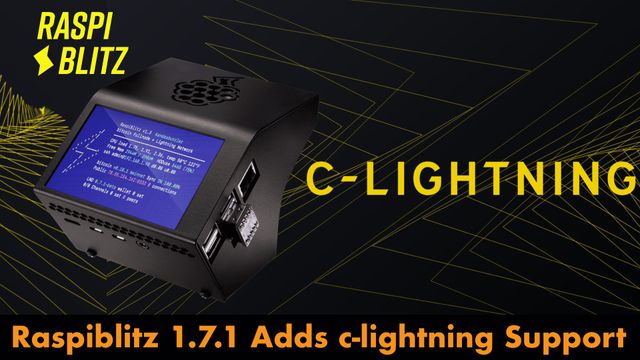
RaspiBlitz 1.7.1 Adds c-lightning Support
The news about RaspiBlitz adding support for Blockstream’s c-lightning implementation first broke in early June of 2021, during…

Comments
Comments run on my own server. No trackers, no tracking cookies.