




S15 E31: Ray Youssef on NoOnes, Freedom Money & Why Roger Ver Was Right
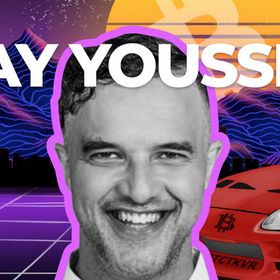
The audio keeps playing while you browse the site.
Ask the Archive
A week before we pressed record, Ray Youssef had been quoted in an article saying four words that guarantee a bad week on Bitcoin Twitter: Roger Ver was right. So that is exactly where I started Season 15 Episode 31. “That is what I said, isn’t it,” Ray answered, “and I don’t regret saying it, because clearly something is up.”
Ray is the CEO of NoOnes, the peer-to-peer marketplace with the lion mascot and the slogan that everyone eats. He co-founded Paxful, a company he is no longer affiliated with, and he spends his days thinking about traders in Nigeria, Kenya, and Egypt who want out of their local fiat. His first visit to the show was S14 E2 with Nicholas Gregory on CivKit, the open source plan to let anyone spin up their own P2P market on Nostr and Lightning. Less than a year later, he came back angry, funny, theatrical, and very sure that Bitcoin had wandered off the road.
This was recorded in April 2024, two weeks after my S15 E26 interview with Roger Ver had turned my mentions into a bonfire. Ray brought gasoline, a Legend of Zelda metaphor, and at least one full pro wrestling promo. I brought my own grievances, a Supra meme, and a camera that kept getting cooked by golden hour.
“Roger Ver Was Right,” With an Asterisk the Size of a Block
Ray’s argument was not about block size. It was about mission drift. “We started this whole journey about freedom money to help the people that really need the help,” he told me, and he had actually gone to those people in places “where us Americans hardly ever go.” What he sees now is a movement satisfied with a ticker. “We don’t believe in freedom money. It’s good enough just to have a nice little stock ticker, BTC or whatever the ETF ticker is.” To him, that is “complete and total capitulation,” and Michael Saylor publicly shrugging off medium of exchange was the moment it stopped being a conspiracy theory.
The asterisk matters, so here it is in his own words. Was Roger right about big blocks? “I don’t think so. I think big blocks are just delaying the inevitable.” Ray also remembered the Bitcoin Cash era with zero nostalgia: users on his platform “couldn’t tell the difference between Bitcoin and Bitcoin Cash,” lost money, and he called Roger out for it. He later apologized for the tone, because “I don’t think it’s civil for us to character assassinate people.” So Roger was right about the siren, not the fix. “Somewhere along the line Bitcoin got hijacked,” Ray said. “Not so much hijacked really, we just kind of completely gave up.”
The Heel, the Face, and the Useful Idiot
I offered to play the villain. In pro wrestling terms, Ray was the face, saying all the noble things, so I took the heel role: what if he was the sucker who bought a sugarcoated 2013 narrative, and onboarding the Global South was always a side quest for people who only wanted number go up? What if we donated sats to people who now hold dust they can’t spend because the fee eats the UTXO?
He took the bait with a wince. “Wow, I feel like a useful idiot running around Africa, Latin America, and the Middle East trying to show people the power of Bitcoin.” He had been, in his words, “the goodest good boy you could ever imagine,” delisting everything that wasn’t Bitcoin, and now trolls called him a shitcoiner anyway. “I do feel like a useful idiot honestly, but I’m still going, brother.”
His frustration is a builder’s frustration. Ray says he has done 14 startups and builds full stack. CivKit, as he described it, is an L2 that uses Tor, Nostr, Lightning, and Bitcoin Script so that setting up your own P2P marketplace is “as easy as setting up a WordPress blog.” But it needs base layer changes like covenants, and he is not keen on begging ossifiers for opcodes. The money side stung even more: “I’m funding it all myself, because, you know, bitcoiners are so damn cheap.” His verdict on the environment for builders was savage: “We have literally created the most toxic environment for innovation and development imaginable.”
Why Not Liquid? Why Not Lightning?
So I asked the obvious troll question in a nice voice. Why not just build on Liquid? L-BTC is real bitcoin locked into a federation, and Blockstream says a supermajority of functionaries is needed to censor you, even if I couldn’t tell you who all those functionaries are.
Ray respects the people and the tech, but not the trust model. “We’re back to trusting Adam Back and his friends, and we don’t know exactly who those friends are.” His conclusion: “This is not decentralization, this is a path that would lead to something that is not permissionless.” He even admitted friends had pushed him to build on Liquid: “Great tech though, but we need to build on something that can never be taken away from us.”
Lightning got a more surgical critique. He called it “an amazing piece of technology, really,” then asked whether it is useful for retail and answered himself: no. Between liquidity requirements, dust, a complex code base, and channel limits, he sees it as something closer to a hawala rail between big institutions. And custodial Lightning? I poked him with Wallet of Satoshi’s clean record. Ray responded by announcing a self-custodial NoOnes wallet built on the open Mutiny Wallet code, because “self-custody is such an important pillar of what we’re doing, next to proof of work. It really is the second most important thing.”
Cartoon Avatars and the Hive Mind
Then Ray turned the microphone on my own situation, which I did not expect. The Roger episode had me labeled a paid shill, and Ray was having none of it. “I will always defend real journalism, even if I don’t like what you say,” he said, adding a rule of thumb I liked a lot: “If you ever want to figure out who the good guy is in any particular situation, just look at who everyone is attacking.”
I argued that a lot of my critics are not people so much as cartoon characters with cartoon avatars, running what Michael Saylor calls the hive mind. The accusation that I got paid by Roger Ver “was the ugliest of insults that I received,” because nobody funds my curiosity. I was chasing Jeff Garzik at the time to understand SegWit2x, and I told Ray my podcast is “not a court of law.” The way I see Roger now is simple: “he is the anti Michael Saylor,” a worthy gladiator in the arena, and opposites battling were what gave us SegWit and Lightning the last time around.
I also confessed the part where I actually disagree with Roger. He thinks people want to store the money they spend. I come from Romania, where my parents lost their savings and their parents lost theirs. “So I understand the store of value function, but I don’t want this to be a pet rock.” Ray’s reply was that the Inquisition now runs the timeline: “It really has devolved into a religion, and we have this guard of inquisitors that are ready to flail anyone that steps out of line.”
Price Discovery and the Six-Year Clock
Ray keeps his own savings in bitcoin, so this was not a sermon from someone short the asset. His fear is that a Bitcoin without a medium of exchange is at the mercy of whoever controls fiat markets. “If Bitcoin loses its potential as a medium of exchange, the price will be in serious jeopardy,” he said. His theory is that the same powers who can suppress gold with paper shorts can do it to BTC: “They control price discovery. I keep saying this and people just don’t understand how important it is.”
He also kept circling a timeline he refused to explain. “We don’t have 10 years. We have six years in my estimation, don’t ask me why.” I didn’t. Instead I told him about my own El Salvador skepticism back when the legal tender law dropped and everyone told me I was raining on the parade. What arrived, in my view, was custodial and KYC heavy. “It’s not the freedom money that we expected, but it pumps our bags.” And since bitcoiners don’t fund their own projects, I segued straight into ads for Wasabi Wallet and Hodling.ch, one for spenders and one for hodlers, both of which Ray patiently sat through. “Not a problem, brother.”
The Triforce Has Been Shattered
While I read the ads, Ray had a vision. “Bitcoin is a Triforce and it’s been split up into, say, three pieces.” In his Zelda reading, the corporate pet rock pension fund angle went to Michael Saylor, the medium of exchange angle went to Tether and Tron, and the infrastructure angle went to Blockstream. “Bitcoin is not Bitcoin anymore. It’s split up into three pieces running in different directions.” Can it be reunited by arguing with trolls all day? “I don’t want to do that. I got better things to do with my time.”
I answered with a tweet I was proud of: less Larry Fink, more Larry Flynt. The Hustler founder fought for freedom of expression in court, and the BlackRock CEO, well, runs BlackRock. Ray gave it a polite grade. “That one’s going to have to grow on me a little bit.” Then he went full Star Wars, with the Empire corrupting the Rebel Alliance and “a small group of us real Jedi with an army of scattered plebs around the world.” Someone in chat said I looked like Obi-Wan’s ghost. Blame the sunlight.
Miners, Drivechains, and a Court of Law
This is where I made my own case. I had interviewed Charlie Lee days earlier for S15 E30 and asked how Litecoin could still top BitPay and beat Lightning on Bitrefill if Lightning made it obsolete. “According to the narrative this is perverse, it should not be happening, but according to the markets and reality it really is happening.”
That led into my LayerTwo Labs ad and my favorite low point of the sidechain debate. Luke Dashjr once told me that with Liquid, if someone steals from you, you can sue them. “That was a mind blower for me,” I told Ray, because it means the system’s security falls back to the nation state. Miners, unlike courts, are something anyone can become.
We vilified them in the scaling war, yet Marathon had just shown it could arrange transactions into ASCII art, a reminder of how much power they quietly hold. Sidechains, I argued, give the same user experience as the base layer: no telling a merchant “you need to open a channel and have at least $100 locked” to receive $100.
Ray wanted a prediction. Will drivechains happen? I said yes, but probably through covenants that enable two-way pegs with weaker user protections than BIP 300 would offer, which at least tests market demand. Ray brought it back to business physics: “What we need is as much momentum behind one clearing layer as possible. That’s why I took Ethereum off the marketplace.” Fragmenting across BCH, Litecoin, and Tether on Tron, in his words, “is going to diffuse the momentum.”
Then the internet ate him. Ray froze mid-sentence, I filled the silence with Satodime and Cryptosteel ads (promo code BTCTKVR, as always), and he returned from his phone. “Maybe it was for the best,” he said, “because everything that I said after that point would have surely got me cancelled.”
Why Doesn’t Ray Want a Lambo?
With his charisma, I said, Ray could have built a Binance or a Kraken. Instead he builds self-custodial P2P markets that people in places like Iran, where my girlfriend is from, could use to compete with him locally. So what is wrong with him? Why does he hate money? “You sound like my mother, bro,” he laughed. “I drive a Mini Cooper. I live quite humbly.” What drives him is different: “What really gets my rocks off is accomplishment.”
His ambition is not small, though. He wants to build “the first successful network state.” In his telling, Facebook tried with Libra and got shot down, and CZ tried with a wallet plus P2P “which he ripped off of me, but so what, I ripped it off of LocalBitcoins,” and ended up awaiting sentencing in Seattle.
Ray’s plan for the third attempt is to decentralize as a matter of survival and leave money on the table. “I aim to get a billion engaged users, citizens, in the next six years.” He talked about giving 50% of NoOnes cash flow back to the community, adding a spot exchange, putting $10 million into a NoOnes Labs fund, and eventually buying telcos so the project “cannot be dislodged.”
The headline for a lot of listeners was this: Ray is done being Bitcoin only. What comes next? “Whatever the streets ask for.” I called it useful blackmail: make Bitcoin work for this use case, or the users will go elsewhere. “It’s super fair,” Ray agreed. “I didn’t have Maxi derangement syndrome. I’ve always been an optimalist.”
The Promo Nobody Asked For
At one point Ray went fully into character, and I told him he had just cut a promo like the Hulkster. “You’re not going up against some Silicon Valley dude, little skinny dorky kid in a suit,” he announced, before listing NoOnes values as if reading them off a championship belt: “Everyone eats, bullish education, revolutionary transparency.”
Underneath the theater was a real thesis about peer-to-peer. “They wanted to take the proof of work out of Bitcoin and they couldn’t,” he said. “Now they’re trying to take peer-to-peer out of it.” He also claimed that the earliest Bitcoin code contained marketplace and escrow functions that were later removed, and that CivKit aims to bring that idea back. As for anyone saying the market has already chosen stablecoins on Tron, his answer was a reminder of who actually set that trend: “Do you know it’s a bunch of Nigerian peer-to-peer traders that made Tether on Tron a thing?” Someone in chat compared him to Blanka from Street Fighter II. He was delighted. “He’s my hero, man.”
Fedimint, Feudalism, and the P2P Corruption Index
I put my own uncomfortable view on the record. A Romanian acquaintance keeps telling me that “Bitcoin is feudalism and it was designed to be as such,” and I told Ray I don’t even like the word pleb, because it implies someone is permanently better than you. Without proper scaling, Bitcoin starts to behave like a pyramid where early arrivals consolidate UTXOs cheaply and latecomers either can’t afford to transact or get pushed onto custodial layers.
I like Obi Nwosu and Eric Sirion, I have had them on the show, but Fedimint made me question things. “They figured out how to do banking in this new world,” I said, and in that model “there is no self-custody.” Ray was kinder to the code than to the vision. He called Fedimint “a great project” and said they will “use pieces of it definitely,” but a world of federated credit unions is not the peer-to-peer dream he signed up for.
Ray’s response was a new metric. “The resistance to peer-to-peer is ultimately what defines corruption,” he said, proposing to rank countries by how hard they fight P2P trading. Nigeria arresting crypto executives scores high. But number one “by a country mile,” in his view, is the United States, which he said had arrested dozens of LocalBitcoins traders and pursued one man and his wife over a bank transfer. That, he said, is why he wanted out of the US market six years earlier.
I also added my disclaimer, because nuance gets lost in clips. Bitcoin maximalism makes sense if you mean the most secure network, with the biggest network effect and the fairest distribution. It doesn’t mean the current design is the best tool for buying a gift card. As I once wrote, Bitcoin is not slow, it’s very secure. “But the question that matters here is how much do people care about the security and the finality of their transaction” when buying an iTunes voucher.
Saylor’s Advice, Ordinals, and Two Cancelled Conferences
I brought up Ordinals as a mirror for the crowd. Inscriptions had simply used SegWit and Taproot to do more efficiently what people did with WikiLeaks documents in 2012 and 2013, yet crusaders still wanted to police permissionless use. Meanwhile the argument that wins with them is purely financial: “Vlad, you’re stupid, you’re poor, and I trust Michael Saylor because he has money.” That, I told Ray, “is how we get to proof of stake.”
Ray had a Saylor story of his own. They walked through a park in Washington, DC, Saylor holding a Diet Coke, and the advice was to study the presentations of Janet Yellen and mimic their language. “If I want to keep my head under the radar and not get sniped like the heroes on my wall, that’s actually pretty good advice,” Ray conceded. Did he follow it? “Hell no, man. I’m calling the truth out like I see it.” He said it had cost him two conference slots, including one in Africa after a presentation some human rights advocates did not appreciate.
Final Fantasy, the Supra Cycle, and a Shelby Cobra
To end on lighter ground, I asked which RPG shaped him. Final Fantasy II, as the US release was titled, which he says he beat “like a hundred times.” He has also beaten Legend of Zelda with just the wooden sword and won with a priest rush in Age of Empires against a world champion.
Then I showed him my Supra cycle meme: a dumb line on a chart that has aged better than stock to flow, where the point is to buy one Toyota Supra and get a girlfriend instead of hodling until you are 60. Ray’s verdict: “I think this is some kind of, it’s a work of some kind of genius.” Toyota, if you are reading, I still want to record a season from a Supra.
Ray countered with his own car. He built a replica of a 1965 Shelby Cobra, the little AC roadster that Carroll Shelby stuffed with a 7-liter Ford V8, for around $45,000 plus a lot of elbow grease. “Nothing can beat that car, bro, for sheer raw torque and horsepower.” I asked how a man his size fits in a car smaller than a Mini Cooper. Carroll Shelby was about his height, he said.
Lions, Not Plebs
Ray had already made his casting call clear earlier in the show: “I only want lions with me on this journey.” No plebs, no sheep, no quiet capitulation. I closed by telling listeners the obvious. Both of us would probably be wealthier if we had boring jobs and just bought bitcoin. What we do instead is ask questions in public, and if that gets us cancelled, maybe it filters the noise. Ray’s final pitch was pure Ray: “We might not be flashy billionaires on CNBC every night, but we are the guys that will win this one.” And his last line could double as a NoOnes billboard: “The first successful network state is coming.”
Listening back in 2026, this episode reads like a time capsule of the moment Ray stopped being Bitcoin only. If you want the earlier, more technical chapter, read the CivKit episode. If you want to know what Roger actually told me, go to S15 E26. And if you want to see where the road led two years later, S17 E12 on the Mexico arrest and life after NoOnes picks up the story. For the episode recorded right after this one, Aaron Day takes the freedom money argument somewhere darker in S15 E32.
Listen to Ray Youssef on Spotify, Apple Podcasts, YouTube, and More
Time stamps:
00:00:00 – Intro: S15 E31, Ray Youssef’s second appearance, NoOnes and CivKit
00:01:09 – Why Ray said “Roger Ver was right”
00:01:42 – Freedom money for Nigeria, Kenya, Egypt vs the ETF ticker
00:02:47 – Michael Saylor on medium of exchange; “complete and total capitulation”
00:03:55 – Was Roger right about big blocks? Ray: no, “delaying the inevitable”
00:04:29 – BCH confusion, users losing money, calling Roger out and apologizing
00:05:03 – “Somewhere along the line Bitcoin got hijacked”
00:05:36 – CivKit as an L2: Tor, Nostr, Lightning, Bitcoin Script
00:06:08 – Covenants, APO, and the ossifiers
00:07:16 – Religious fanatics and the pet rock
00:08:22 – “We are in a state of war”: will talent leave for DeFi?
00:08:55 – Face vs heel: Vlad plays the villain
00:10:00 – Dust, UTXOs, and onboarding the Global South
00:10:36 – “I feel like a useful idiot”
00:11:11 – 14 startups; begging for L1 features
00:12:18 – Self-funding CivKit; “bitcoiners are so damn cheap”
00:13:24 – Why not build on Liquid?
00:14:32 – Federation trust vs decentralization
00:15:38 – “Great tech though” but not what Ray signed up for
00:16:13 – Lightning: amazing tech, not a retail solution
00:17:18 – Custodial Lightning and Wallet of Satoshi
00:17:52 – NoOnes self-custody wallet based on Mutiny code
00:19:02 – Number go up, Dogecoin comparisons, and fake Maxis
00:19:35 – Ray defends real journalism and Vlad
00:20:07 – Cartoon avatars and the hive mind
00:21:16 – “Paid by Roger Ver” accusations; chasing Jeff Garzik on SegWit2x
00:22:23 – The podcast is not a court of law
00:22:57 – Roger as the anti Michael Saylor; worthy gladiator
00:24:04 – ETFs as scaling layers?
00:24:37 – Store of value vs medium of exchange; Romanian savings lost
00:25:11 – Old friends turning on Vlad
00:26:21 – Bitcoin as religion and inquisition
00:27:29 – Salvaging freedom money with L2s
00:28:37 – Ray’s savings in bitcoin; medium of exchange and price risk
00:29:11 – Price discovery and paper shorts
00:30:18 – What if Saylor or the ETFs dump?
00:31:28 – Vlad on El Salvador’s custodial Bitcoin experiment
00:33:07 – Sponsors: Wasabi Wallet and Hodling.ch
00:35:20 – Ray’s vision: the Triforce split into three
00:36:26 – Tether, Tron, and a balkanized Bitcoin
00:37:39 – Less Larry Fink, more Larry Flynt
00:38:48 – Builders will just build; Bitcoin as a bridge
00:39:23 – Obi-Wan lighting and Jedi metaphors
00:40:31 – Ray’s past call: Africa leading adoption
00:41:38 – Ray will no longer be Bitcoin only
00:42:45 – Vlad on being disappointed and the campaign against him
00:44:28 – What is the mission? Altcoin threat models
00:45:01 – Charlie Lee, Litecoin, BitPay and Bitrefill
00:45:35 – ERC-20 tokens and building on Bitcoin
00:46:08 – Sponsor: LayerTwo Labs; drivechains
00:46:41 – Luke Dashjr on suing Liquid thieves in court
00:47:15 – Miners vilified in the scaling war; Marathon and MEV
00:48:26 – Sidechains vs Lightning UX for merchants
00:49:33 – Pruning, shutting down sidechains, banking the unbanked
00:50:44 – Think tanks and the hijacking theory
00:51:17 – Will drivechains ever activate? BIP 300, soft forks, hard forks
00:51:55 – Vlad: covenants could enable trust-inclined two-way pegs
00:52:28 – The drivechain demand paradox
00:54:07 – Why users go to Litecoin, Tron, BCH, or Dash
00:54:42 – Momentum behind one clearing layer; Ethereum delisted
00:55:15 – The six-year estimate
00:57:32 – Ray’s connection drops
00:58:53 – Sponsor: Satodime by Satochip
01:00:01 – Sponsor: Cryptosteel
01:01:07 – Ray returns from his phone; “saved by the Lord”
01:02:14 – Jameson Lopp, CivKit team, and what happened to Roger
01:03:22 – Advice for newcomers; ETF buying pressure
01:04:28 – Why didn’t Ray build a Binance? Iran and P2P
01:06:10 – Mini Cooper, not a Lambo; accomplishment over money
01:07:17 – The first successful network state
01:07:55 – Facebook Libra and Binance as failed network states
01:09:33 – Decentralizing and leaving money on the table; one billion users
01:10:08 – Bitcoin as one tool; giving 50% back; buying telcos
01:10:42 – Why trust Ray
01:12:55 – Spot exchange plans and a civil but firm stance
01:14:03 – The pro wrestling promo
01:15:12 – Everyone eats, bullish education, revolutionary transparency
01:16:19 – Proof of work held; now peer-to-peer is the target
01:17:26 – Nigerian P2P traders and Tether on Tron
01:18:00 – Call to defend people under attack
01:19:40 – Satoshi’s early marketplace code and CivKit
01:20:48 – Blanka from Street Fighter II
01:21:20 – Hero of Bitcoin and a $10 million NoOnes Labs fund
01:21:53 – What will NoOnes support beyond BTC? “Whatever the streets ask for”
01:23:01 – Useful blackmail and Ray as an “optimalist”
01:24:05 – Custodial Lightning vs self-custody
01:25:14 – Losing honorable people
01:26:21 – The pleb terminology
01:26:54 – “Bitcoin is feudalism”
01:27:28 – Without scaling, a pyramid of early arrivals
01:28:33 – Fedimint and federated banking
01:30:16 – The war against medium of exchange
01:31:27 – Silicon Valley money and CZ as a tyrant CEO
01:32:33 – Ray’s commitment to win
01:33:07 – Vlad’s disclaimer on Bitcoin maximalism
01:33:40 – Bitcoin is not slow, it’s very secure
01:34:47 – Free markets and payments
01:35:20 – Ray’s P2P corruption index
01:36:25 – The US as number one on the index
01:36:58 – LocalBitcoins trader arrests in the US
01:38:04 – Ray’s plan and Vlad’s plan
01:40:22 – Vlad’s numbers didn’t drop; disagreeing with Roger
01:41:30 – Ordinals, inscriptions, and Bitcoin crusaders
01:42:40 – “You’re poor and I trust Michael Saylor”
01:43:14 – Ray meets Michael Saylor in Washington, DC
01:44:22 – Cancelled from two conferences
01:45:28 – Belief that humanity can win
01:47:47 – How to sell bitcoin on NoOnes
01:48:52 – Spot exchange, CFDs, FX, prop trading
01:49:24 – RPGs, side quests, and the last boss
01:49:58 – Final Fantasy II; Zelda with a wooden sword; Age of Empires
01:51:41 – Vlad’s Supra cycle meme
01:52:50 – Ray’s verdict on the Supra cycle
01:53:58 – Toyota, sponsor the podcast
01:54:33 – Ray’s Shelby Cobra replica
01:55:39 – How a big guy fits in a Cobra
01:56:12 – Vlad’s closing thoughts
01:59:32 – Ray’s closing message
02:02:25 – The first successful network state is coming
Verify this episode
This is the SHA-256 fingerprint of the MP3 as published here, timestamped in the Bitcoin blockchain with OpenTimestamps. If one byte of the file changes, the fingerprint changes.
- SHA-256
600f33ffd76acaf5493376c561e7a89803b49ba60ddaff23c37b6cc13409bc46- Proof
- 2024-04-16_s15_e31_ray_youssef_on_noones_why_roger_ver_was_right.mp3.ots · all episode hashes (proof)
- Status
- Anchored in Bitcoin block 974,312
How to check it yourself
- Download the MP3 and the proof into the same folder.
- Run
sha256sum 2024-04-16_s15_e31_ray_youssef_on_noones_why_roger_ver_was_right.mp3(on a Mac:shasum -a 256 2024-04-16_s15_e31_ray_youssef_on_noones_why_roger_ver_was_right.mp3). The result must match the SHA-256 above. - Install the OpenTimestamps client (
pip install opentimestamps-client) and runots verify 2024-04-16_s15_e31_ray_youssef_on_noones_why_roger_ver_was_right.mp3.ots. It hashes the MP3 again and checks the proof against your own Bitcoin node, then prints the block and the date the file existed by. Without a node,ots info 2024-04-16_s15_e31_ray_youssef_on_noones_why_roger_ver_was_right.mp3.otsshows the block height to look up in any block explorer.
Related
S17 E12: Ray Youssef on the Mexico Arrest & Life After NoOnes
Ray Youssef does not do quiet exits. In his telling, he walked out of Monerotopia in Mexico after giving a Malcolm X…
S17 E10: Mark Karpelès on Mt. Gox, the 1Feex Fortune & His Plan to Hard Fork Bitcoin
Mark Karpelès is the one name in Bitcoin that needs no introduction and always gets one anyway. The former CEO of Mt.…

S1 E4 Remastered: Omar Faridi on Bitcoin in Pakistan, Brain Drain & the Case for Moderate Thinking
In January 2019, I was still an editor at Crypto Insider. Working a fixed salary and editing other people’s articles while…

Comments
Comments run on my own server. No ads, no trackers.