




Wassim Alsindi on Bitcoin as a Time Machine (S2 E1 Article)
The audio keeps playing while you browse the site.
Read the transcript27,772 words, every line links to the minute it was said
Ask this episode
Season 2 started with a long one. Wassim Alsindi of Parallel Industries and I talked for almost three hours, and he told me before we recorded that he had an idea about Bitcoin being a time machine. I had to wait over an hour for it, but it was worth it.
Wassim isn't a computer scientist. He spent about a decade "chained to a laboratory desk, operating large lasers," and he brings that scientist's mindset to Bitcoin. You can listen on the episode page.
A Closet Full of GPUs
His first contact was in summer 2012, on a music tour on the West Coast. A friend of a friend, an intern at Intel in Santa Clara, "opens his closet in his small apartment and says, 'Check this out. I'm doing this thing called mining Bitcoin.'" He had "a rack of GPUs crunching away."
At first it "just sounded like a cool technology experiment." What changed his mind was resilience. After Mt. Gox, "people kind of said Bitcoin was dead," but blocks kept coming and "transactions are getting confirmed." He saw "that this thing was actually a resilient network, a resilient piece of technology."
Why Money Matters to Him
Wassim's family is from Iraq, which gave him "a special insight." When they first came to the UK, "it was two Iraqi dinars for one pound." They went shopping in Harrods "because it was cheap to them." Later, his family's fortunes "changed very quickly gravely from one moment to the next." I shared similar stories about my parents in Romania. When you've seen a currency collapse up close, Bitcoin makes sense quickly.
Forkonomy: Bitcoin as a Star
His research project is called Forkonomy, "by analogy with astronomy." Astronomy studies "faraway objects that you can't necessarily observe directly and completely." So does anyone trying to predict Bitcoin's future.
He compared Bitcoin to a star. "A star is a big ball of energy." For Bitcoin, "the mining you can think of as the energy, the work being put into the system." Some stars burn out: "the fire goes out, and it lacks the economic, the gravity, the accretive force to keep its mass."
The question is whether Bitcoin keeps "the necessary incentive to the miners to defend the network" as the subsidy falls, or whether it becomes "a white dwarf or become a failed project."
Bitcoin Private, an Old Chain Made in a Lab
The case study was Bitcoin Private, a fork merge of ZClassic and Bitcoin. ZClassic "only had 3.5 or 4 million of the 21 million coins issued," while Bitcoin had "about 16 or so million." Put them together and "what you end up with is a network that's already issued over 20 million of its 21 million coins."
That left "not much stellar fuel for this thermodynamic engine." With low subsidy and a low price, "this thing was just a sitting duck" for 51% attacks.
Because the reward schedules were "constant scaled factors of each other," he could plot them on the same chart. "I realized that Bitcoin Private is basically halving ahead of Bitcoin." His summary: "It's kind of like we Frankenstein-monstered an elderly blockchain." It's "a look into a possible future of Bitcoin," though "admittedly, it's the very worst case scenario."
Price Solves a Lot
The good news is simple. "All of Bitcoin's potential problems with the mining subsidy going down, they disappear if Bitcoin's price keeps going up." If Bitcoin is "a million dollars a coin, then even if the mining subsidy is very small, that will probably be sufficient, and transaction fees will probably plug the gap." But at "$5 a coin," security gets very expensive.
He also credited Nic Carter, Antoine Le Calvez and Coin Metrics for "absolutely amazing work" analyzing the Bitcoin Private UTXOs after his paper.
The Time Machine
Finally we got there. Bitcoin's issuance "is known. That is deterministic." So "it's kind of like quite a cold mechanical machine in a way."
That's the time machine. "By looking at these different coins that are in different regimes of the halving, or indeed looking at Bitcoin as it progresses through its life, that's kind of this idea of Bitcoin being a time machine, that we can rewind." We can look at Bitcoin "when it was a young upstart," and with anomalies like Bitcoin Private, "you can kind of fast forward a little bit into the future."
He even linked it to free will. "It's not necessarily the case that we only have one timeline." Forks are like "parallel dimensions."
Altcoins as Experiments
Wassim is open to altcoins in one specific way. "I may not be particularly wild about terabyte blocks or hidden pre-mines or even very short block times or unaudited smart contracting virtual machines, I'm all for people doing these experiments. I just wish that people would be a bit more responsible and honest in reminding everybody that these are experiments."
The problem is short-termism. Bitcoin trains "this long-term mindset," while elsewhere "I see very short-termism, kind of growth hacks." He quoted the old saying: "in the short term, the market is a voting machine. In the long term, it's a weighing machine."
How Do You Price Romanian Bread?
He also introduced me to transactome theory, which he credited to Gogerty. He used a fun example: "say you've got some nice Romanian bread, and I would like to purchase it at some point in the future. It's very hard for us to agree a price until the moment of the transaction." The theory tries to model value through "the sum of all possible connections that can be made between the willing economic agents in a monetary network." The more people "that will accept your bread as money," the more the network is worth.
Spending Bitcoin Around the World
Wassim used travel hacking with credit card points to see the world. "I think I'll hit 80 countries this year." I asked which places were friendliest to Bitcoin. Mostly Europe. Prague's Institute of Crypto-Anarchy, "where the Hackers Congress conference is held every October," doesn't accept fiat. "If you want to eat, if you want a beer, that's what you've got to do. You've got to pay with Bitcoin."
He saw acceptance in Estonia and Latvia, and even an estate agent in Valletta with a Bitcoin sign. "'So I can rent, buy a place with Bitcoin?' And they're like, 'Yep.'"
Glasgow was another story. A crypto pub crawl "found basically nothing." Except "one small cafe where the owner's son was into Bitcoin, so you could pay with Bitcoin for your fry-up."
Still a Grand Experiment
Wassim stayed honest about risk. "Bitcoin is still a grand experiment. We're 10 years into a grand experiment and nothing is certain. Success is not guaranteed." But it matters "for humanity that we can return to this sort of sense of an asset that you own that's not another counterparty's liability."
He expected that "sooner or later, the fiat currencies will struggle." Governments will "put pressure on the monetary issuing authorities, the treasuries, central banks, to print more." That's when an alternative matters.
"Bitcoin may not be perfect," he said. "But I don't know if we're going to get a better shot at something that provides a genuine alternative to the perpetual mismanagement of state money."
His closing advice: "be curious, open your minds to different ideas and don't be afraid of what other people are going to think." He even admitted, "I've been the stupidest person in quite a few Bitcoin conferences," and loved it, because "all you can do is learn."
Looking Back
This was one of the most thoughtful conversations on the show. The security budget debate he described is still one of the biggest long-term questions in Bitcoin.
Read the full transcript, visit the episode page, or find more on Wassim Alsindi's guest page.
Listen to Wassim Alsindi on Spotify, Apple Podcasts, and More
Time stamps:
- 00:05:24– A closet full of GPUs
- 00:06:02– Summer 2012
- 00:07:55– A resilient network
- 00:12:55– A family from Iraq
- 00:22:27– Two dinars to the pound
- 00:32:58– Forkonomy
- 00:34:09– Bitcoin as a star
- 00:35:43– When the fire goes out
- 00:36:49– Defending the network
- 00:39:29– ZClassic plus Bitcoin
- 00:40:03– A sitting duck
- 00:42:54– Halving ahead of Bitcoin
- 00:43:54– Price solves a lot
- 00:44:23– Coin Metrics' work
- 00:51:28– Short-termism
- 00:52:04– Voting machine, weighing machine
- 00:53:57– Altcoins as experiments
- 01:06:53– Romanian bread
- 01:07:27– Transactome theory
- 01:10:41– The time machine
- 01:11:33– Deterministic issuance
- 01:12:48– Rewinding Bitcoin
- 01:14:05– More than one timeline
- 01:15:33– Lasers and travel
- 01:18:06– 80 countries
- 01:20:43– Prague's Institute of Crypto-Anarchy
- 01:22:06– Bitcoin real estate in Valletta
- 01:23:41– A pub crawl in Glasgow
- 02:28:56– Fiat will struggle
- 02:29:42– A genuine alternative
- 02:44:51– A grand experiment
- 02:52:08– Be curious
Verify this episode
This is the SHA-256 fingerprint of the MP3 as published here, timestamped in the Bitcoin blockchain with OpenTimestamps. If one byte of the file changes, the fingerprint changes.
- SHA-256
89683437e14b11f80a5ebf66a3e0b1cb76c23b158ddcf73d690815ff63e36ce8- Proof
- 2019-06-29_wassim_alsindi_bitcoin_takeover_podcast_interview_with_vlad_costea_2.mp3.ots · all episode hashes (proof)
- Status
- Anchored in Bitcoin block 974,312
- Timestamped
- After release. The episode came out on 29 Jun 2019, but this proof was made on 3 Nov 2026 and anchored in block 974,312, so it proves this exact file existed by 3 Nov 2026, not on the release date.
How to check it yourself
- Download the MP3 and the proof into the same folder.
- Run
sha256sum 2019-06-29_wassim_alsindi_bitcoin_takeover_podcast_interview_with_vlad_costea_2.mp3(on a Mac:shasum -a 256 2019-06-29_wassim_alsindi_bitcoin_takeover_podcast_interview_with_vlad_costea_2.mp3). The result must match the SHA-256 above. - Install the OpenTimestamps client (
pip install opentimestamps-client) and runots verify 2019-06-29_wassim_alsindi_bitcoin_takeover_podcast_interview_with_vlad_costea_2.mp3.ots. It hashes the MP3 again and checks the proof against your own Bitcoin node, then prints the block and the date the file existed by. Without a node,ots info 2019-06-29_wassim_alsindi_bitcoin_takeover_podcast_interview_with_vlad_costea_2.mp3.otsshows the block height to look up in any block explorer.
Related
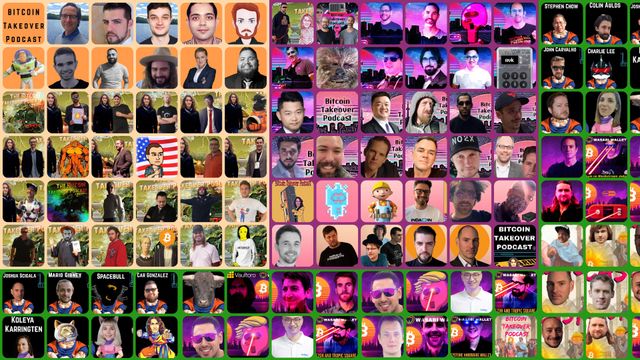
The First 109 Episodes of the Bitcoin Takeover Podcast
Much like Satoshi Nakamoto’s decentralized money system, the Bitcoin Takeover Podcast was launched in times of turmoil and…
S17 E38: Keagan McClelland on Lightning Metrics, Covenants, Consensus Politics & Verifying Bitcoin
There is a certain genre of Bitcoin Twitter argument that never quite resolves into a conversation. People trade metrics, memes…
S17 E13: Charlie Spears on Blockspace Media, the Purity Spiral & the Case for Classical Maximalism
Editor’s note: this conversation was streamed live in mid-March 2026, a week after the US switched to daylight saving time (which…

Comments
Comments run on my own server. No trackers, no tracking cookies.