




John Carvalho on Shilling Lightning to the Moon (S6 E10 Full Article)
The audio keeps playing while you browse the site.
Read the transcript10,639 words, every line links to the minute it was said
Ask this episode
John Carvalho was my guest back in Season 1. Almost two years later, he liked to call himself the Lightning Network business developer nobody asked for. He'd spent more than a year at Bitrefill and had just left to start his own company, focused on Lightning products that weren't about finance.
We recorded on day two of the 2020 Hackers Congress at Paralelní Polis. My brief was simple: shill Lightning to the moon. John didn't play hype man. His thesis was that Lightning is ready, but the Bitcoin community isn't. The original show notes have the summary.
Should I Run a Lightning Node?
I started with a confession. I hadn't run a Lightning node in months and only used custodial wallets like BlueWallet. "I've been just lazy and I didn't do it." So convince me, I said, before fees go up and opening channels gets expensive.
John's answer surprised me. "I don't think what you're describing is laziness. I think you're just describing that you don't have incentive." Lightning is "supposed to be hot Bitcoin that's moving around," and the typical node runner "is probably someone that's trying to be part of the infrastructure."
He also wasn't worried about getting caught by high fees. "It's not going to be that one day you're going to wake up and it's going to cost $500 to make a channel. You're going to see it coming."
Routing Is a Business
I suggested that small node operators could earn routing fees and help decentralize the network. He disagreed. "I don't think that it's a good notion to promote that people are going to make money off of routing, like small people. I think it is actually going to be a business-oriented role."
The key idea: "this is actually what the biggest advantage of Lightning is: it allows us to leverage centralization trustlessly. The worst that somebody can do to you is basically be a nuisance." At the time, a handful of nodes like Bitfinex, ACINQ and Bitrefill did most of the important routing, because people actually send money to and through them.
So location in the network is about "economic proximity," not geography. Putting yourself in the middle to "tax" traffic is "not providing a service." "You have to be somewhere that a lot of people want to send money through or to for a reason."
His comparison was Twitter. "Twitter will be the biggest service provider because they're the best at scaling," but eventually "tweets will be able to leave Twitter" and others can compete. "It's an open competition for ordering transactions onto the base layer."
He also thought developers were overly focused on advanced routing. "I'm not an engineer, so I'm probably going to sound ignorant to them." Multi-path payments are useful, "but generally, that's like an optimization. These are edge cases."
The Culture Problem
So why wasn't Lightning taking off? "I actually think it's a culture problem." The number go up version of maximalism had become "this kind of culture where we hate the shitcoins because they're fake innovation, and we love Bitcoin because it's the only real coin and it's going to go up." As a result, "everything gets biased towards finance."
Lightning had produced games, wallets and lots of talk about routing. "But where is the consumer stuff? Where is the, you know, publishing stuff, the Web3 stuff? Where is all of the stuff that is not finance?" That was what his new company wanted to build.
Exchanges Are the Arteries
John had been pushing exchanges publicly to support Lightning. "Even exchanges don't even understand why it's important to add Lightning. They just think of it as strictly about the fees." His argument was about opportunity: "if the exchanges are the arteries economically, then if they don't support Bitcoin upgrades," builders can't reach users. "The next DeFi or the better DeFi or something could be, you know, a year away or could be three months away." Kraken added Lightning in 2022.
His conclusion: "Bitcoiners need to get smarter and they need to get more creative and they need to stop thinking that Bitcoin is here just to get them rich."
A Circular, Parallel Economy
Is it a parallel economy or a circular one? "I call it both. I think that it starts as a parallel economy and it only succeeds because that economy is circular." And it has to be Bitcoin. "It's got the most use, it's the safest, it's the most secure, it's the most censorship resistant." "If we're going to go in here and kind of cause a digital revolution, it has to be Bitcoin."
He liked experiments outside finance, like competitive gaming with "real money at stake," and micro-task work in places "where, you know, the money is worth a lot more." The last thing he'd used Lightning for was LN Markets, which "feels like a much cooler user experience."
Fees, Altcoins and a Second Tier
We also talked about what happens when blocks fill up. John had modeled Bitcoin's future scaling, and his honest conclusion was uncomfortable. "If we want it to be for everybody, it really does get complicated," and "we might need to have tier two blockchains," with "a second tier of lower security." He'd seen the evidence already. "When fees went really high, all of a sudden altcoins actually had a use case," as people moved coins between exchanges more cheaply. "Altcoins finally had an argument, you know."
He didn't expect a sudden fee shock, though. More likely, with "enough valves on Bitcoin," fees on chain and on Lightning would rise slowly, "like stair step up."
He was also suspicious of DeFi yields. His thought experiment: you think you're earning 10%, but you pay "11% in fees just to be able to have access," and "they're not going to realize it until they get out." He added, fairly, "I don't know if it's true, though."
The Hamburger Problem
This was my favorite line of the episode. "Yes, maybe Bitcoin will be at $100,000, but what if a hamburger costs $10,000? It's not just about number go up."
He called this "the big lie of number go up." If everyone expects the same gains, "your place in society right now will probably be pretty similar." And "if we keep indoctrinating this perspective with every entrant, then we'll kind of manifest it," with everyone buying and selling on the same four-year schedule.
Consensus Is Mutual
Then it got philosophical. "Consensus is mutual. And what that means is it transcends any system." "If you and I agree on something, we don't need to agree about it on the Bitcoin layer for it to be true."
Utopias and citadels need more than code. "This actually is a cultural revolution." People must learn to "cooperate and value meritocracy and fairness and competition." And there's always the physical world. "Violence is always an option. That's the problem," he said, citing the wrench attack. "We're social creatures," and that evolved "so we don't just constantly kill each other."
Holding People Accountable
John was candid about his methods. "You have to be willing to hold people publicly accountable." "Sometimes the only way I've been able to get a business meeting with certain people is if I piss them off on Twitter. And it's really weird, and I hate that it's that way." What he was really doing behind the scenes was setting up "three-way bootstrapping partnerships" between his products and other businesses.
The company he was building became Synonym.
What Makes This Episode Worth Listening To
I asked for hype and got a reality check, which is better. My summary at the end of the recording still holds: Lightning was ready and most of the development was done, the incentives to run a node were low, which "doesn't mean that you shouldn't," and a culture of only holding meant people weren't trading goods and services for Bitcoin. Six years later, a lot of that debate is still open.
You can read the full transcript, the original show notes, our Season 1 conversation, or visit John Carvalho's guest page.
Listen to John Carvalho on Spotify, Apple Podcasts, and More
Time stamps:
- 00:00:39– I haven't run a Lightning node in months
- 00:02:56– Not laziness, no incentive
- 00:04:52– Routing is a business
- 00:05:25– Leveraging centralization trustlessly
- 00:07:44– The Twitter comparison
- 00:11:16– You'll see high fees coming
- 00:13:34– Economic proximity
- 00:16:53– Advanced routing is an edge case
- 00:18:22– A culture problem
- 00:20:30– Where is the non-finance stuff?
- 00:21:05– Exchanges and Lightning
- 00:22:30– Bitcoiners need to get more creative
- 00:24:08– Parallel and circular
- 00:24:53– It has to be Bitcoin
- 00:26:18– Tier two blockchains
- 00:30:32– DeFi as a fee trap
- 00:32:56– LN Markets
- 00:38:24– What if a hamburger costs $10,000?
- 00:44:16– Consensus is mutual
- 00:47:30– Violence is always an option
- 00:56:34– Holding people publicly accountable
- 00:58:21– Summing it up
Verify this episode
This is the SHA-256 fingerprint of the MP3 as published here, timestamped in the Bitcoin blockchain with OpenTimestamps. If one byte of the file changes, the fingerprint changes.
- SHA-256
66668737f4622d6a4f604e3f7355a1672acc3650b02ff741150ac4fac0dece9a- Proof
- 2020-10-08_s6_e10_john_carvalho_shilling_lightning_to_the_moon.mp3.ots · all episode hashes (proof)
- Status
- Anchored in Bitcoin block 974,312
- Timestamped
- After release. The episode came out on 8 Oct 2020, but this proof was made on 3 Nov 2026 and anchored in block 974,312, so it proves this exact file existed by 3 Nov 2026, not on the release date.
How to check it yourself
- Download the MP3 and the proof into the same folder.
- Run
sha256sum 2020-10-08_s6_e10_john_carvalho_shilling_lightning_to_the_moon.mp3(on a Mac:shasum -a 256 2020-10-08_s6_e10_john_carvalho_shilling_lightning_to_the_moon.mp3). The result must match the SHA-256 above. - Install the OpenTimestamps client (
pip install opentimestamps-client) and runots verify 2020-10-08_s6_e10_john_carvalho_shilling_lightning_to_the_moon.mp3.ots. It hashes the MP3 again and checks the proof against your own Bitcoin node, then prints the block and the date the file existed by. Without a node,ots info 2020-10-08_s6_e10_john_carvalho_shilling_lightning_to_the_moon.mp3.otsshows the block height to look up in any block explorer.
Related
S6 E10: Shilling Lightning to the Moon with John Carvalho
John Carvalho is the Lightning Network business developer that nobody asked for. And in this podcast, he explains how we can…
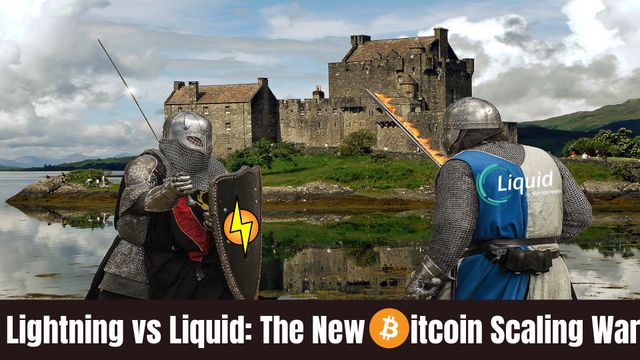
Lightning vs Liquid: The New Bitcoin Scaling War
The ongoing tensions between Lightning Network proponents and Liquid sidechainers bring back memories from another scaling debate.
S15 E1: Max Hillebrand & Lando Rothbardian on Wasabi’s New “Buy Anything” Button
With the launch of version 2.0.5, Wasabi wallet now includes a “Buy Anything” button. Though it might sound banal, what it does…

Comments
Comments run on my own server. No trackers, no tracking cookies.