




S16 E58: Leona Hioki on INTMAX, ZK Rollups & Privacy

The audio keeps playing while you browse the site.
Read the transcript20,217 words, every line links to the minute it was said
Ask this episode
Leona Hioki is a ZKP person who will tell you, without being asked, that optimistic rollups beat ZK rollups on adoption. He has been researching Plasma since 2018, runs INTMAX as CEO, co-founder and architect, lives in Switzerland because it was the only candidate he had, and grew up in Japan, where his own stateless design was already sitting in a paper that someone else is now quoting. The whole stack lives on Ethereum, yet he spent a good part of our livestream arguing that Bitcoin will end up verifying zero-knowledge proofs at layer 1 and that the only open question is when.
We recorded for two hours and forty-one minutes with more than a thousand people watching live. I opened by performing a ritual dance for the Zcash price. I do not hold any, so in community slang I am "zidelined," and the dance is my penance until the chart cooperates. "I have to dance until I die," I told the chat, and then I let Leona start talking before the neighbors complained.
His project is INTMAX, a ZK rollup layer 2 on Ethereum built on client-side validation and recursive proofs. The pitch is that you can run a payment network that stores almost nothing and still hides almost everything. We got into how that works, where it breaks, what Bitcoin could borrow from it, and why Switzerland and Japan make such different homes for people who write cryptography.
0.08 Bytes Per Transfer
I asked Leona to explain client-side validation to the chat, and he started from the UTXO. Each coin carries a proof, and the proofs chain together: "once you verify the previous ZKP in the chain of ZKP, you can verify the entire history of UTXO, right?" The chain does not have to see the history. The receiver checks it.
That is where the trade-off lives. "Client-side validation has more scalability and more privacy. But the functionality is quite limited." No sprawling smart contract world, no global state to query. What you get in exchange is a footprint he put at "0.08 bytes per transfer," which he called "maybe it's a Guinness record of on-chain minimization, especially regarding transfer."
Stateless was the word he kept returning to. Of the field at large he said "99.9% of blockchains in this industry are stateful," and that includes the scalable ones. When I brought up StarkWare, his verdict was "it's scalable, but it's still stateful." INTMAX keeps no account state on the rollup side at all.
I wondered how much of this he could port to Bitcoin without touching consensus. His answer surprised me: for verifying these proofs, "actually no opcode is needed, just OP_RETURN is fine." The data goes in an output, the clients do the rest, and Bitcoin sees nothing but ordinary transactions.
Shielded CSV Quoted the Paper
The obvious next question was about Shielded CSV, the client-side validation proposal for Bitcoin that Liam Eagen, Robin Linus and Jonas Nick sat down with me to discuss last season. Leona has read it closely, and he does not pretend there is no overlap: "that idea is very similar to INTMAX. They are quoting our paper." He also does not pretend INTMAX wins every comparison. "Basically, Shielded CSV is more private than INTMAX."
I pushed him on Zcash, since I had my own stake in the answer. Should Zcash move to client-side validation? He was careful about how he said it: "I think that it's a bit arrogant to say this, but no, Zcash should apply client-side validation in my opinion." On the Zcash side, Sean Bowe joined me to talk about Tachyon, a scaling plan for Zcash.
Later, in a different context, he told me Zooko had been following him a year earlier, and then after he retweeted something he described as a stupid tweet, Zooko unfollowed. I did not ask which tweet.
From Plasma to Rollups and Back to Waiting Rooms
"So rollup started from Plasma, actually." Leona was there for that part. Plasma's problem, as he described it, was a human one: "people needed to be online to keep watch over, keep watching over the other malicious behaviors." If you went offline and someone tried to cheat the exit, you lost. Rollups made the data available on chain, and INTMAX uses ZKPs so users can leave without waiting for anyone else.
He said it plainly too: "We are ZKP people, but we need to admit that. So yeah, optimistic rollups have an advantage over ZK rollups till now." He followed that with "They're doing much better than ZK rollups so far in terms of adoption." That fits the data I see in the market, and I did not argue.
Our conversation about fragmentation on Ethereum layer 2s went somewhere cultural. Leona thinks it comes from the same place as every other split in this industry: "libertarians and kind of freedom advocates, they easily branch, right?" He wants unity from people who do not always like each other: "So as a libertarian mindset, how we need to unify people somehow in the same direction, even if sometimes we don't like each other."
I raised the other half of the problem. A lot of what people call decentralized runs on AWS. "if you rely on just a bunch of corporate servers, you can't expect that to have the values that we expect." Leona agreed the pattern is common and thinks users should know what they are picking: "people need to be kind of aware of the trade off they're choosing."
What Counts as Layer 2, and Whether Lightning Qualifies
The definition he uses is strict. "It's all about having a same security assumption of Layer 1. So this is a definition of Layer 2." By that standard, "Rollups are sidechains managed by smart contract on Layer 1," and, in a line I did not see coming, "drivechain, it's not a sidechain, actually, it's a Layer 2."
On drivechains: what Paul Sztorc proposes is "not full rollups like in the case of Ethereum." Paul and I went through the details in S15 E68, on activating drivechains via CUSF.
Lightning came up in the same breath. Leona thinks it deserves more credit than the market gives it. "I think that Lightning Network is still undervalued." He listed what it does that nothing else does: "And also no other Layer 2s can achieve instant finality. So Lightning Network has their instant finality. And they also have the security assumption of Layer 1, and they also have some privacy." His complaint is the usual pair, channel capacity and the requirement to stay online.
Bitcoin Layer 1 Will Verify ZKPs and Other Predictions
He asked the question I think about at night: "I just wonder why Bitcoin Layer 1 does not verify ZKP by opcodes." His prediction is brief: "it's just a matter of time."
I said the obstacle is not engineering. "Bitcoin doesn't have any technical issue per se," I told him, "It's a cultural issue that people don't agree with anything." I added that the scaling layer we actually have today is the ETF, "the scaling layer that we have nowadays is the ETF or the paper Bitcoin," and that the base chain "can't double every four years to keep all the miners profitable." On whether any of that is bad, I said "I don't see the bad effect," and moved on before the chat turned it into a fight.
Drivechains were Leona's detour. He thinks the idea came "too early in 2015," and now that EVMs exist it "can be more functional with more functionality like EVMs." He went a step further: BIP 301 could be replaced by adapter signatures, and "Ethereum layer one can be a drivechain of Bitcoin." I told him the market would sort it out ("The market will solve this") and that I had a hard time seeing which side the market would pick. He also made a point that stayed with me, that Bitcoin and Ethereum are less different than the people on each side believe. "I don't think Bitcoin and Ethereum have different purposes. I think it's quite same."
Zcash, Monero and the Quantum Paper Tiger
Leona sees the two best-known privacy coins as differently positioned. "Monero is more anarchy kind of stuff. It's more hostile to the government. And Zcash is kind of neutral." On Zcash's future he said "it's really unpredictable for me," which I took as the answer of a man who has watched cryptographers argue for a living.
I came with chart facts. Zcash is listed on Binance, "which Monero is not anymore." I added that a major venue "has surprisingly 53.44% of all trades," and that the coin sits at "number 65 in terms of ranking" on the day we recorded, a position I called, in the broader sense of the word, a bullish setup. I also said "Both of them are kind of bullish for Zcash," and Leona did not disagree with the direction.
Quantum was the one place we landed on opposite sides. For me it is "a paper tiger." For him, the risk is practical and specific to privacy coins: "a privacy project cannot realize that they are hacked immediately because if cryptography is broken by quantum computers, we don't have a way to realize that." A transparent chain at least shows you the theft. A shielded one stays silent. I did not change my mind and neither did he, and I think that is the right amount of disagreement for a livestream.
My own hardware came up here, because I had a new Trezor with Bluetooth and post-quantum firmware on the desk, and I unboxed it on camera. I would sooner own the device than argue about its threat model.
Mining, Dev Taxes and a Hardware Lottery Ticket
I asked how he thinks coins should be distributed, and Leona was clear: "the coins should come from competition, and PoW is the most pure competition, right?" INTMAX applies that idea in what it calls privacy mining: "this is kind of how we do the coin generation in INTMAX." He even argues that a chain which later moves to proof of stake still needs a proof of work period first: "So regarding this, even if we do PoS on some chains like Ethereum, then we need a PoW period before starting PoS."
He warned me about MEV, which he thinks will wreck PoW as a distribution tool: "MEV will kill PoW." I said I like everyone mining from their house: "I think everyone mining from their home is actually how we are going to decentralize this." That is why I keep a Braiins Bitcoin Mini Miner on my shelf. "I haven't taken it out of the box." I treat it as a lottery ticket. Leona wondered what the odds are, and I told him "I think it's much lower than that."
The dev tax is a more personal story for him. He proposed one for INTMAX mining, people pushed back, and the team is implementing it anyway. He admits "there's no perfect system to distribute kind of coins." I said "I don't think there's anything wrong with premines and dev taxes," and I noted that the model that avoids them "doesn't attract people too much because it doesn't make them rich." Leona was not thrilled with the vocabulary: "tax is the worst word to have in the system." He also does not enjoy the accounting that comes with it: "I don't like spreadsheet."
Shamefully AML, and the Kyoto Question
He spoke plainly about compliance. INTMAX uses a predicate system that rejects high-risk addresses. "Shamefully, we have AML, but non-KYC." Someone he knows "got rejected by this kind of AML system," and the end state he wants is "no KYC, no AML basically." In the meantime the solution he likes is a proof that "a ZKP proving that your money is not mixed with criminals." I said what I would like to see next is "replacing centralized exchanges as the default way of onboarding new people."
I could not skip the name. "Satoshi," Leona confirmed, is a "super kind of common name in Japan," and I reminded the audience that "Satoshi is the name of Ash Ketchum in the Pokemon series." There is Tokyo lore too: I told the story about Roger Ver and the Lamborghini he bought with bitcoin, and I mentioned Amir Taaki's episode at a Japanese airport, when he was detained over a question about destroying currency.
Why Switzerland? "I didn't have any kind of candidate besides Switzerland." It comes with a particular business culture: "Basically, the trustworthy people are doing business in crypto as well, and you cannot see so many scammers in Switzerland, maybe." And an easy visual cue: "many people wear suits."
He also reminded me which crypto war was first. "The last crypto war was actually not the blockchain war. The first one was like the encryption war back to the beginning of the internet, on how to encrypt the internet." We both remembered the Ripple and Greenpeace campaign, "Change the Code," that aimed at Bitcoin's energy use.
One more design remark, since I like founders who admit what they would not do: "UTXO itself is a very unique idea from the beginning. So if I, the founder of the cryptocurrency, for example, maybe I have no talent to start from UTXO."
The roadmap is short. INTMAX will publish zERC20, which he described as "totally kind of cross-rollup, privacy-preserving transfer." I wanted to know if there was any way to get him to Romania, where I am planning a privacy conference around Halloween. I pitched it as "a council of vampires discussing matters of privacy." He raised a reasonable doubt: "It's a difficult perspective to make a privacy conference." My answer: "there's nothing weird about wearing a mask or a cape."
Leona is a person who said the Plasma users were online watching for thieves, and now the people in the INTMAX design watch nothing, because 0.08 bytes does not leave much to watch. I am still zidelined, still dancing, and the offer to host him in Romania in a cape stands.
Listen to Leona Hioki on Spotify, Apple Podcasts, YouTube, and More
Time stamps:
- 00:01:17– Introducing Leona
- 00:02:47– Leona Hioki's Background
- 00:03:38– Discussion on Past Podcasts and Zcash Pump Dance
- 00:05:00– Privacy Trends in Crypto
- 00:05:26– INTMAX Overview: Privacy, Scalability, Trade-offs
- 00:05:44– Client-Side Validation and ZKP in INTMAX
- 00:08:22– Comparison to Zcash and RGB
- 00:08:46– INTMAX on Ethereum and Potential Bitcoin Integration
- 00:11:02– INTMAX vs. StarkWare
- 00:14:15– Stateless vs. Stateful Systems
- 00:15:05– Evolution from Plasma to INTMAX
- 00:18:56– Similarities to Lightning Network
- 00:19:47– Market Dynamics of Ethereum L2s
- 00:20:25– ZK Rollups vs. Optimistic Rollups
- 00:24:45– Fragmentation in Ethereum L2 Ecosystem
- 00:26:19– Role of Money and Base Outage Concerns
- 00:28:03– Trade-offs in Decentralization
- 00:29:34– Differences Between Rollups and Sidechains
- 00:32:42– Bitcoin Script Limitations and ZKP Verification
- 00:35:18– Cultural Issues in Bitcoin Upgrades
- 00:36:56– Miner Revenue and Drivechains
- 00:41:58– Bitcoin in Japan and Satoshi's Name
- 00:43:24– Speculation on Satoshi's Identity
- 00:44:48– Early Bitcoin Community in Japan
- 00:45:28– Post-2018 Regulations in Japan
- 00:48:37– Moving to Switzerland for Privacy Projects
- 00:50:55– Amir Taaki's Experiences
- 00:52:37– Japanese Society and Libertarianism
- 00:56:30– Cryptography History and Crypto Wars
- 01:00:22– Podcast Milestone and Hardware Wallets
- 01:02:38– Trezor Safe 5 and Quantum Resistance
- 01:05:58– Quantum Computing and Privacy Risks
- 01:08:06– UTXO Model and Bitcoin's Design
- 01:09:48– Satoshi's Intentions and Op Codes
- 01:11:57– Bitcoin as Money Network, Not Just Digital Gold
- 01:14:21– Monolithic vs. Modular Blockchains
- 01:17:07– Drivechains and BIP Proposals
- 01:20:58– Stateless Clients for Drivechains
- 01:24:23– Zcash's Potential and Comparisons to Monero
- 01:27:52– Future Scenarios for Zcash
- 01:30:57– Zcash vs. Monero Market Focus
- 01:33:39– Client-Side Validation for Zcash
- 01:36:27– Interactions with Zooko Wilcox
- 01:39:47– Proof of Work vs. Proof of Stake
- 01:46:16– Fairness in Proof of Work
- 01:47:17– Home Mining Devices
- 01:51:53– Decentralizing Mining
- 01:53:05– AML in INTMAX Privacy Mining
- 01:56:34– Confidential Layers and Bridges
- 01:57:59– Proof of Innocence in Privacy
- 02:00:04– Replacing Centralized Exchanges with DEXs
- 02:00:44– Narrative on Zcash vs Monero Exchange Listings
- 02:00:48– Uniswap and Decentralized Fiat Onramps
- 02:01:04– Zcash Listings on Major Exchanges
- 02:01:55– Monero Listings and Volume
- 02:03:26– Ranking of Exchanges
- 02:05:00– Alternative Ways to Buy Monero
- 02:05:31– Flashshift App for Swaps
- 02:06:34– Zcash Support in Flashshift
- 02:07:15– Zashi Wallet Features
- 02:08:00– Planning Privacy Vampires Conference in Romania
- 02:09:58– Vampires and Privacy Analogy
- 02:11:06– Challenges of Privacy Conferences
- 02:12:22– Interest in Visiting Romania and Japan
- 02:13:21– Japan Recommendations and Metaplanet
- 02:14:15– Japan vs Switzerland Bitcoin Culture
- 02:17:18– Personal Story with Bitcoin
- 02:19:49– Reactions to Bitcoin and Ethereum
- 02:22:27– Bitcoin vs Ethereum Purposes
- 02:23:10– Coin Distribution and Fairness
- 02:26:49– Perfect System for Fairness
- 02:28:03– Proof of Work Fairness
- 02:29:02– Grin Fair Launch Example
- 02:31:07– Premines and Dev Taxes
- 02:32:58– Spreadsheet Coins and Competition
- 02:33:05– Ethereum ICO Success
- 02:35:28– Ethereum Competitors' Impact
- 02:36:50– Zcash Dev Tax Benefits
- 02:38:20– Issues with Scams in Premines
- 02:39:22– Value of Experimentation
- 02:39:38– Closing Remarks and Follows
- 02:40:55– Thanks and Sponsors
Verify this episode
This is the SHA-256 fingerprint of the MP3 as published here, timestamped in the Bitcoin blockchain with OpenTimestamps. If one byte of the file changes, the fingerprint changes.
- SHA-256
d826da7d6cb2741e30d1ad27dc487547c67a3e7cca558630f42324da74f8e7e6- Proof
- 2025-11-12_s16_e58_leona_hioki_on_intmax_zk_rollups_privacy.mp3.ots · all episode hashes (proof)
- Status
- Anchored in Bitcoin block 974,312
- Timestamped
- After release. The episode came out on 12 Nov 2025, but this proof was made on 3 Nov 2026 and anchored in block 974,312, so it proves this exact file existed by 3 Nov 2026, not on the release date.
How to check it yourself
- Download the MP3 and the proof into the same folder.
- Run
sha256sum 2025-11-12_s16_e58_leona_hioki_on_intmax_zk_rollups_privacy.mp3(on a Mac:shasum -a 256 2025-11-12_s16_e58_leona_hioki_on_intmax_zk_rollups_privacy.mp3). The result must match the SHA-256 above. - Install the OpenTimestamps client (
pip install opentimestamps-client) and runots verify 2025-11-12_s16_e58_leona_hioki_on_intmax_zk_rollups_privacy.mp3.ots. It hashes the MP3 again and checks the proof against your own Bitcoin node, then prints the block and the date the file existed by. Without a node,ots info 2025-11-12_s16_e58_leona_hioki_on_intmax_zk_rollups_privacy.mp3.otsshows the block height to look up in any block explorer.
Related

S17 E13: Charlie Spears on Blockspace Media, the Purity Spiral & the Case for Classical Maximalism
Editor’s note: this conversation was streamed live in mid-March 2026, a week after the US switched to daylight saving time (which…
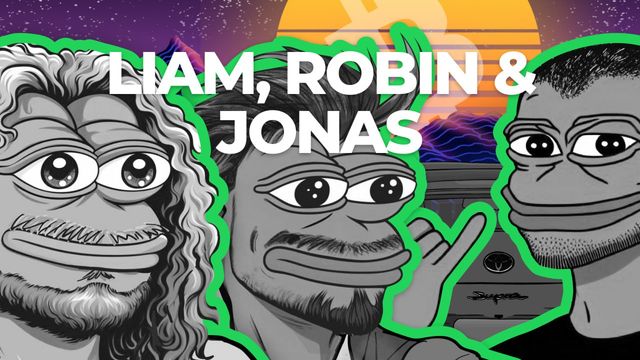
S15 E58: Liam Eagen, Robin Linus & Jonas Nick on Shielded CSV, Private Client-Side Validation & the Future of Bitcoin Privacy
Liam Eagen, Robin Linus and Jonas Nick explain Shielded CSV: private client-side validation with ZK proofs, BitVM bridges…

S17 E36: Yonatan Sompolinsky on Kaspa Covenants, DAGKnight & Coordination Markets
Yonatan Sompolinsky came to Europe for a reason he would only describe on record as a secretive meeting of DAGKnight magicians…

Comments
Comments run on my own server. No trackers, no tracking cookies.