




What the Fork?!
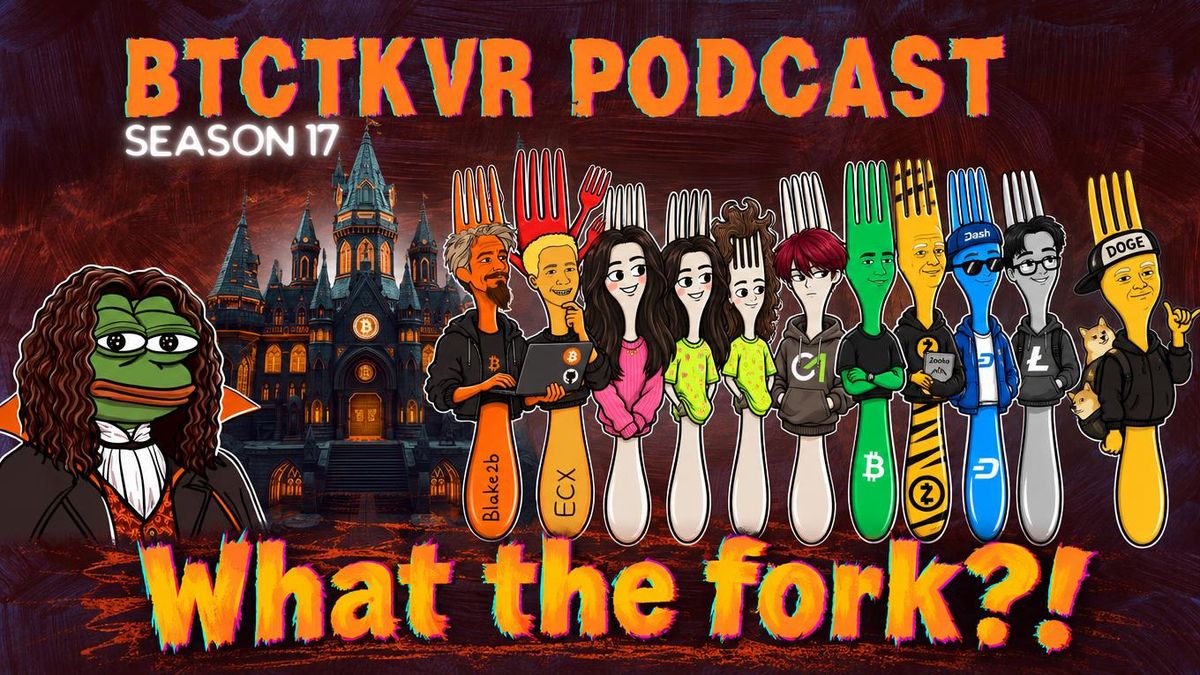
Forks are an integral part of the Nakamoto consensus. Satoshi gave us an amazing way to solve the double spending problem and handed out the blueprint to create unstoppable internet money… but he also left us with a governance problem that still causes division and outright tribal wars between bitcoiners.
As long as everyone agrees with the ongoing network rules, there is no fork. But Bitcoin still has very limited scalability, cannot do complex contracts, and doesn’t issue a fungible currency that’s truly censorship resistant. There isn’t even a system in place to veto the developers’ technical consensus: so if the code wizards make changes that you don’t like, the best you can do is operate and maintain old software that might just get deprecated or become incompatible in the future.
So when network participants have greater expectations from Satoshi’s design, for reasons which concern network upgrades or policy changes… well, that’s when the pain begins. The rebels have three choices:
- play the political game in order to try to convince everyone in Bitcoin to update the code;
- coordinate a breakaway movement which divides the network, but continues to mine blocks on a new parallel blockchain;
- start a new coin from the genesis block, with new rules and unique features.
If a large majority of participants agree with the change, they can leverage their power to blackmail the minority into upgrading. It’s very political, except that voting, violence and first class citizenship rights are replaced by Proof of Work mining and economic incentives.
Completing the first quest requires ”consensus”: a situation of unanimity in which no significant participant expresses any objection. The issue is, however, that significance is very difficult to define or measure. The largest holders don’t have authority because Bitcoin is not a Proof of Stake system. The miners try to avoid getting involved in politics unless they’re safe from ostracization… because they are afraid of losing individual hashers, and reputation is important for their revenue.
The nodes themselves don’t control the network because otherwise Bitcoin would get Sybil attacked. And the developers are usually unwilling to take responsibility for any controversial proposal because it affects their ability to receive grants and any resulting bug can diminish the market valuation of the project (therefore devaluing their personal savings too).
To put it plainly, Bitcoin is stuck in a game theory that makes it safe to do nothing. If anything, arguing in favor of protocol ossification and expressing concerns about any improvement proposal on very predictable grounds (increasing complexity, unknown exploits that nobody thought about yet) is respected enough to get rewarded by conference organizers and orthodox podcasters. Yes, Bitcoin is supposed to be hard to change and that’s part of the value proposition. But when the network participants can’t even agree on the necessity to deploy upgrades and there’s a fairly large faction that argues in favor of stagnation, that’s where the forking becomes legitimate.
But this game gets even more complicated once you realize that in Bitcoin, unlike traditional political systems, nobody wants to have an evident majority. Controlling a large share of the mining hash rate, routing a significant chunk of the economic activity, and even hiring too many developers can be perceived as a sign of centralization.
This centralization relies on trusted third parties and single points of failure… and the consequence is that the project at large gets perceived as being less valuable because it’s not sufficiently decentralized. If anyone takes too much action, it’s possible that the price of bitcoin will actually go down. So the question is: what is the right amount of action? Where do we strike a balance?
Bitcoin is the only political system in the world where nobody wants to form a majority, nobody wants to appear that they’re in charge, and nobody wants to be held accountable. It’s a weird and counterintuitive system whose resilience to change can also get exploited by its enemies: if this unprecedented form of internet money never becomes a threat to the mainstream financial system and actually gets coopted by those who would normally be obsoleted by such an innovative network, then nothing ever changes and all the libertarian dreams fade.
Printing money is cheap. Allocating a small amount of this money to keep Bitcoin under control is a trivial expense in the grand scheme. And for better and for worse, ”number go up” is the ultimate form of consensus… as everyone agrees that it’s good for the project and nobody will dare to fight against it.
But as we’ve seen over the last decade, price increases do not guarantee that any meaningful development will happen. Bull markets do bring in more smart people, more developers willing to put their time and effort into making the project successful, and more academics who do research that pushes the limits of Satoshi’s design. Some of the best ideas receive funding and get deployed on test networks. Some of the brightest Bitcoin developers travel the world to explain their ideas on conference stages. The problem is that eternal ”bikeshedding” and a predictable repetition of the same critical concerns result in no meaningful progress.
So once the improvement proposal never gets merged into the code due to lack of consensus, what should the developers do? Should they set years of their work on fire, never to attempt to test it on a financial network with real incentives? Should they accept defeat and move on to other things? Or perhaps they can prove the merits of their idea, while also collecting precious market information about the actual value of this upgrade. This is when forking becomes imperative.
Sure, most altcoins are doomed to fail. Historically, the Bitcoin hard forks haven’t been able to capture the same market valuation or network effect either. But in this world of free markets and free open source software, why not give it a try? Worst case scenario, the critics were right and the entire initiative was a mistake. But if it works out, Bitcoin can finally have a worthy competitor.
In an ideal scenario, everyone is on board with every meaningful upgrade. But in a decentralized network, it’s very difficult to reach consensus. As a matter of fact, the term ”consensus” is often cited in order to stall progress, or else effectively kill off an improvement initiative. There’s ”technical consensus” which stalled OP_CTV according to Dr. Adam Back. There’s social consensus which never allowed BIP101 and its sibling block increase proposals to get activated. There’s ”rough consensus” which is being used against OP_CAT and other attempts to restore Satoshi’s old disabled OP codes.
Faced with this reality, where the developers who maintain the Bitcoin project will only accept a utopian unanimity that any malevolent actor can break, we end up having forks: versions of Bitcoin that follow pretty much the same rules, try to reach the same goal, share most of the original codebase, but seek to accomplish the mission in a different way or through different technical or political means. Which is really beautiful for computer science nerds who are accustomed to the Linux model where every minor disagreement leads to the creation of a new distribution.
But for economists, it’s a confusing situation where competing currencies that are 90% identical are going through a multi-year price discovery phase in order to gain network effects and figure out the value of new ideas. Maybe one day one such fork will dethrone the original Bitcoin due to ingenuity of design and large-scale adoption on markets. Or maybe we will be stuck in this pet rock phase forever, making bets against inflating fiat currencies without ever replacing them.
While Satoshi Nakamoto was around, the world knew nothing but Bitcoin. But as soon as he left the project in the hands of the Core development team, political struggles emerged. And for every rejected proposal, we had a bunch of developers launching a new cryptocurrency network to experiment with the unpopular features. Many of these projects died over the years… yet today we still have a handful of them that survived and were able to find their own market and use cases.
From a rather practical and cynical perspective, one can argue that Bitcoin scales and adds new features through forks. So everything that builds on the same original codebase is a Bitcoin, the only inconvenience is that there are multiple currencies with different security models that are priced by the market individually according to their merits. If BTC doesn’t scale and doesn’t have privacy, one can use Zcash. If the fees are too high on the original chain, BCH and Litecoin come to the rescue. And if this whole movement appears to be too serious, with institutions and high-profile politicians getting involved, it can also become appealing to people looking to have some fun via Dogecoin.
The market provides options for everyone… but fundamentally, the technology is still Bitcoin. This is a hard pill to swallow for maximalists and a complex problem to solve by economists and game theoreticians. But the reality is that forks really do extend Bitcoin: they add capacity and features, but print money too.
Yet is it really so terrible if we replace the hundreds of political central bank-controlled fiat currencies with a dozen blockchains that provide utility to billions of users via cryptocurrencies that can be swapped at the global market rate? 1 billion censorship resistant coins with predictable monetary policy are definitely better than infinite numbers in Excel spreadsheets that the government can control. I like to call this way of thinking Bitcoin post-maximalism… but I guess that’s a subject for another magazine!
This magazine explores three types of forks:
- the hard forks and soft forks that improved the original Bitcoin chain;
- the breakaway hard forks, which copied the UTXO set (coin ownership) but moved it to a new network with new rules and features: Bitcoin Cash, Bitcoin SV, Bitcoin Gold, Amaury Sechet’s eCash (XEC), Luke Dashjr’s Blake2b XBT, and Paul Sztorc’s BIP300 eCash (ECX);
- the codebase forks, which took Satoshi Nakamoto’s code and tried something new by starting a new blockchain from scratch (Namecoin, Litecoin, Dogecoin, Dash, Decred, Zcash);
In order to make this publication unique, I used quotes from interviews with founders and developers which I have interviewed over the years on Bitcoin Takeover Podcast. Even though you can find the data about every fork elsewhere, it’s the personal input and commentary of the people involved that makes this effort truly one of a kind.
This magazine was designed in September 2026, and the plan had three stops: a digital demo at Token2049 in Singapore (October 7-8), a 5-article demo print at TABConf 8 in Atlanta (October 12-15), and the final version with all 13 articles and some bonuses at the Bitcoin Conference in Amsterdam (November 5-6). Every article is free to read on the Forks! magazine page, because research like this should not sit behind a paywall.
But the information without gorgeous eye-catching graphics can be boring. So I would like to thank Ani for doing the stunning watercolor painting for the cover and the clean graphics for the BTC article (with more work on the way). I also want to thank CM for jumping in to help: his work ethic is amazing, his comic book-style graphics are jaw-dropping, and without his ”one article per day” routine the demo wouldn’t have been ready on time. So kudos to both of them for turning my text into something that’s visually pleasing.
I would also like to thank my podcast sponsors Cake Wallet, LayerTwo Labs, Sideshift.ai, Orange Rock, and Braiins Hashpower for supporting my work over the years. It’s thanks to them that nice projects like this magazine can see the light of day (just like Vaultoro, Wasabi and Trezor made the first BTCTKVR magazine happen in 2021). Yes, HODLing is nice. But creating beautiful art is what gives life meaning and how others will remember us.
So is Bitcoin a monolithic project or a codebase? Did Satoshi Nakamoto give us the blueprint to create unstoppable internet currencies, or did he bring into existence the final form of money and the only one we will ever need? Is there any value in trying these forks? There is only one way to find out: through study, free markets and research, not dogma.
Further context, November 2026
A companion timeline
The essays in this magazine are unchanged. After they were written, this site published Fork Wars, a dated timeline of the 2015–17 block-size war, with a faces board, a side-by-side reading of the two main books, and a section on later splits. It is a companion to these essays, not a replacement. Start at the magazine contents, BTCTKVR: Forks!, or go straight to the timeline.
Related
Bitcoin Forks, Described by Dorks
A collection of Bitcoin Takeover podcast quotes about soft forks, hard forks, Bitcoin Cash, SegWit, Taproot, Drivechains, BIP110…
S17 E45: Talking Tari & Privacy with Naveen Jain, Mr. Fox & Marguerite de Courcelle
There are projects in this space that are famous for what they shipped. Tari used to be famous for what it has…
S17 E11: John Carvalho on Bitcoin Depression, Lightning Derangement & the Atomic Economy
John Carvalho was the second guest in the history of this podcast, way back in season one, episode two, when he was…

Comments
Comments run on my own server. No trackers, no tracking cookies.